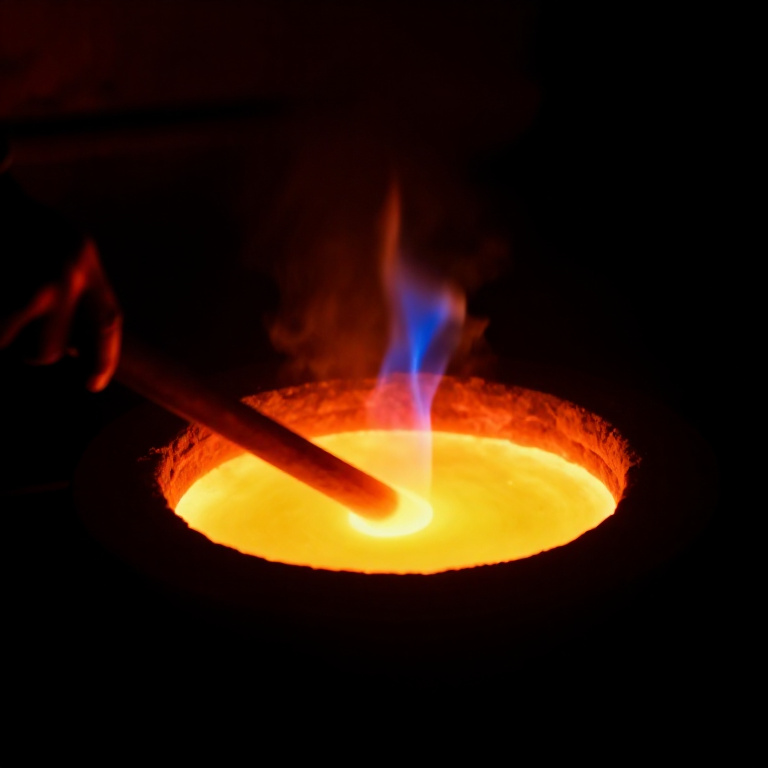


Puddling Wrought Iron from Pig Iron — Burning Out the Carbon in a Reverberatory Furnace
Pig iron straight from the blast furnace is cheap and plentiful but nearly useless for anything that must bend or take a blow: its high carbon makes it brittle as glass. To turn it into the tough, malleable wrought iron that built the railways and bridges of the 1800s, the carbon has to be burned out. Henry Cort's puddling process, patented in 1784, did exactly that — at scale, with coal.
The trick is the reverberatory furnace, which keeps the fuel separate from the metal. Coal burns in a side firebox and the flame is drawn over a low bridge and reflected down off the furnace roof onto a hearth of pig iron, so the sulphurous coal smoke never touches the iron. A workman called a puddler stirs the molten bath through a small door with a long iron rabble, exposing every part of it to the air until the carbon oxidises away.
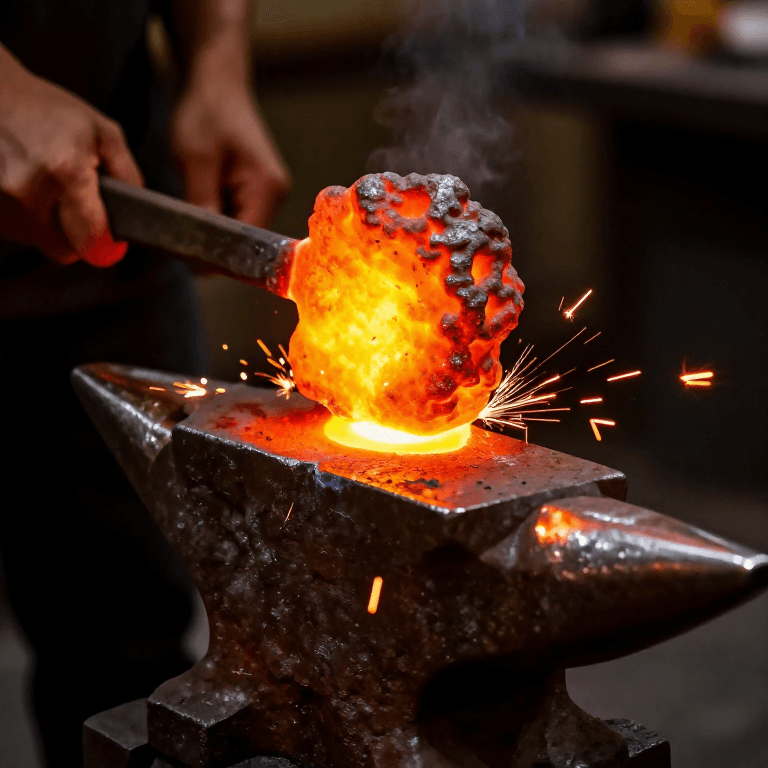
As the carbon leaves, something strange happens: the purer iron's melting point rises above the furnace temperature, so the metal grows stiff and pasty even in the heat. The puddler gathers it into spongy balls, which are then hammered and rolled to squeeze out the slag and consolidate the fibres into bars of wrought iron.
Maagizo
Understand the goal
Understand the goal
Build a reverberatory furnace
Build a reverberatory furnace
Vifaa kwa hatua hii:
 Matofali yanayostahimili moto100 vipande
Zana zinazohitajika:
 Kijiko cha Bustani
Fettle the hearth
Fettle the hearth
Vifaa kwa hatua hii:
 Magamba ya chuma5 kg
Fire the furnace with coal
Fire the furnace with coal
Vifaa kwa hatua hii:
 Makaa ya mawe ya bitumeni60 kg
Charge and melt the pig iron
Charge and melt the pig iron
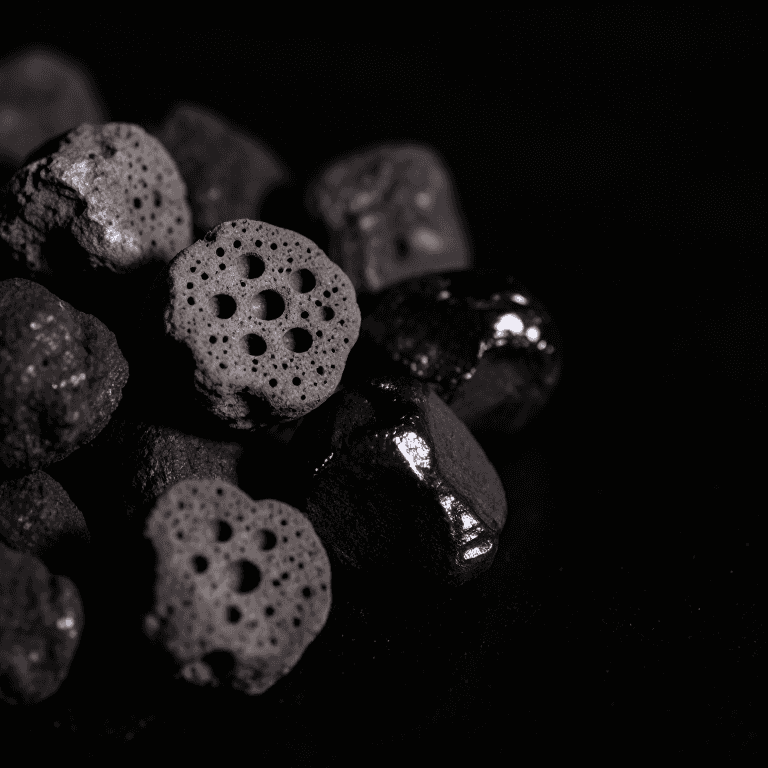
Vifaa kwa hatua hii:
 Vitalu vya chuma ghafi30 kg
Puddle the bath
Puddle the bath
Zana zinazohitajika:
 Mchokoo wa kuchemsha chuma
Bring on the boil
Bring on the boil
Let it come to nature
Let it come to nature
Zana zinazohitajika:
Mchokoo wa kuchemsha chumaBall up the iron
Ball up the iron
Zana zinazohitajika:
Mchokoo wa kuchemsha chumaShingle the ball
Shingle the ball
Zana zinazohitajika:
 Nyundo kubwa
Roll into bars
Roll into bars
Zana zinazohitajika:
 Mashine ya kusongesha bati
Identify wrought iron
Identify wrought iron
Zana zinazohitajika:
 Nyundo
Vifaa
4- 100 vipandeKishikilia Nafasi
- 5 kgKishikilia Nafasi
- Kishikilia Nafasi
- Kishikilia Nafasi
Zana Zinazohitajika
5- Kishikilia Nafasi
- Kishikilia Nafasi
- Kishikilia Nafasi
- Kishikilia Nafasi
- Kishikilia Nafasi
Vifaa vya Michoro Iliyounganishwa

Blueprint zinazohusiana
Blueprint hizi zinashiriki maarifa — mbinu, vifaa au kanuni

CC0 Umma Wote
Mchoro huu umetolewa chini ya CC0. Uko huru kunakili, kubadilisha, kusambaza, na kutumia kazi hii kwa madhumuni yoyote, bila kuomba ruhusa.
Saidia Mtengenezaji kwa kununua bidhaa kupitia Mchoro wao ambapo wanapata Kamisheni ya Mtengenezaji iliyowekwa na Wachuuzi, au unda marudio mapya ya Mchoro huu na uiunganishe kama kiungo katika Mchoro wako kuchangia mapato.