កិច្ចសហប្រតិបត្តិការ
សិល្បៈ
សម្រស់ និង សុខុមាលភាព
សិប្បកម្ម
វប្បធម៌ និង ប្រវត្តិសាស្ត្រ
ការកម្សាន្ត
បរិស្ថាន
ម្ហូប និង ភេសជ្ជៈ
វិស្វកម្មបញ្ច្រាស
វិទ្យាសាស្ត្រ
កីឡា
បច្ចេកវិទ្យា
ប្រដាប់ដែលស្លៀក
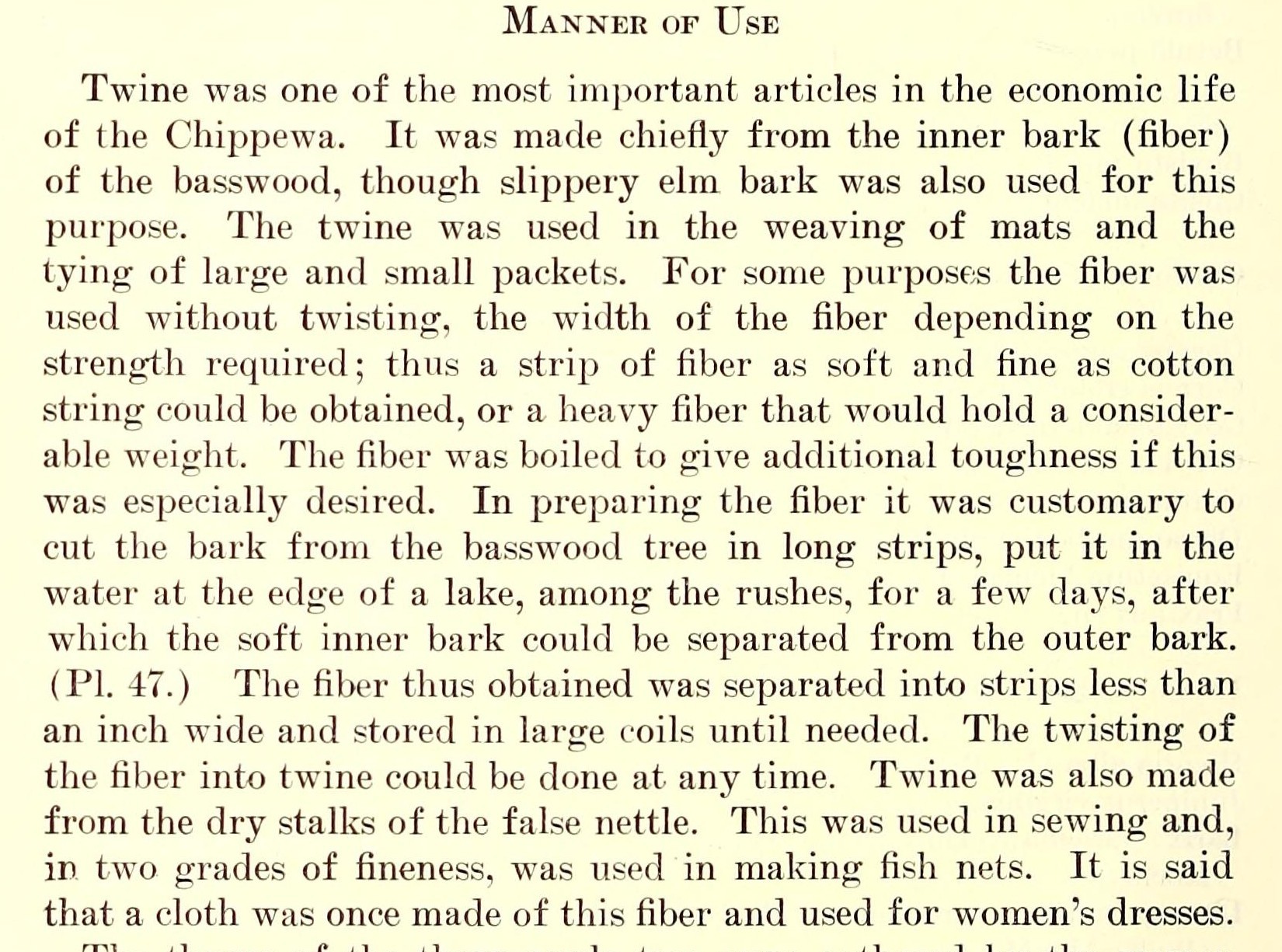


Chippewa Basswood Fiber and Twine: Bark Strips Soaked at the Lake Edge, Inner Bark Peeled and Coiled (Densmore, 1928)
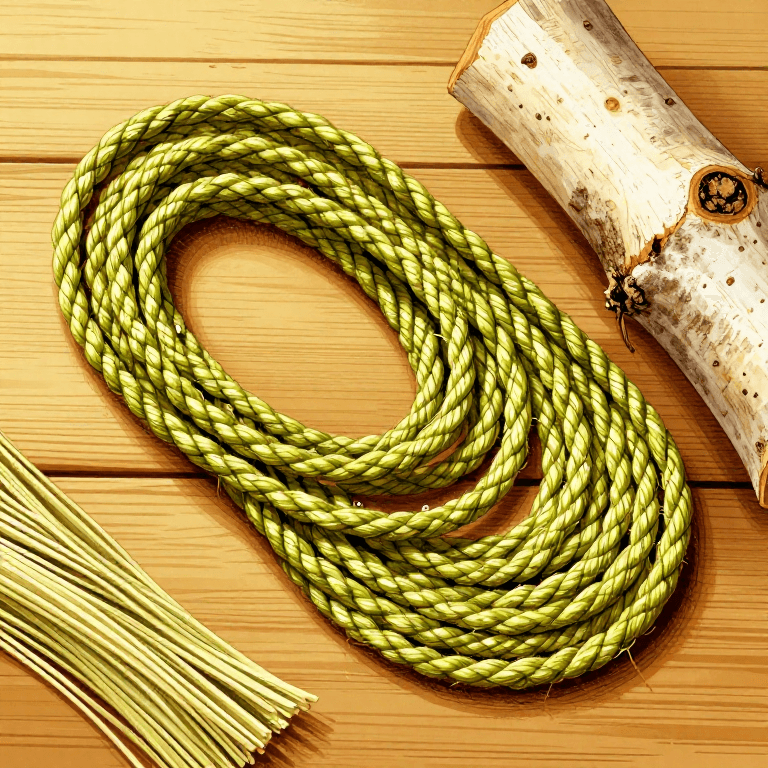
How the Chippewa (Ojibwe) got their most important twine, from Frances Densmore's record: long strips of basswood bark left a few days in the water among the rushes at a lake edge, the soft inner bark peeled off, split into strips under an inch wide and kept in coils, used flat or twisted into twine, and boiled when extra toughness was wanted.
ចាប់ផ្តើម
A few days of soaking, then an afternoon
ការណែនាំ
1
1
Read Densmore
Read Densmore
"Twine was one of the most important articles in the economic life of the Chippewa."
2
2
Cut the bark
Cut the bark
Cut the bark from a basswood tree in long strips. (Slippery elm bark was also used.)
សម្ភារៈសម្រាប់ជំហាននេះ៖
 ដុំឈើបាសវូដ (Tilia americana)1 ដុំ
ឧបករណ៍ដែលត្រូវការ៖
 កាំបិត
3
3
Soak at the lake edge
Soak at the lake edge
Put the strips in the water at the edge of a lake, among the rushes, for a few days.
សម្ភារៈសម្រាប់ជំហាននេះ៖
 ទឹក1 ដុំ
ឧបករណ៍ដែលត្រូវការ៖
កាំបិត4
4
Peel and coil the fiber
Peel and coil the fiber
Separate the soft inner bark from the outer bark. Split the fiber into strips less than an inch (25 mm) wide, narrow for string as soft and fine as cotton, wider for a heavy load. Store it in large coils, somewhat moist, in a dark, cool place.
ឧបករណ៍ដែលត្រូវការ៖
កាំបិត5
5
Toughen and twist
Toughen and twist
Boil the fiber if you want it extra tough. Use it flat for tying, or twist it into twine whenever you like. She does not say how; ours: roll two strands on the thigh so each twists one way, then let them wind round each other.
សម្ភារៈសម្រាប់ជំហាននេះ៖
ទឹក1 ដុំឧបករណ៍ដែលត្រូវការ៖
 កំសៀវដែក
 រណ្ដៅភ្លើង
6
6
Troubleshooting
Troubleshooting
Basswood fiber troubleshooting.
Flow
Loading...
7
7
History and honest limits
History and honest limits
From Frances Densmore, *Uses of Plants by the Chippewa Indians*, **44th Annual Report of the Bureau of American Ethnology** (1928), pp. 378-379 (checked on the archive.org scan usesofplantsbych00dens). The twine wove bulrush floor mats, passed over and under the rushes on a frame. Soaking time beyond "a few days", the knife, boiling time and the twisting method are not given; ours.

ប្លង់ពាក់ព័ន្ធ
ប្លង់ទាំងនេះចែករំលែកចំណេះដឹង — បច្ចេកទេស សម្ភារៈ ឬគោលការណ៍

CC0 សាធារណៈ
ប្លង់នេះត្រូវបានចេញផ្សាយក្រោម CC0។ អ្នកមានសិទ្ធិចម្លង កែប្រែ ចែកចាយ និងប្រើប្រាស់ដោយមិនចាំបាច់សុំអនុញ្ញាត។
គាំទ្រអ្នកបង្កើតដោយទិញផលិតផលតាមរយៈប្លង់របស់ពួកគេ ដែលពួកគេទទួលបាន កម្រៃជើងសារអ្នកបង្កើត កំណត់ដោយអ្នកលក់ ឬបង្កើតកំណែថ្មីនៃប្លង់នេះ ហើយបញ្ចូលជាការតភ្ជាប់ក្នុងប្លង់របស់អ្នកដើម្បីចែករំលែកចំណូល។