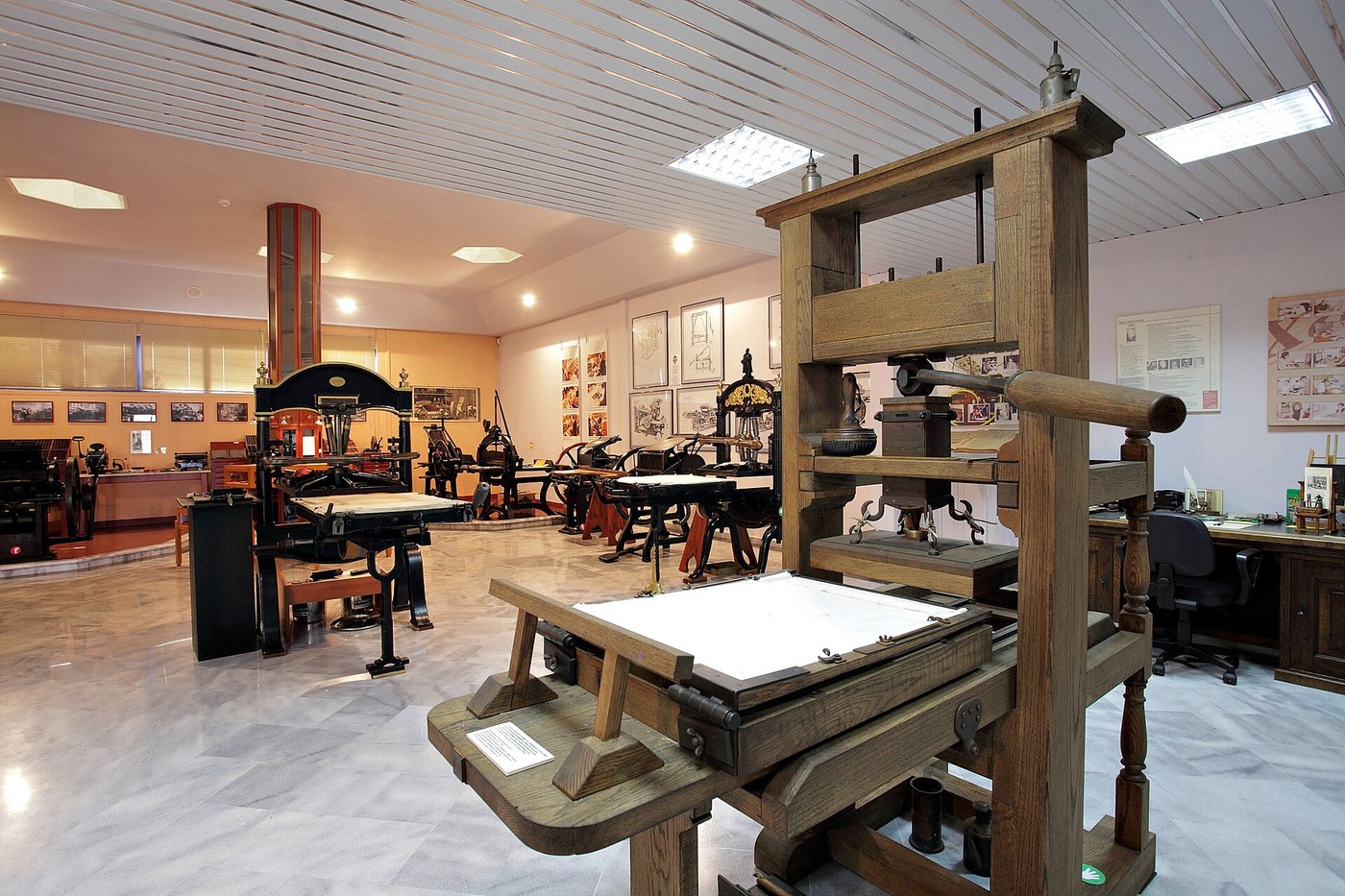


The Common Press
A page of type is a slab of several thousand separate pieces of metal standing on end. To print it you must press paper against all of them with even force, then lift the paper away without smudging, then do it again several hundred times a day — and put the second side down in exactly the right place relative to the first.
The screw press was borrowed wholesale from wine and olive pressing, which had solved "large steady force from a small effort" centuries earlier. But a wine press squeezes a shapeless mass. Printing needs three things a wine press never had.
Even pressure over a flat plane. The platen — a flat plate hung from the screw so it descends parallel rather than screwing itself into the paper.
Registration. The tympan, a hinged frame holding the sheet, with points — small spikes that pierce the paper so it can be laid back down in exactly the same position for the second side.
Masking. The frisket, a second hinged frame with windows cut in it, which covers the margins so only the type touches the sheet.
The whole assembly slides in and out on a carriage so the printer can ink the type between impressions without reaching under a suspended platen.
Almost none of that is about force. It is about doing the same thing identically, hundreds of times.
ការណែនាំ
Find out what uneven pressure does
Find out what uneven pressure does
Ink a flat block of type or a set of stamps and press a sheet down by hand, deliberately leaning on one corner.
Expect one side to print black and the far side to print faintly or not at all.
Now put a rigid flat board over the paper and press on its centre.
Expect a far more even impression.
The board is a platen, and it has just done the press's main job. Record how much more even the second attempt is — that difference is why a flat rigid plate hangs under the screw instead of the screw touching the paper.
Make the screw push without twisting
Make the screw push without twisting
Rig a screw so it bears on a loose plate rather than being fixed to it, and press an inked block.
Then fix the plate rigidly to the screw and try again.
Expect the fixed version to smear, because the plate turns as the screw turns and drags across the paper.
The historical answer is a swivel between screw and platen — the screw rotates, the platen only descends.
Note the general problem: converting rotation to pure linear motion at the last moment. It recurs in every clamp, vice and press, and getting it wrong shows up as a scuffed workpiece.
ឧបករណ៍ដែលត្រូវការ៖
 Bench Vise
Build the tympan and prove registration
Build the tympan and prove registration
Make a hinged frame that holds a sheet flat and folds down onto the type. Fit two small points that pierce the sheet.
Print one side. Then take the sheet off, turn it over, and place it back on the same two points to print the second side.
Hold the finished sheet up to a light.
Expect the two sides to back each other up closely. Then try it without the points, by eye, and compare.
Those two holes are why a book's pages line up through the whole volume — and the pin holes are still visible in the margins of early printed sheets.
Cut a frisket and see what it saves
Cut a frisket and see what it saves
Take an impression without masking, letting the sheet touch furniture and quoins around the type.
Expect grey smudges in the margins.
Now cut windows in a second hinged frame so only the type area is exposed, and print again.
Expect clean white margins.
The frisket also holds the sheet against the tympan as the whole assembly is swung down, which stops it drifting — so one component solves masking and handling together. That kind of double duty is a good sign a design has been refined by long use rather than designed once.
Time a full cycle and find the real bottleneck
Time a full cycle and find the real bottleneck
Run a complete cycle repeatedly and time each part: inking the type, laying the sheet, closing tympan and frisket, running the carriage in, pulling the bar, running out, opening, lifting the sheet.
Expect inking to dominate, and the pull itself to be a small fraction.
A trained two-person team worked to a few hundred impressions an hour, one inking while the other pulled.
That is why the press changed so little for 350 years while inking was mechanised first — rollers replacing leather ink balls — and why the later cylinder and rotary presses attacked continuous motion rather than pressure. Optimise the step that takes the time, not the step that looks impressive.
History & Context
History & Context
It was already in the barn. The screw press existed for wine, olives, cloth and paper long before printing. Gutenberg's workshop did not need to invent a way of making force — that was solved. What had to be invented was everything around it: the platen that stays parallel, the sliding carriage, the tympan and its points, the frisket. The famous machine is mostly fixtures, and the fixtures are the part that had to be new.
It barely changed for three and a half centuries. Wooden common presses of 1800 are recognisably those of 1500. Improvements were incremental — better screws, then iron frames such as the Stanhope, then Columbian and Albion presses using toggle linkages instead of a screw to get more force from a shorter pull. Only steam and the cylinder press broke the pattern, and the hand press survived alongside them for fine work.
Registration is the quiet triumph. Force is easy; repeatability is hard, and the points on a tympan are a locating fixture — the same idea as a jig, a dowel pin or a machine tool's datum face. Every manufacturing process that assembles parts made separately depends on this: define a reference, return to it exactly. A printer solved it with two spikes and a fold.
What it built. The press is why the Reformation spread faster than any authority could answer it, why scientific results could be compared rather than merely reported, and why a text could be identical in a thousand places — which is the precondition for citation, and therefore for argument at a distance. It did not preserve ideas by making them precious. It preserved them by making them numerous.
Honest limits. Slow, physically punishing work — pulling the bar all day was known to deform the body. The forme had to be locked up perfectly or type worked loose mid-run and pied across the floor. Only a modest area could be printed per pull, so large sheets needed two pulls with the carriage moved between them. And every sheet was handled individually, twice, which is the cost that eventually made the rotary press inevitable.
សម្ភារៈ
4- កន្លែងទុក
- 2 ដុំកន្លែងទុក
- 100 មលកន្លែងទុក
- 25 សន្លឹកកន្លែងទុក
ឧបករណ៍ចាំបាច់
4- កន្លែងទុក
- កន្លែងទុក
- កន្លែងទុក
- កន្លែងទុក
សម្ភារៈប្លង់ដែលបានភ្ជាប់
ប្លង់ពាក់ព័ន្ធ
ប្លង់ទាំងនេះចែករំលែកចំណេះដឹង — បច្ចេកទេស សម្ភារៈ ឬគោលការណ៍

CC0 សាធារណៈ
ប្លង់នេះត្រូវបានចេញផ្សាយក្រោម CC0។ អ្នកមានសិទ្ធិចម្លង កែប្រែ ចែកចាយ និងប្រើប្រាស់ដោយមិនចាំបាច់សុំអនុញ្ញាត។
គាំទ្រអ្នកបង្កើតដោយទិញផលិតផលតាមរយៈប្លង់របស់ពួកគេ ដែលពួកគេទទួលបាន កម្រៃជើងសារអ្នកបង្កើត កំណត់ដោយអ្នកលក់ ឬបង្កើតកំណែថ្មីនៃប្លង់នេះ ហើយបញ្ចូលជាការតភ្ជាប់ក្នុងប្លង់របស់អ្នកដើម្បីចែករំលែកចំណូល។