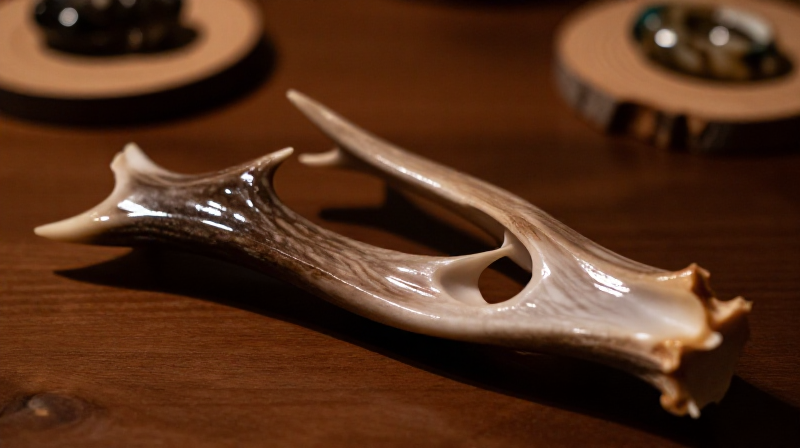


Cutting Decorative Deer Antler Slices — Polished Rounds for Display and Jewelry
A cross-section slice of deer antler reveals a striking natural pattern — the hard, glossy cortex ring surrounding an intricate network of cancellous bone that looks like fine lacework under polish. Each slice is unique in diameter, colour, and internal pattern. Polished antler slices make attractive coasters, pendants, Christmas ornaments, and display pieces.
This blueprint covers cutting thin rounds from a deer antler beam, wet-sanding to a high polish, optionally drilling a hanging hole, and sealing with linseed oil and beeswax to preserve the natural grain pattern.
ការណែនាំ
Select the beam section
Select the beam section
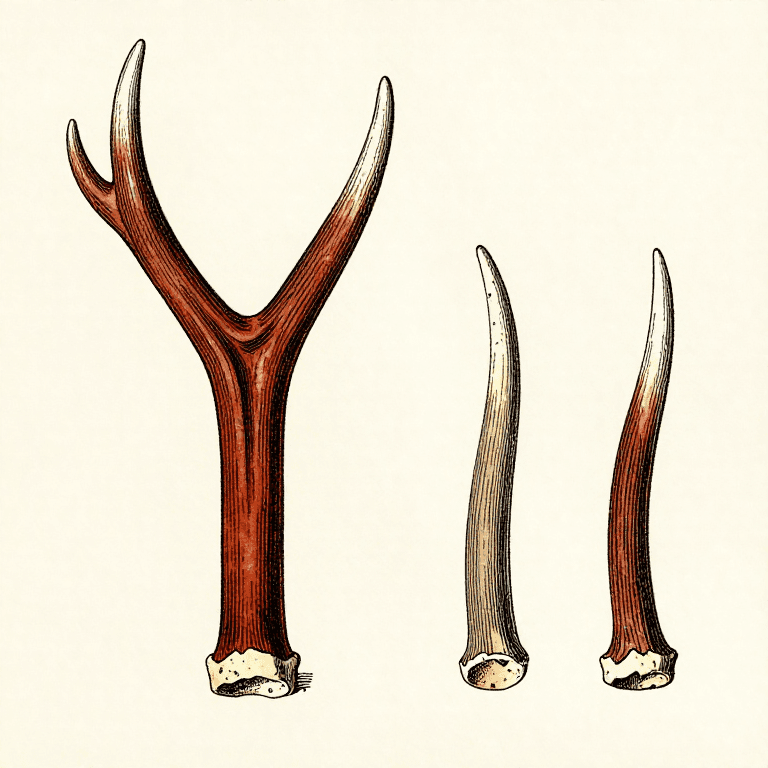
Choose the thickest part of the main beam for the largest slices — the lower beam near the coronet (the bumpy ring at the base) can be 50-70 mm in diameter on a mature white-tailed deer. For pendants, thinner tine sections (15-25 mm) work well. Avoid cracked or sun-bleached antler.
សម្ភារៈសម្រាប់ជំហាននេះ៖
 កំណាត់ស្នែងក្តាន់1 ដុំ
 ក្តាន់1 ដុំ
Saw thin rounds
Saw thin rounds
Clamp in a bench vise and cut slices 6-10 mm thick with a fine-toothed hacksaw. Thicker slices (8-10 mm) work for coasters and ornaments; thinner ones (6 mm) for pendants. Saw slowly and evenly to keep both faces parallel. Mark cut lines with a pencil for uniform thickness.
ឧបករណ៍ដែលត្រូវការ៖
 ដង្កាប់តុ
 រណារកាត់ដែក
Sand and polish both faces
Sand and polish both faces
Sand flat on sandpaper laid on a hard surface. Start at 120 grit to flatten saw marks, then 220, 400, and finally 800 grit for a high polish. Wet-sand at 400+ grit — water keeps the dust down and produces a smoother finish. The cortex ring polishes to a glassy sheen; the spongy centre shows an intricate bone-grain pattern.
សម្ភារៈសម្រាប់ជំហាននេះ៖
 ក្រដាសខាត់1 សន្លឹកក្រដាសខាត់1 សន្លឹកក្រដាសខាត់1 សន្លឹកក្រដាសខាត់1 សន្លឹក
Drill a hanging hole for pendants
Drill a hanging hole for pendants
For pendants or ornaments, drill a 2 mm hole near the edge of the cortex ring. Position it in the thickest part of the cortex so it does not crack through to the spongy centre. Drill at low speed on a scrap board backing. Skip this step for coasters or display pieces.
ឧបករណ៍ដែលត្រូវការ៖
 ស្វានឥតខ្សែ
 សំណុំក្បាលខួង
Seal with oil and wax
Seal with oil and wax
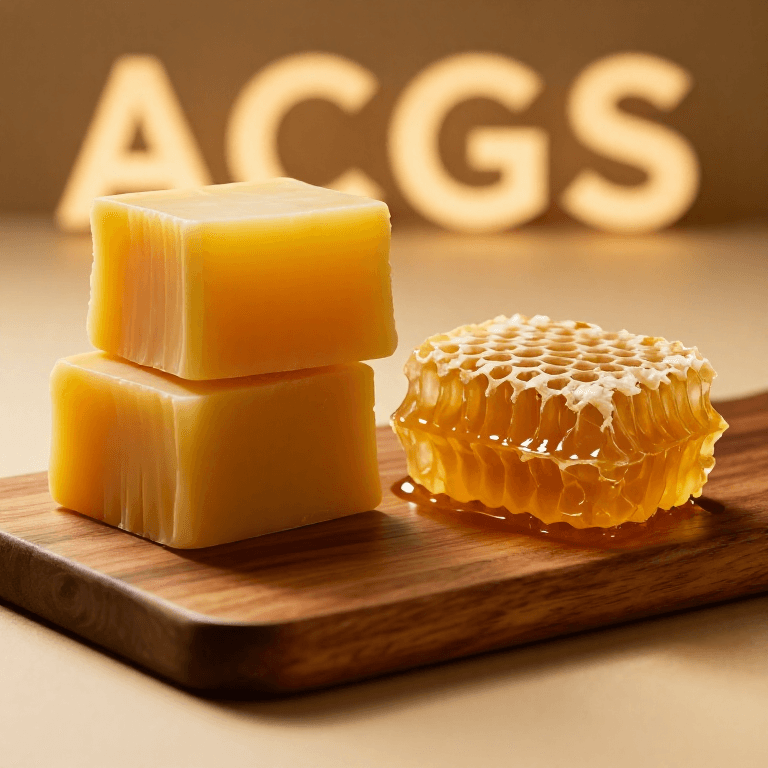
Apply boiled linseed oil to both faces with a cloth, let it soak in for 10 minutes, then wipe dry. Once the oil dries (24 hours), buff with a thin layer of beeswax for a protective sheen. The oil deepens the natural colour contrast between cortex and core; the wax prevents the spongy centre from absorbing moisture or staining.
សម្ភារៈសម្រាប់ជំហាននេះ៖
 ប្រេងលីនស៊ីតដាំ30 មល
 គ្រាប់ក្រមួនឃ្មុំ15 ក្រ
សម្ភារៈ
8- 1 ដុំកន្លែងទុក
- 1 ដុំកន្លែងទុក
- 1 សន្លឹកកន្លែងទុក
- 1 សន្លឹកកន្លែងទុក
- 1 សន្លឹកកន្លែងទុក
- 1 សន្លឹកកន្លែងទុក
- 30 មលកន្លែងទុក
- 15 ក្រកន្លែងទុក
ឧបករណ៍ចាំបាច់
4- កន្លែងទុក
- កន្លែងទុក
- 1 vendor sell this, none ship to you yetកន្លែងទុក
- កន្លែងទុក
សម្ភារៈប្លង់ដែលបានភ្ជាប់

ប្លង់ពាក់ព័ន្ធ
ប្លង់ទាំងនេះចែករំលែកចំណេះដឹង — បច្ចេកទេស សម្ភារៈ ឬគោលការណ៍
CC0 សាធារណៈ
ប្លង់នេះត្រូវបានចេញផ្សាយក្រោម CC0។ អ្នកមានសិទ្ធិចម្លង កែប្រែ ចែកចាយ និងប្រើប្រាស់ដោយមិនចាំបាច់សុំអនុញ្ញាត។
គាំទ្រអ្នកបង្កើតដោយទិញផលិតផលតាមរយៈប្លង់របស់ពួកគេ ដែលពួកគេទទួលបាន កម្រៃជើងសារអ្នកបង្កើត កំណត់ដោយអ្នកលក់ ឬបង្កើតកំណែថ្មីនៃប្លង់នេះ ហើយបញ្ចូលជាការតភ្ជាប់ក្នុងប្លង់របស់អ្នកដើម្បីចែករំលែកចំណូល។