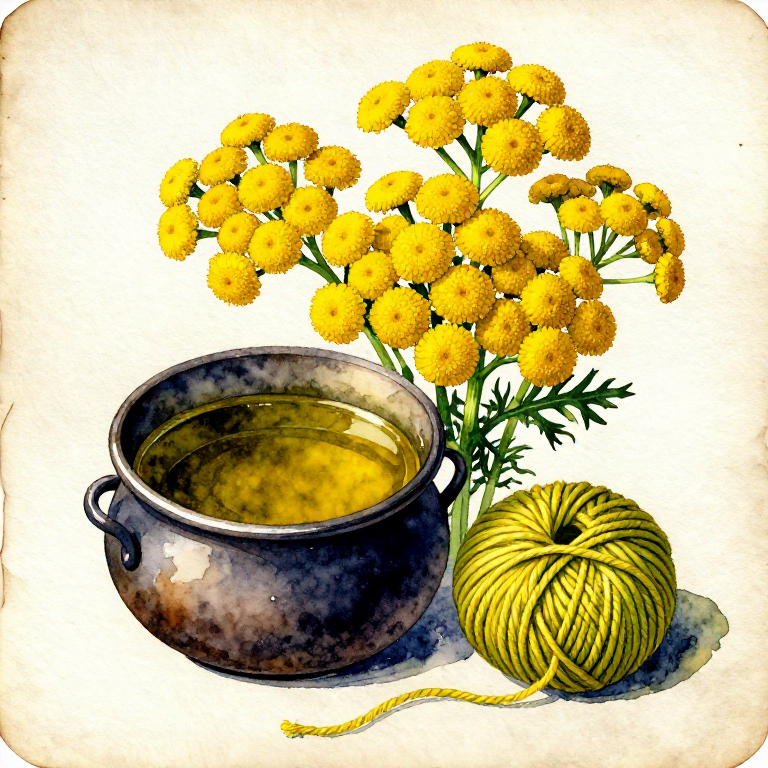

Dyeing Yellow-Green with Tansy — The Bitter Herb of Medieval Dye Gardens
Tansy (Tanacetum vulgare) is a vigorous perennial herb native to temperate Europe and Asia. Its flat-topped clusters of button-like yellow flowers and strongly aromatic, fern-like leaves have made it one of the most recognisable herbs of the European countryside. In medieval Europe, tansy was a dual-purpose plant: valued both as a medicinal and culinary herb and as a textile dye source. The flowers and leaves contain flavonoid pigments — primarily luteolin — that produce warm yellow to yellow-green shades on alum-mordanted wool.
Tansy was a staple of the medieval dye garden because it grows aggressively, self-seeds freely, and produces abundant biomass with minimal care. A single plant can yield several kilograms of fresh material per season. The dried flowers retain their dye value well, and tansy was one of the plants regularly stockpiled by household dyers for winter dyeing. In Scandinavian textile traditions, tansy yellow appears frequently in extant medieval fabrics — its availability in northern climates where weld grows less readily made it an important regional substitute.
The colour from tansy varies with the plant part used and the time of harvest. Flowers picked at full bloom give the brightest yellow. Leaves harvested earlier in the season give a more green-tinted yellow. With iron modification, both shift to a soft olive-green — one of the most natural-looking greens achievable from a single plant dye without over-dyeing with blue.
ការណែនាំ
Weigh the dried tansy flowers and leaves
Weigh the dried tansy flowers and leaves
Use 100-150% WOF of dried tansy — flowers and upper leaves together give the richest colour. For 100 g of wool, weigh out 100-150 g of dried plant material. Harvest tansy when the button flowers are fully open and bright yellow. Cut the top 20-30 cm of stems (flowers and upper leaves), bundle loosely, and hang to dry in shade for 1-2 weeks. The dried material should still have a strong, bitter herbal scent — this indicates the essential oils and flavonoids are well preserved.
សម្ភារៈសម្រាប់ជំហាននេះ៖
 ផ្កា និងស្លឹកតង់ស៊ី (សម្ងួត)120 ក្រ
ឧបករណ៍ដែលត្រូវការ៖
 ជញ្ជីងឌីជីថលផ្ទះបាយ
Soak the tansy in warm water for one hour
Soak the tansy in warm water for one hour
Place the dried tansy in a dye pot with 4 litres of warm water and soak for at least one hour. The water will quickly turn a golden-green as the flavonoids dissolve. Tansy releases colour relatively quickly because the flowers and leaves are thin-walled. Pressing the plant material below the water surface ensures even extraction. The liquid will develop a strong herbal smell during soaking — this is normal and expected.
ឧបករណ៍ដែលត្រូវការ៖
 ឆ្នាំងស្តុកធំ
Simmer the tansy for 30-40 minutes
Simmer the tansy for 30-40 minutes
Bring the pot to a gentle simmer (80-85°C) and hold for 30-40 minutes. Stir occasionally. The liquid will deepen to a rich golden-green. Do not boil — excessive heat dulls the colour and can introduce an unpleasant bitterness to the dye liquor. The flowers will lose their bright yellow colour as the pigment transfers to the water. After 30-40 minutes, most of the dye will be extracted.
ឧបករណ៍ដែលត្រូវការ៖
 ទែម៉ូម៉ែត្រចម្អិន
 វែកឈើ
វែកឈើStrain out the plant material
Strain out the plant material
Strain the dye liquor through a fine mesh strainer into a clean pot. Tansy stems and leaves can tangle with wool and cause uneven colouring — strain thoroughly. Press the spent plant material to extract all remaining liquid. The strained dye bath should be a clear, warm golden-green.
ឧបករណ៍ដែលត្រូវការ៖
 ចម្រោះល្អិត
Dye alum-mordanted wool at 80°C for 45 minutes
Dye alum-mordanted wool at 80°C for 45 minutes
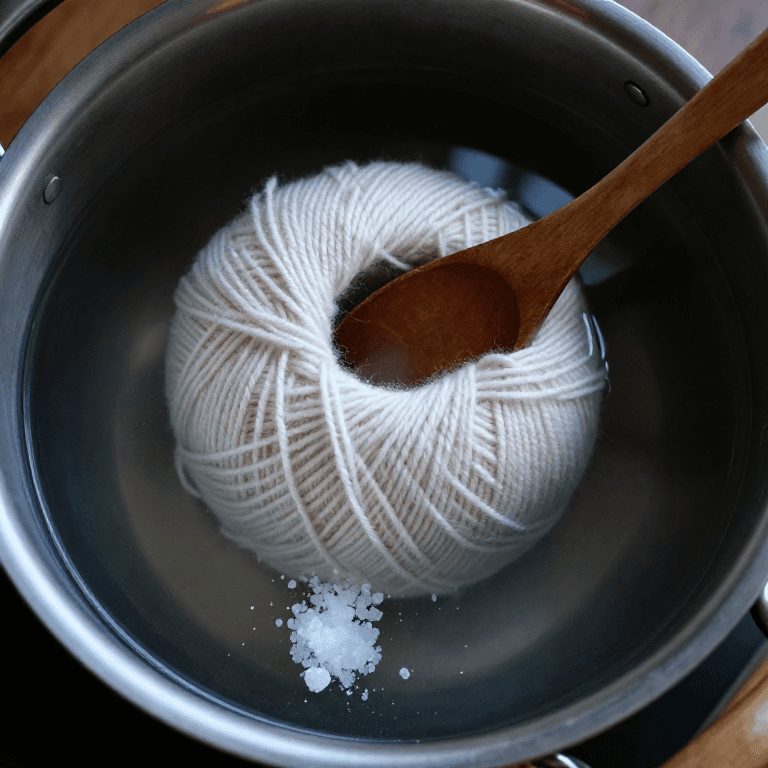
Pre-wet the alum-mordanted wool in lukewarm water for 15 minutes, squeeze gently, and lower it into the tansy dye bath at room temperature. Slowly raise to 80°C over 15 minutes, then hold for 45 minutes. Turn gently every 10 minutes. The wool will absorb the dye steadily, developing a warm yellow with a subtle green undertone — this green note is what distinguishes tansy from purer yellows like weld or goldenrod. The alum mordant produces the brightest, most saturated result.
សម្ភារៈសម្រាប់ជំហាននេះ៖
 ក្រវាត់អំបោះរោម100 ក្រ
 សាច្ចុ (ប៉ូតាស្យូមអាឡុម)10 ក្រ
Cool, rinse, and dry
Cool, rinse, and dry
Turn off the heat and let the wool cool in the dye bath overnight. Remove, squeeze gently, and rinse in lukewarm water until the runoff is clear. The final colour is a warm yellow-green — sunny yellow with a subtle earthy green undertone that varies depending on whether flowers or leaves predominated in the dye pot. Tansy has moderate lightfastness — better than many wildflower dyes but not as permanent as weld. Suitable for garments and household textiles with moderate light exposure. Dry in shade.
សម្ភារៈ
3- 120 ក្រកន្លែងទុក
- 100 ក្រកន្លែងទុក
- 10 ក្រកន្លែងទុក
ឧបករណ៍ចាំបាច់
5- កន្លែងទុក
- កន្លែងទុក
- កន្លែងទុក
- កន្លែងទុក
- កន្លែងទុក
សម្ភារៈប្លង់ដែលបានភ្ជាប់
ប្លង់ពាក់ព័ន្ធ
ប្លង់ទាំងនេះចែករំលែកចំណេះដឹង — បច្ចេកទេស សម្ភារៈ ឬគោលការណ៍
Dyeing Yellow with Marigold — The Sacred Aztec Flower Dye
ដោយ Tex
វាយនភណ្ឌ និង ស្បែក
Iron Saddening — Darkening and Shifting Natural Dye Colours with Iron Water
ដោយ Tex
វាយនភណ្ឌ និង ស្បែក
Dyeing Yellow with Yarrow — The Ancient Wound-Herb of Every Meadow
ដោយ Tex
វាយនភណ្ឌ និង ស្បែក
Dyeing Yellow-Green with Nettle — The Universal Wild Dye Plant
ដោយ Tex
វាយនភណ្ឌ និង ស្បែក
CC0 សាធារណៈ
ប្លង់នេះត្រូវបានចេញផ្សាយក្រោម CC0។ អ្នកមានសិទ្ធិចម្លង កែប្រែ ចែកចាយ និងប្រើប្រាស់ដោយមិនចាំបាច់សុំអនុញ្ញាត។
គាំទ្រអ្នកបង្កើតដោយទិញផលិតផលតាមរយៈប្លង់របស់ពួកគេ ដែលពួកគេទទួលបាន កម្រៃជើងសារអ្នកបង្កើត កំណត់ដោយអ្នកលក់ ឬបង្កើតកំណែថ្មីនៃប្លង់នេះ ហើយបញ្ចូលជាការតភ្ជាប់ក្នុងប្លង់របស់អ្នកដើម្បីចែករំលែកចំណូល។