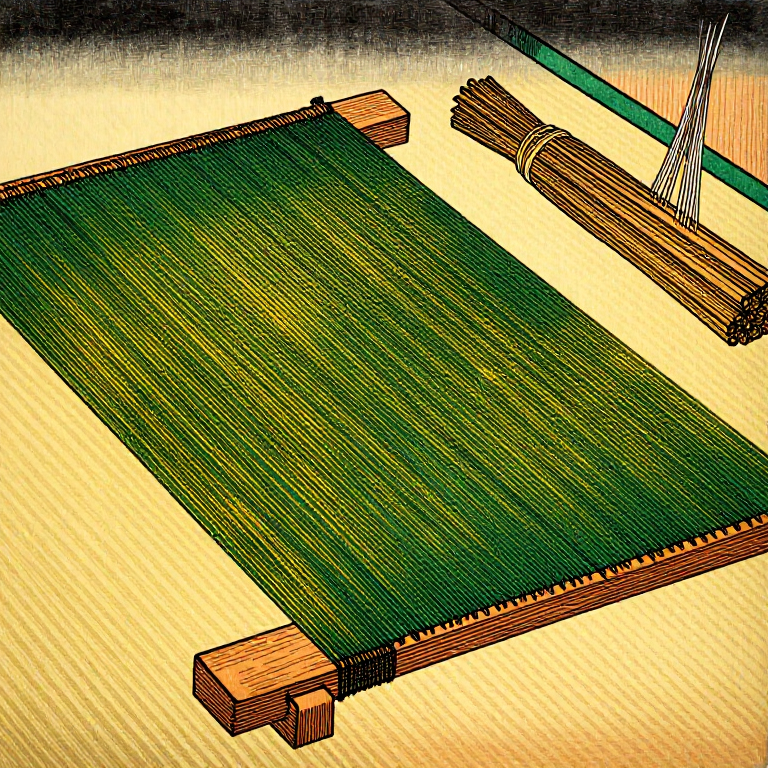


Weaving a Rush Tatami Mat Cover — Igusa Rush Weaving
ការណែនាំ
Prepare the Igusa Rush
Prepare the Igusa Rush
Sort dried igusa rush stalks by length and diameter, discarding any that are broken, discoloured, or too thin. Traditionally, igusa is harvested in midsummer when the stalks are at their longest (100-150cm) and most uniform. After harvest, the stalks are dried in the sun and optionally coated with a thin clay mud (doro-zome) that gives them the characteristic blue-green colour and pleasant earthy fragrance. Before weaving, soak the dried igusa in water for 30-60 minutes to restore flexibility — dry rush snaps when bent. Drain and keep the stalks wrapped in a damp cloth during weaving. Each stalk is used whole, not split, laid side by side to form the mat surface.
សម្ភារៈសម្រាប់ជំហាននេះ៖
 ដើមត្រែងស្ងួត2-3 kg (for a half-size mat cover) គក
 កប្បាស50-80m m
 ដីឥដ្ឋបេនតូនីតas needed ដុំ
ឧបករណ៍ដែលត្រូវការ៖
 តម្បាញសិតរឹង
 ឈុតម្ជុលដេរ
 ឆ្អឹង
ឆ្អឹងSet Up the Warp Threads
Set Up the Warp Threads
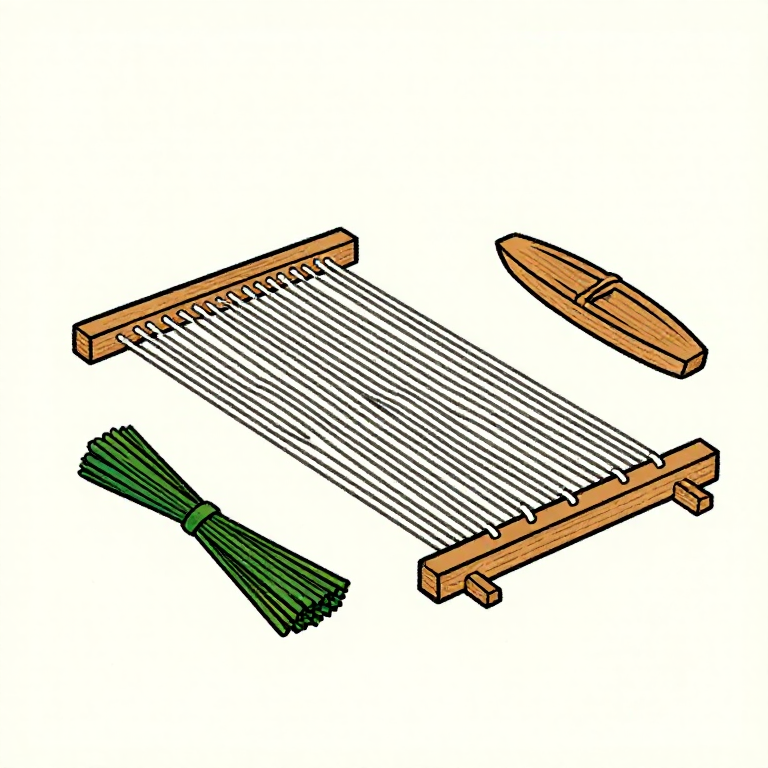
String cotton or hemp warp threads lengthwise on the weaving frame, spacing them 3-4cm apart across the full width of the intended mat cover (approximately 90cm for a standard tatami). The warp threads are what hold the igusa in place — they run the length of the mat and are hidden between the rush stalks in the finished product. Tension the warp threads evenly. Traditional tatami looms have a mechanism to lift alternate warp threads (creating a shed) for faster weaving, but a simple frame loom with manual thread lifting works for a single mat cover.
Weave the Rush Rows
Weave the Rush Rows
Lay the first igusa stalk across the warp threads, perpendicular to them. Lift alternate warp threads and pass the stalk through the shed. Beat the stalk down firmly against the starting edge of the frame using a flat reed beater. Lay the next stalk, lifting the opposite set of warp threads, and beat down. Continue row by row, alternating the shed with each stalk. Each stalk must lie perfectly straight and parallel to its neighbours — even small angles become visible as wavy lines in the finished mat surface. Pack the stalks tightly together so no warp thread is visible between them. Use stalks of consistent diameter in each area for a uniform appearance.
Maintain Even Density and Trim Edges
Maintain Even Density and Trim Edges
As you weave, check the density by pressing down on the surface — it should feel firm and uniform with no soft spots or ridges. Periodically measure the width to ensure the mat is not narrowing or widening as you work. If the rush varies in diameter, alternate thick and thin stalks to maintain even surface thickness. At each side edge, the igusa stalks should extend 1-2cm beyond the outermost warp thread. After the weaving is complete, these protruding ends are trimmed flush with sharp scissors. The trimmed edges will be covered by the binding strip (tatami-beri) in the final assembly.
Remove and Finish the Mat Cover
Remove and Finish the Mat Cover
Cut the warp threads from the frame, leaving enough length at each end to tie off or fold under. Tie adjacent warp threads together at both ends to prevent the weave from loosening. Trim any uneven stalk ends along the sides. The finished mat cover (tatami-omote) is the visible face of the tatami mat. In traditional assembly, it is stretched over a compressed rice straw core (tatami-doko) approximately 5-6cm thick and bound with a decorative fabric strip (tatami-beri) along the long edges. Fresh igusa has a sweet, grassy fragrance that is one of the defining sensory experiences of a Japanese room. The colour gradually changes from green to golden yellow over months of use and sun exposure. A well-woven tatami cover lasts 5-10 years before it needs replacing.
សម្ភារៈ
5- 2-3 kg (for a half-size mat cover) គកកន្លែងទុក
- 50-80m mកន្លែងទុក
- as needed ដុំកន្លែងទុក
- 2-3 kg (for a half-size mat cover) ដុំកន្លែងទុក
- as needed ដុំកន្លែងទុក
ឧបករណ៍ចាំបាច់
8- កន្លែងទុក
- កន្លែងទុក
- កន្លែងទុក
- Sharp scissors or knife
- កន្លែងទុក
- កន្លែងទុក
- កន្លែងទុក
- កន្លែងទុក
CC0 សាធារណៈ
ប្លង់នេះត្រូវបានចេញផ្សាយក្រោម CC0។ អ្នកមានសិទ្ធិចម្លង កែប្រែ ចែកចាយ និងប្រើប្រាស់ដោយមិនចាំបាច់សុំអនុញ្ញាត។
គាំទ្រអ្នកបង្កើតដោយទិញផលិតផលតាមរយៈប្លង់របស់ពួកគេ ដែលពួកគេទទួលបាន កម្រៃជើងសារអ្នកបង្កើត កំណត់ដោយអ្នកលក់ ឬបង្កើតកំណែថ្មីនៃប្លង់នេះ ហើយបញ្ចូលជាការតភ្ជាប់ក្នុងប្លង់របស់អ្នកដើម្បីចែករំលែកចំណូល។