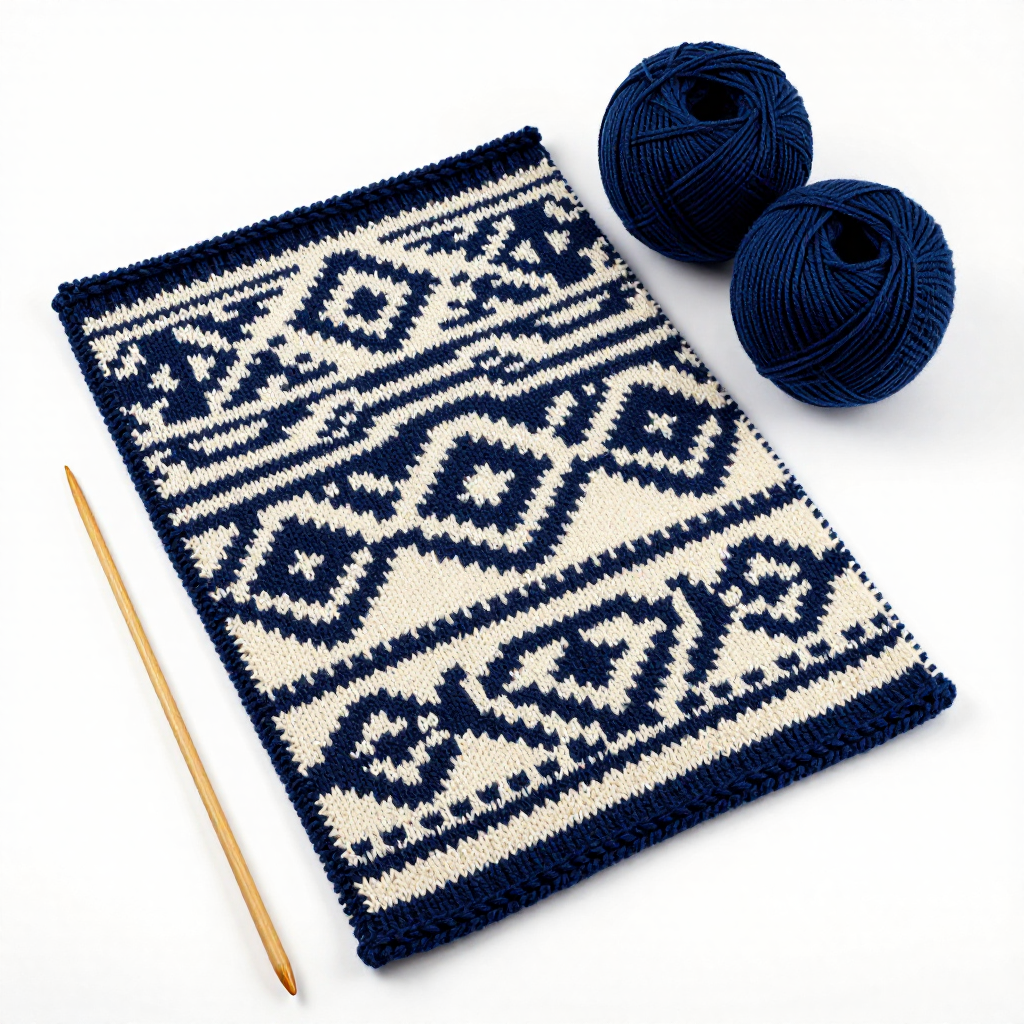

Fair Isle Stranded Colourwork — Knitting with Two Colours Per Row
Fair Isle is a stranded colourwork technique named after Fair Isle, a tiny island halfway between Orkney and Shetland in the North Sea. The technique involves knitting with two colours in the same row — one colour is knitted while the other floats across the back of the fabric, carried loosely behind the stitches until it is needed again. The floats create a double-layered fabric that is warmer, thicker, and more wind-resistant than single-colour knitting. This is not decorative excess — Fair Isle knitting evolved among island fishermen and crofters who needed garments that could withstand North Atlantic weather.
Traditional Fair Isle patterns use no more than two colours per row, change colours frequently (usually every 1-5 stitches to keep floats short), and never carry a yarn more than 5-7 stitches without catching it behind the working yarn. The patterns are geometric — stacked bands of repeating motifs such as OXO (a cross and circle pattern), stars, diamonds, anchors, and peerie (small all-over) patterns. Each band typically uses a different pair of colours drawn from a limited palette of natural dyes: indigo blue, madder red, onion-skin gold, and the natural whites and browns of Shetland sheep.
Fair Isle knitting entered mainstream fashion in 1921 when the Prince of Wales (later Edward VIII) wore a Fair Isle pullover on the golf course at St Andrews. The resulting fashion boom transformed Fair Isle from a subsistence craft into a recognized textile tradition. Authentic Fair Isle garments are still knitted on the island today, though the technique is practiced worldwide.
ការណែនាំ
Choose two contrasting yarns
Choose two contrasting yarns
Select two colours of the same weight and fibre — ideally Shetland-weight wool (equivalent to modern fingering or sport weight, roughly 25-27 stitches per 10 cm on 3.25 mm needles). The two colours must have strong contrast: a dark main colour (MC) and a light contrast colour (CC) — or vice versa. Traditional Fair Isle uses natural Shetland sheep colours (moorit brown, shaela grey, white, black) alongside dyed colours (madder red, indigo blue). For a first swatch, use a dark and a light in any wool yarn you already have. Avoid slippery yarns (cotton, silk, bamboo) — wool's natural grip keeps the two strands from tangling as badly.
សម្ភារៈសម្រាប់ជំហាននេះ៖
 ក្រវាត់អំបោះរោម2 ដុំ
 ម្ជុលចាក់អំបោះ1 ឈុត
Cast on and knit a base
Cast on and knit a base
Cast on 32 stitches in your main colour (MC) using a long-tail cast-on. Knit 4-6 rows in MC only (garter stitch or stockinette) to create a base before introducing the second colour. This gives you a stable edge to work from and a clear visual separation when the colourwork begins. If working flat, alternate knit and purl rows for stockinette; if working in the round on DPNs or a circular needle, knit every round.
Hold two yarns simultaneously
Hold two yarns simultaneously
There are two common methods for holding two yarns. Method 1 (two-handed): hold MC in your right hand (English/throwing style) and CC in your left hand (Continental/picking style). This is the fastest method because you never drop either yarn — you throw with one hand and pick with the other. Method 2 (one-handed): hold both yarns in your left hand (or right), with MC over the index finger and CC over the middle finger. This is slower but works if you only know one knitting style. Whichever method you choose, keep the yarns consistent: MC always in the same hand/position, CC always in the other. Switching positions mid-row creates uneven tension.
Knit the first colourwork row
Knit the first colourwork row
Begin with a simple pattern: knit 3 MC, 1 CC, repeat across the row. When you knit with MC, the CC yarn floats behind the work — it is carried loosely across the wrong side, not wrapped around the needle. When you switch to CC, drop MC (let it hang behind) and knit one stitch with CC, then switch back. The yarn you are not using must always stay on the wrong side (the back in stockinette). On the return purl row (if working flat), the floats will be on the side facing you — purl with whichever colour the pattern calls for, carrying the unused yarn across the front (which is the wrong side when purling).
Read a colourwork chart
Read a colourwork chart
Fair Isle patterns are read from a chart — a grid where each square represents one stitch, coloured or marked to show which yarn to use. Charts are read from bottom to top (row 1 is at the bottom), and right-side rows are read right to left (matching the direction you knit). Wrong-side (purl) rows are read left to right. In the round, every row is read right to left because you always face the right side. A simple OXO chart might show: row 1: 1 MC, 1 CC, repeat; row 2: 1 CC, 1 MC, repeat — creating a tiny checkerboard. Traditional Fair Isle charts stack multiple pattern bands vertically, separated by peerie (small filler) rows.
Manage float length — the 5-stitch rule
Manage float length — the 5-stitch rule
The cardinal rule of stranded colourwork: never carry a float longer than 5 stitches. Long floats snag on fingers and buttons when putting on the garment, and they create loose spots in the fabric. Traditional Fair Isle patterns are specifically designed so that no colour runs more than 5 stitches without being used — the geometric patterns naturally alternate colours frequently. If a pattern requires carrying a yarn more than 5 stitches, you must catch the float (see next step). When carrying a float, spread the stitches on the right needle slightly apart before switching colours — this prevents the float from pulling the fabric too tight.
Catch long floats
Catch long floats
To catch a float: at the midpoint of a long run of one colour, twist the unused yarn around the working yarn once, then continue knitting with the working colour. The caught yarn is trapped behind a stitch without being knitted into it. To catch on a knit stitch: insert the needle as normal, lay the unused yarn over the needle, wrap the working yarn and knit the stitch, then drop the unused yarn off the needle. The unused yarn is trapped between the stitch and the fabric but does not appear on the right side if done correctly. Catch floats every 3-4 stitches when a colour is not used for a long stretch.
Maintain even tension across colours
Maintain even tension across colours
The most common problem in Fair Isle knitting is puckering — the fabric bunches and pulls because the floats are too tight. The floats must be the same length as the stitches they span when the fabric is relaxed. After knitting a few stitches in one colour, spread the stitches on the right needle apart before picking up the other colour — this ensures the float has enough slack. Some knitters work colourwork on needles one size larger than they would use for plain stockinette, to compensate for the natural tendency to knit tighter with two yarns. Check tension by turning the work over and examining the floats: they should lie flat against the back without pulling or looping.
Knit a traditional OXO pattern band
Knit a traditional OXO pattern band
The OXO pattern is one of the oldest and most recognizable Fair Isle motifs — alternating crosses (X) and circles (O) in a horizontal band. Chart for a 6-stitch repeat over 7 rows: Row 1: 1CC, 5MC. Row 2: 1MC, 1CC, 3MC, 1CC. Row 3: 2MC, 1CC, 1MC, 1CC, 1MC. Row 4: 1MC, 1CC, 1MC, 1CC, 1MC, 1CC. Row 5: same as row 3. Row 6: same as row 2. Row 7: same as row 1. Repeat this 6-stitch motif across the row. After completing one band, knit 2-3 rows of peerie pattern (1MC, 1CC alternating checkerboard) before starting the next motif band. This creates the characteristic stacked-band structure of Fair Isle.
Examine the double-layered fabric
Examine the double-layered fabric
After knitting 20-30 rows of colourwork, turn the swatch over and examine the wrong side. The floats create a dense lattice of carried yarn behind every stitch — effectively a second layer of fabric. Pinch the colourwork section and compare its thickness to the plain stockinette base: the colourwork is nearly twice as thick. This double layer is why Fair Isle garments are so warm and wind-resistant. The floats trap dead air between the two layers, creating insulation. Shetland fishermen's ganseys (sweaters) used this property deliberately — the patterned yoke and upper body, where wind hits hardest, is colourwork while the lower body and sleeves are plain.
Understand yarn dominance
Understand yarn dominance
In stranded colourwork, one yarn always sits slightly in front of the other on the wrong side — the yarn that sits in front produces slightly larger, more prominent stitches on the right side. This is called yarn dominance. The yarn held in the left hand (Continental position) typically dominates — it produces the more visible stitch. In traditional Fair Isle, the pattern colour (CC) is held in the dominant position so the motifs pop against the background. This is a subtle effect but becomes visible over large areas of colourwork. Consistency matters more than which position you choose — pick one arrangement and maintain it throughout the entire garment.
សម្ភារៈ
2- 2 ដុំកន្លែងទុក
- 1 ឈុតកន្លែងទុក
សម្ភារៈប្លង់ដែលបានភ្ជាប់
Knitting a Flat Swatch on Two Needles — The Knit Stitch and Garter Stitch
ដោយ Tex
វាយនភណ្ឌ និង ស្បែក
The Purl Stitch and Stockinette Fabric — Knitting's Second Foundation
ដោយ Tex
វាយនភណ្ឌ និង ស្បែក
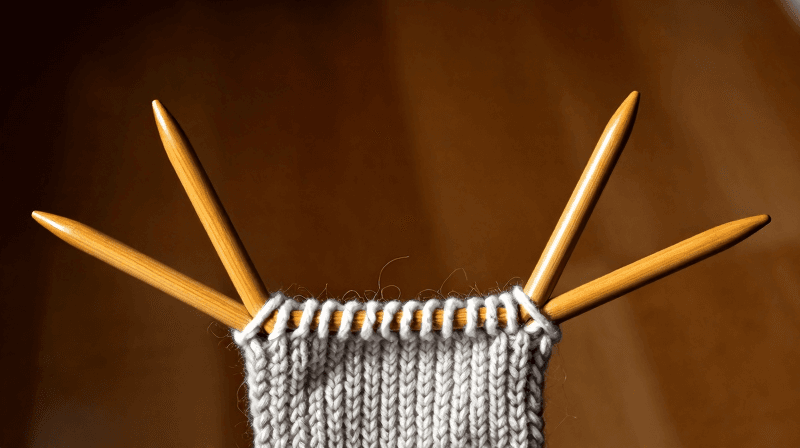
Knitting in the Round on Double-Pointed Needles — Seamless Tubes for Socks, Hats and Mittens
ដោយ Tex
វាយនភណ្ឌ និង ស្បែក
ប្លង់ពាក់ព័ន្ធ
ប្លង់ទាំងនេះចែករំលែកចំណេះដឹង — បច្ចេកទេស សម្ភារៈ ឬគោលការណ៍
CC0 សាធារណៈ
ប្លង់នេះត្រូវបានចេញផ្សាយក្រោម CC0។ អ្នកមានសិទ្ធិចម្លង កែប្រែ ចែកចាយ និងប្រើប្រាស់ដោយមិនចាំបាច់សុំអនុញ្ញាត។
គាំទ្រអ្នកបង្កើតដោយទិញផលិតផលតាមរយៈប្លង់របស់ពួកគេ ដែលពួកគេទទួលបាន កម្រៃជើងសារអ្នកបង្កើត កំណត់ដោយអ្នកលក់ ឬបង្កើតកំណែថ្មីនៃប្លង់នេះ ហើយបញ្ចូលជាការតភ្ជាប់ក្នុងប្លង់របស់អ្នកដើម្បីចែករំលែកចំណូល។