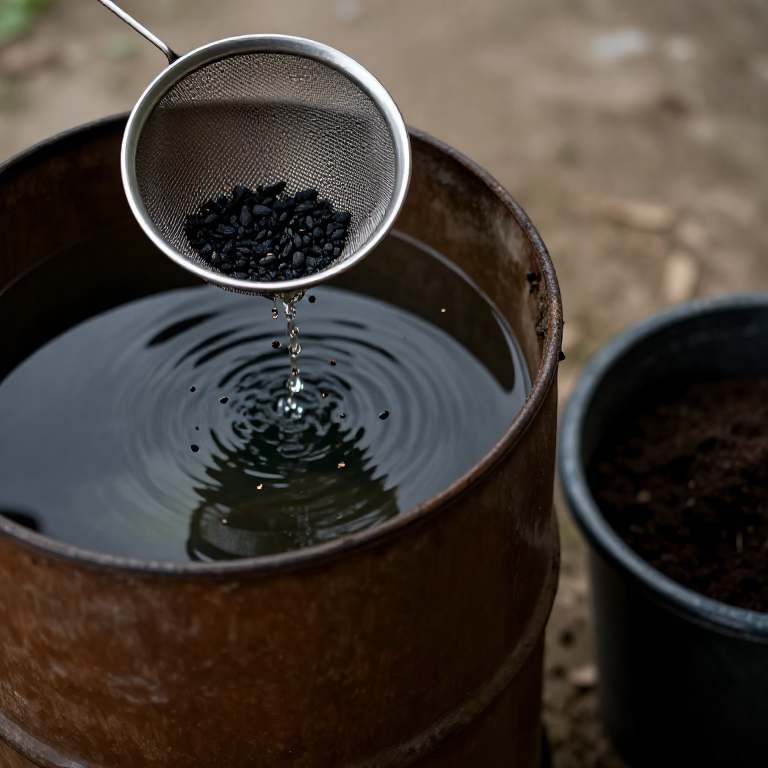


Flotation for Seeds and Charcoal
Most of what people ate leaves no trace you can see. A grain of wheat that fell in a fire two thousand years ago survives as a charred seed a couple of millimetres long, indistinguishable from the soil around it by eye, and it will go into the spoil heap with everything else unless you go looking for it.
Flotation finds it. Charred plant material is less dense than water and full of tiny voids, so it floats; sand, stone and pottery do not, so they sink. Stir a soil sample into water and the archaeobotany separates itself.
Two things come out. The light fraction that floated — charcoal, seeds, nutshell. The heavy fraction left behind — small bone, beads, flint chips, and the heavier seeds that refused to float. Both are evidence, and the sieve mesh you choose decides how much of either you ever see.
ការណែនាំ
Make a practice sample with known contents
Make a practice sample with known contents
Char a measured handful of seeds, grain and small nutshell in a tin over heat until black but not ash, and count them. Mix them into 5 litres of soil. You now know the right answer, which is the only way to find out whether your method actually works.
សម្ភារៈសម្រាប់ជំហាននេះ៖
 សណ្តែកស្ងួត50 ក្រ
Record the sample volume
Record the sample volume
Measure the soil in litres and write it on the label. Every archaeobotanical result is expressed per litre of soil, so an unmeasured sample cannot be compared with anything.
ឧបករណ៍ដែលត្រូវការ៖
 សៀវភៅកត់ត្រា
Set up the flotation tank
Set up the flotation tank
Take a barrel or large tub and fit a coarse mesh basket inside it to hold the soil. The basket keeps the heavy fraction together while the water works.
Fit the flot sieve at the overflow
Fit the flot sieve at the overflow
Arrange a fine sieve to catch water spilling over the rim. A pair works better than one — around 1 mm on top to hold the big material and 300 microns beneath to catch the small.
ឧបករណ៍ដែលត្រូវការ៖
 រែងម៉ដ្ឋ
Choose the mesh deliberately
Choose the mesh deliberately
Write down the mesh you are using. The mesh decides the result: a 1 mm sieve loses every seed smaller than 1 mm, and small weed seeds are often the most informative material in the sample. Standard practice runs from 250 microns upward.
Wet the sample gently first
Wet the sample gently first
Lower the basket in and let the soil wet through before you agitate anything. Charred material is brittle, and dumping dry soil into water breaks seeds into unidentifiable fragments.
Agitate slowly by hand
Agitate slowly by hand
Stir the submerged soil with slow, gentle movements to break up clods and release the light material. Vigorous stirring is the commonest way to destroy the evidence you are collecting.
Skim or overflow the light fraction
Skim or overflow the light fraction
Let the floating material carry over the rim into the sieves, or lift it off with a fine tea strainer. Keep going until nothing more comes up.
Dry the light fraction slowly in the shade
Dry the light fraction slowly in the shade
Turn the flot out onto labelled newspaper or fine cloth and dry it out of the sun. Fast drying warps and cracks charred seeds and can make them unidentifiable.
Keep the heavy fraction too
Keep the heavy fraction too
Wash and dry what is left in the basket and label it with the same sample number. Heavy fraction routinely holds small bone, beads, flint chips, pottery and the larger nuts and seeds that never floated.
Sort the light fraction under magnification
Sort the light fraction under magnification
Sort the dried flot under a hand lens or a low-power microscope, separating charcoal, seeds, nutshell and modern rootlets into different dishes.
ឧបករណ៍ដែលត្រូវការ៖
 កញ្ចក់ពង្រីក
Tell charred from modern
Tell charred from modern
Ancient material is charred through — black, matt, and black on a fresh break. Uncharred seeds and pale rootlets are almost always modern contamination that arrived from the topsoil, and counting them as ancient is the classic beginner's error.
Count against what you buried
Count against what you buried
Compare your recovered count with the number you charred and buried. The percentage you got back is your recovery rate, and it is the honest measure of your technique — not the number of seeds you found.
Rerun the residue to check for losses
Rerun the residue to check for losses
Float the same soil a second time. Anything that comes up on the second pass was missed on the first, and tells you how much a single run leaves behind.
Express results per litre
Express results per litre
Divide your counts by the sample volume. Seeds per litre lets one context be compared with another, and a raw count without a volume is not a result.
Compendium — what flotation can and cannot tell you
Compendium — what flotation can and cannot tell you
A method from the 1960s. Flotation came into archaeological use in the 1960s and transformed what excavation could recover. Before it, plant remains were found by luck; after it, they could be sampled systematically, and whole questions — what people farmed, gathered, stored and burned — became answerable. Machine-assisted systems push water up through descending sediment to lift the light material out continuously; the bucket method here is the same physics by hand.
Charring is a filter, not a window. Almost everything that survives survives because it was burnt. That biases the record hard toward whatever came near a fire — grain parched or accidentally scorched, chaff burnt as fuel, nutshell thrown into the hearth. Foods eaten raw or boiled and never near flame are largely invisible. A flotation sample is a record of what got charred, and reading it as a menu is a mistake.
Mesh size is a decision about evidence. Recovery is set by the smallest opening the material has to pass. Choosing 1 mm because it drains faster silently discards every smaller seed, and those small weed seeds are often what identify a crop's growing conditions, harvesting method and processing stage. The sieve is not a detail of the equipment; it is a decision about what the site is allowed to say.
Contamination is constant. Modern rootlets, insect remains and uncharred seeds work down through soil continually. This is why the charred/uncharred distinction is done at the sorting table and why a sample from near the modern surface is treated with suspicion.
The heavy fraction is not waste. It routinely contains fish bone, small mammal bone, beads and micro-debitage — a whole second dataset that is lost if the residue is tipped out after the flot is skimmed off. Two fractions, two labels, one sample number.
សម្ភារៈ
1- 50 ក្រកន្លែងទុក
ឧបករណ៍ចាំបាច់
3- កន្លែងទុក
- កន្លែងទុក
- កន្លែងទុក
ប្លង់ពាក់ព័ន្ធ
ប្លង់ទាំងនេះចែករំលែកចំណេះដឹង — បច្ចេកទេស សម្ភារៈ ឬគោលការណ៍
CC0 សាធារណៈ
ប្លង់នេះត្រូវបានចេញផ្សាយក្រោម CC0។ អ្នកមានសិទ្ធិចម្លង កែប្រែ ចែកចាយ និងប្រើប្រាស់ដោយមិនចាំបាច់សុំអនុញ្ញាត។
គាំទ្រអ្នកបង្កើតដោយទិញផលិតផលតាមរយៈប្លង់របស់ពួកគេ ដែលពួកគេទទួលបាន កម្រៃជើងសារអ្នកបង្កើត កំណត់ដោយអ្នកលក់ ឬបង្កើតកំណែថ្មីនៃប្លង់នេះ ហើយបញ្ចូលជាការតភ្ជាប់ក្នុងប្លង់របស់អ្នកដើម្បីចែករំលែកចំណូល។