

Fire Hydrant
A hydrant is a pipe standing in the street with water in it. In any climate that freezes, that sentence is a description of a burst main — water expands as it freezes, the cast-iron barrel splits, and the fault is not discovered until the day there is a fire.
The answer is to make the hydrant empty itself. Put the main valve at the bottom, below the frost line, and link a small drain valve to it so that closing one opens the other. Shut the hydrant off and the water in the barrel runs away into the ground. What stands in the street in January is a dry tube.
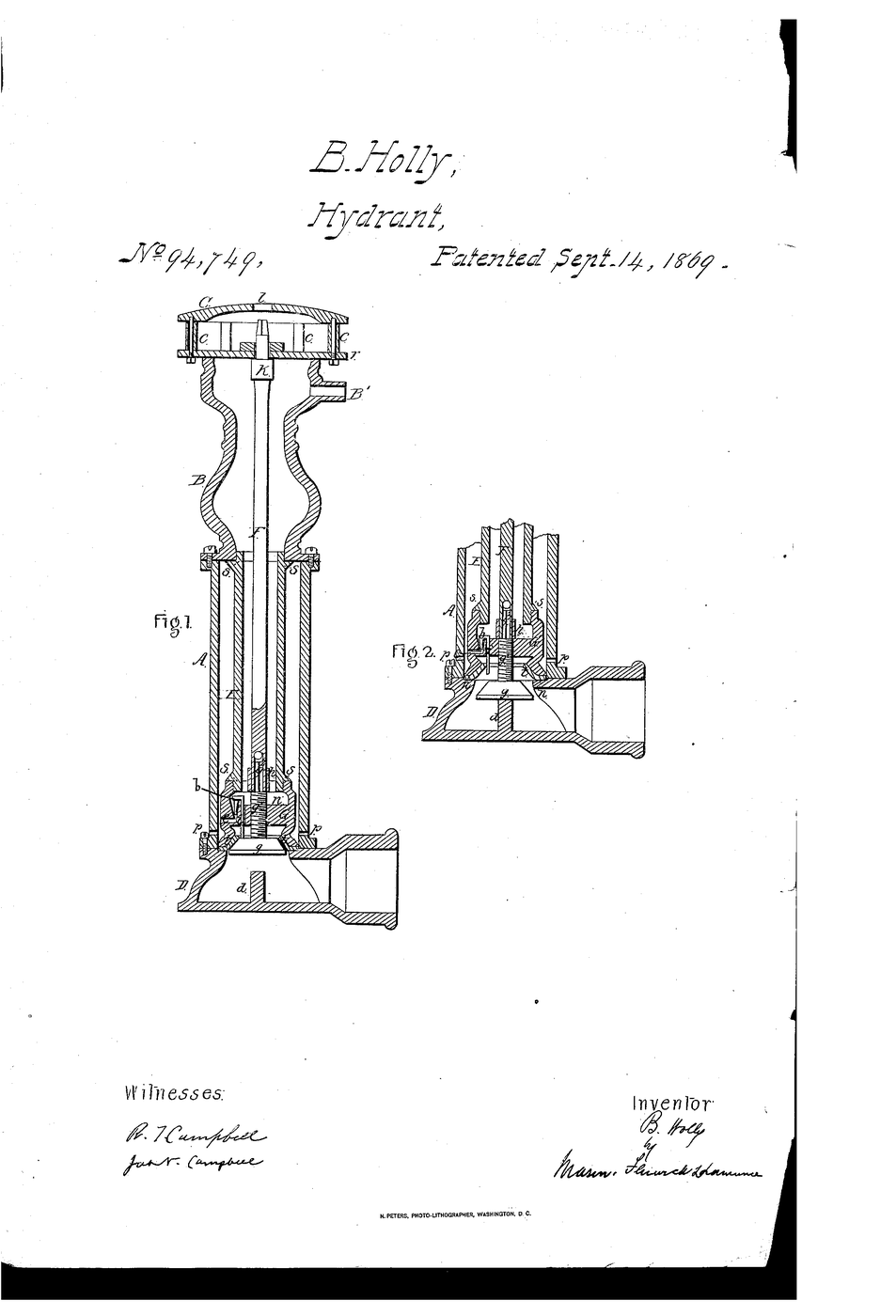
US Patent 94,749, "Improvement in hydrants", granted 14 September 1869 to Birdsill Holly of Lockport, New York. He claims a leather valve-seat doing two jobs at once — sealing the main valve and packing the joint between the inner pipe and the base chamber — plus the trip-valve that drains the barrel, and a key-rod with a protective cap so the public cannot open it.
ការណែនាំ
Read US 94,749 and find the second job
Read US 94,749 and find the second job
Holly's leather ring is both a valve seat and a packing. One part, two sealing functions — note that before building, because it explains the shape.
Freeze a sealed tube of water and look at it
Freeze a sealed tube of water and look at it
Fill a rigid plastic tube, cap both ends, and freeze it overnight. It bulges or splits. This is what a wet hydrant does in winter, out of sight, underground.
Build the outer casing
Build the outer casing
Make a vertical tube about 300 mm tall standing on a base chamber. This is the barrel that will stand above ground and must end up empty.
សម្ភារៈសម្រាប់ជំហាននេះ៖
 Mild Steel Round Tube1 ដុំ
Fit the inner pipe inside it
Fit the inner pipe inside it
Run a narrower pipe up the centre, carrying water from the base chamber to an upper outlet. Holly's arrangement is a pipe within a casing, not a single bore.
សម្ភារៈសម្រាប់ជំហាននេះ៖
 Copper Tube 10mm1 ដុំ
ឧបករណ៍ដែលត្រូវការ៖
 Flat-Nose Pliers
Cut the leather valve seat
Cut the leather valve seat
Cut a leather ring to sit between the main valve and its box. Leather compresses to fit imperfect cast surfaces — the reason a soft seat beats a machined one here.
សម្ភារៈសម្រាប់ជំហាននេះ៖
 Vegetable Tanned Leather1 ដុំ
Make the main valve at the base
Make the main valve at the base
Fit a valve at the bottom of the assembly, closing upward onto the leather seat. Everything above it will be empty when it is shut.
Add the key-rod up to the top
Add the key-rod up to the top
Run a long rod from the main valve to a squared head at the top. The operator stands at street level and works a valve a metre below their feet.
សម្ភារៈសម្រាប់ជំហាននេះ៖
 Mild Steel Rod (6mm)1 ដុំ
Test it wet with no drain
Test it wet with no drain
Fill, open, close. Water stays in the barrel. Tip it and measure what comes out — that volume is what would freeze.
Drill the drain port low in the casing
Drill the drain port low in the casing
Make a small opening near the base of the barrel, below where the frost line would be, discharging to the outside.
Link the drain to the main valve
Link the drain to the main valve
Arrange the valve stem so that as the main valve closes, it uncovers the drain port; as it opens, it covers it. One motion, two valves, opposite senses.
Run the full cycle and watch the barrel empty
Run the full cycle and watch the barrel empty
Open, flow, close. The barrel drains by itself within seconds. Measure how much water is left and compare with step 8.
Confirm the drain shuts under pressure
Confirm the drain shuts under pressure
With the hydrant open and flowing, check that nothing escapes from the drain port. A drain that leaks while in use undermines the whole main.
Fit the cap and try to open it without the key
Fit the cap and try to open it without the key
Put the protective cap over the squared head. Without the matching key it cannot be turned — Holly claims this deliberately, because an open hydrant drops pressure across the district.
Freeze the drained hydrant overnight
Freeze the drained hydrant overnight
Cycle it closed, leave it drained and freeze it. Nothing splits. Repeat step 2's comparison and write both results down.
History & Context — the valve you never see is the one that matters
History & Context — the valve you never see is the one that matters
The patent. US 94,749, "Improvement in hydrants", granted 14 September 1869 to Birdsill Holly of Lockport, New York, who held well over a hundred patents and is also remembered for district steam heating.
Holly's larger contribution was the water system, not the hydrant. Before him, urban firefighting pressure came from gravity — a reservoir on high ground, and whatever head it happened to give. His Holly Fire Protection and Water System, built at Lockport in 1863, used steam and water-turbine pumps to push water into the mains at a controlled pressure directly. That changes what a hydrant is for: with direct pumping, a hydrant is a tap on a permanently pressurised network, and it becomes worth engineering properly. Many American and European towns adopted the approach within a decade.
Why the drain is the whole design. The visible parts of a hydrant — the cap, the outlets, the paint — are trivial. The two decisions that matter are both invisible: put the main valve below the frost line, and make closing it open a drain. Together they mean the exposed barrel contains no water between uses. This is the dry-barrel hydrant, and it is still the standard wherever the ground freezes; wet-barrel hydrants, which hold water right up to the outlets, are used only in warm climates where they are simpler and faster to charge. Steps 2 and 14 are the entire argument, and they take a night each.
The leather ring is a nice piece of nineteenth-century pragmatism. Cast iron of the period could not be machined to a reliable metal-to-metal seal at reasonable cost, so Holly used a compliant material that conforms to whatever the casting actually is — and then got a second seal out of the same part by using it as packing at the pipe joint. One component, two leak paths closed, no precision required.
A footnote about lost records. It is often said that the patent for the original fire hydrant was itself destroyed by fire — the 1836 Patent Office fire, which burned roughly ten thousand patents including, by the usual telling, Frederick Graff's earlier hydrant. The story is repeated widely and is difficult to verify precisely, which is worth saying rather than passing it on flat. What is certain is that the 1836 fire destroyed the early record wholesale; the Otis steam shovel elsewhere in this collection has no surviving drawing for the same reason.
សម្ភារៈ
4- កន្លែងទុក
- 1 ដុំកន្លែងទុក
- កន្លែងទុក
- 1 ដុំកន្លែងទុក
ឧបករណ៍ចាំបាច់
1- កន្លែងទុក
ប្លង់ពាក់ព័ន្ធ
ប្លង់ទាំងនេះចែករំលែកចំណេះដឹង — បច្ចេកទេស សម្ភារៈ ឬគោលការណ៍

CC0 សាធារណៈ
ប្លង់នេះត្រូវបានចេញផ្សាយក្រោម CC0។ អ្នកមានសិទ្ធិចម្លង កែប្រែ ចែកចាយ និងប្រើប្រាស់ដោយមិនចាំបាច់សុំអនុញ្ញាត។
គាំទ្រអ្នកបង្កើតដោយទិញផលិតផលតាមរយៈប្លង់របស់ពួកគេ ដែលពួកគេទទួលបាន កម្រៃជើងសារអ្នកបង្កើត កំណត់ដោយអ្នកលក់ ឬបង្កើតកំណែថ្មីនៃប្លង់នេះ ហើយបញ្ចូលជាការតភ្ជាប់ក្នុងប្លង់របស់អ្នកដើម្បីចែករំលែកចំណូល។