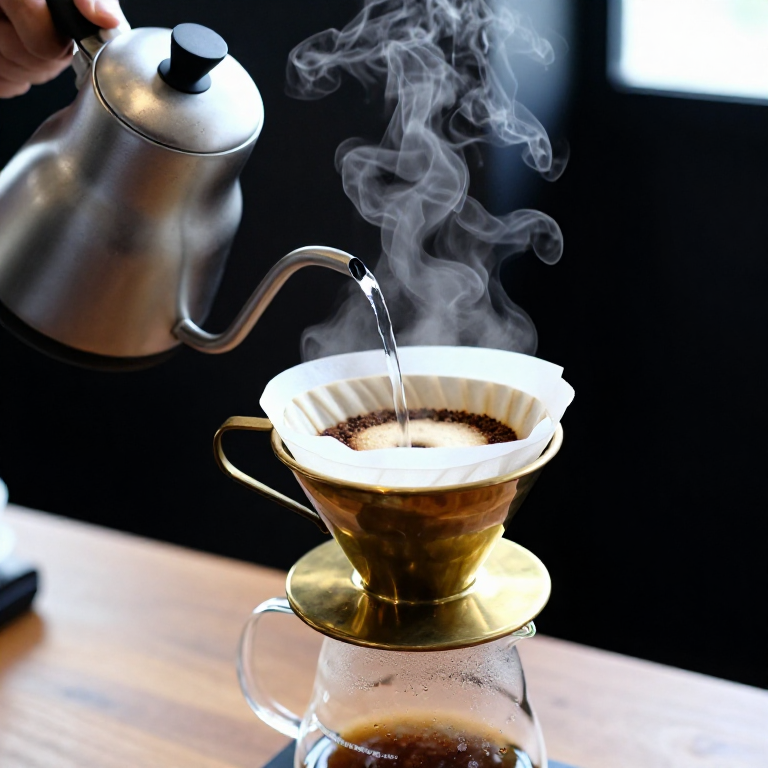

Melitta Kaffeefilter
Kaffee wurde um 1900 im Topf gekocht oder durch ein Leinentuch gegossen. Beides hat dieselben zwei Fehler: Satz in der Tasse, und ein bitterer Geschmack, weil der Kaffee zu lange und zu heiß mit dem Wasser in Berührung bleibt. Das Leinentuch wurde außerdem ranzig und musste ausgewaschen werden.
Melitta Bentz ersetzte das Tuch durch Papier — einmal benutzt, dann weggeworfen. Sie nahm ein Löschblatt aus dem Schulheft ihres Sohnes, legte es in einen Messingtopf, in dessen Boden sie mit einem Nagel Löcher geschlagen hatte, und goss heißes Wasser darüber. Kein Satz, kein altes Fett, kein Auswaschen.
Am 20. Juni 1908 meldete sie das beim Kaiserlichen Patentamt in Berlin an — als Gebrauchsmuster, nicht als Patent. Eingetragen am 8. Juli 1908, Patentblatt Seite 1145.
ការណែនាំ
Zuerst den Fehler nachbauen: Kaffee im Topf kochen
Zuerst den Fehler nachbauen: Kaffee im Topf kochen
Kaffeemehl mit Wasser aufkochen und in eine Tasse gießen. Satz am Boden, bitterer Nachgeschmack. Genau das war der Ausgangszustand 1908.
សម្ភារៈសម្រាប់ជំហាននេះ៖
 កាហ្វេកិន100 ក្រ
Danach mit einem Leinentuch filtern
Danach mit einem Leinentuch filtern
Ein Tuch über eine Tasse spannen und aufgießen. Klarer, aber das Tuch behält Öl und Geruch — nach einigen Tagen schmeckt jeder Kaffee daraus alt.
Ein Gefäß aus Messingblech treiben
Ein Gefäß aus Messingblech treiben
Aus Blech eine flache Schale formen, die auf einer Tasse aufsitzt. Melitta Bentz benutzte einen Messingtopf, den sie zu Hause hatte.
សម្ភារៈសម្រាប់ជំហាននេះ៖
 សន្លឹកស្ពាន់លឿង ២៦០ ក្រាស់ ២៤1 សន្លឹក
ឧបករណ៍ដែលត្រូវការ៖
 ដែកកិនលោហៈ
Den Boden wölben, nicht flach lassen
Den Boden wölben, nicht flach lassen
Der Boden bekommt eine leichte Wölbung. Das steht wörtlich in der Gebrauchsmusterbeschreibung: gewölbter, gemuldeter Boden — damit das Papier nicht flach aufliegt.
Die Löcher schräg einschlagen
Die Löcher schräg einschlagen
Mit einem Nagel schräg gerichtete Durchflusslöcher schlagen. Schräg, damit das Wasser nicht senkrecht durchfällt, sondern verzögert abläuft.
Prüfen, dass das Papier nirgends aufliegt
Prüfen, dass das Papier nirgends aufliegt
Papier, das dicht am Metall klebt, verschließt die Löcher darunter. Die Wölbung hält einen Spalt frei — das ist der eigentliche Kunstgriff.
Ein Rundfilter aus Löschpapier schneiden
Ein Rundfilter aus Löschpapier schneiden
Eine Scheibe aus saugfähigem Papier schneiden, etwas größer als der Boden. Der erste Filter der Welt war ein Löschblatt aus einem Schulheft.
សម្ភារៈសម្រាប់ជំហាននេះ៖
 តម្រងកាហ្វេ / ក្រដាសតម្រង20 ដុំ
Das Papier vor dem Aufgießen anfeuchten
Das Papier vor dem Aufgießen anfeuchten
Mit heißem Wasser durchspülen und das Wasser weggießen. Das entfernt den Papiergeschmack und wärmt Filter und Tasse vor.
Den Mahlgrad einstellen
Den Mahlgrad einstellen
Mittelfein mahlen. Zu fein verstopft das Papier und das Wasser steht; zu grob läuft es durch, bevor es etwas gelöst hat.
Wassertemperatur auf 92-96 °C bringen
Wassertemperatur auf 92-96 °C bringen
Kochendes Wasser kurz stehen lassen. Mit kochendem Wasser aufgießen macht bitter — genau der Fehler des Kochtopfs, nur im Filter.
ឧបករណ៍ដែលត្រូវការ៖
 ទែម៉ូម៉ែត្របន្ទប់
Zuerst nur wenig aufgießen und warten
Zuerst nur wenig aufgießen und warten
Das Mehl mit etwas Wasser benetzen und eine halbe Minute warten. Es bläht sich auf — entweichendes Kohlendioxid aus der Röstung.
In langsamen Kreisen weitergießen
In langsamen Kreisen weitergießen
Gleichmäßig von innen nach außen aufgießen. Wasser, das am Rand vorbeiläuft, hat gar keinen Kaffee berührt.
Die Durchlaufzeit messen
Die Durchlaufzeit messen
Etwa drei bis vier Minuten für eine Kanne. Deutlich schneller heißt zu grob gemahlen, deutlich langsamer zu fein.
Alle drei Zubereitungen nebeneinander verkosten
Alle drei Zubereitungen nebeneinander verkosten
Topf, Tuch und Papierfilter direkt vergleichen. Der Unterschied ist groß genug, dass man ihn nicht suchen muss.
Kompendium — ein Gebrauchsmuster, kein Patent
Kompendium — ein Gebrauchsmuster, kein Patent
Was genau eingetragen wurde. Melitta Bentz, Hausfrau aus Dresden, meldete am 20. Juni 1908 beim Kaiserlichen Patentamt in Berlin ein Gebrauchsmuster an: „Kaffeefilter mit auf der Unterseite gewölbtem, gemuldetem Boden und schräg gerichteten Durchflusslöchern." Das Schutzrecht entstand mit der Eintragung am 8. Juli 1908, veröffentlicht auf Seite 1145 des Patentblatts. Ein Gebrauchsmuster ist kein Patent: es wird nicht sachlich geprüft, sondern nur registriert, es läuft kürzer, und es wird deshalb oft „kleines Patent" genannt. Das Deutsche Patent- und Markenamt veröffentlicht die Registriernummer von 1908 nicht — wer eine nennt, hat sie erfunden.
Die belegbare Patentnummer kam später. Die Melitta Werke AG meldete am 3. Dezember 1937 die Patentschrift DE 653796 an: „Filterpapiereinsatz für Kaffeeaufbrühfilter u. dgl." — der gefaltete Papiereinsatz, der aus drei Kreissegmenten eine Tüte bildet und dabei weniger Papier verbraucht. Das ist die Filtertüte, wie man sie heute kauft. Der berühmte konische Filter mit den Rippen stammt also aus den 1930er-Jahren, nicht aus 1908.
Warum Papier besser filtert als Tuch. Papier hält nicht nur den Satz zurück, sondern auch einen großen Teil der Kaffeeöle, darunter Cafestol und Kahweol — dieselben Stoffe, die ungefilterter Kaffee in die Tasse bringt und die den Cholesterinspiegel messbar beeinflussen. Papiergefilterter Kaffee schmeckt deshalb klarer und leichter; French Press und Kochkaffee schmecken voller, weil die Öle mitkommen. Beides ist eine Geschmacksfrage, aber der Unterschied ist chemisch real und nicht eingebildet.
Was daraus wurde. Melitta Bentz gründete das Unternehmen 1908 mit einem Startkapital von 73 Pfennig und einem Gewerbeschein; Ehemann und Söhne arbeiteten mit. Auf der Leipziger Messe 1909 verkaufte sie 1.200 Filter. Der Name des Unternehmens ist bis heute ihr Vorname. Bemerkenswert an dieser Erfindung ist nicht ihre technische Tiefe — ein Blech mit Löchern und ein Blatt Papier —, sondern dass sie ein tägliches Ärgernis beseitigt, das alle kannten und niemand als lösbar ansah.
សម្ភារៈ
3- 100 ក្រកន្លែងទុក
- 1 សន្លឹកកន្លែងទុក
- កន្លែងទុក
ឧបករណ៍ចាំបាច់
2- កន្លែងទុក
- កន្លែងទុក
ប្លង់ពាក់ព័ន្ធ
ប្លង់ទាំងនេះចែករំលែកចំណេះដឹង — បច្ចេកទេស សម្ភារៈ ឬគោលការណ៍
CC0 សាធារណៈ
ប្លង់នេះត្រូវបានចេញផ្សាយក្រោម CC0។ អ្នកមានសិទ្ធិចម្លង កែប្រែ ចែកចាយ និងប្រើប្រាស់ដោយមិនចាំបាច់សុំអនុញ្ញាត។
គាំទ្រអ្នកបង្កើតដោយទិញផលិតផលតាមរយៈប្លង់របស់ពួកគេ ដែលពួកគេទទួលបាន កម្រៃជើងសារអ្នកបង្កើត កំណត់ដោយអ្នកលក់ ឬបង្កើតកំណែថ្មីនៃប្លង់នេះ ហើយបញ្ចូលជាការតភ្ជាប់ក្នុងប្លង់របស់អ្នកដើម្បីចែករំលែកចំណូល។