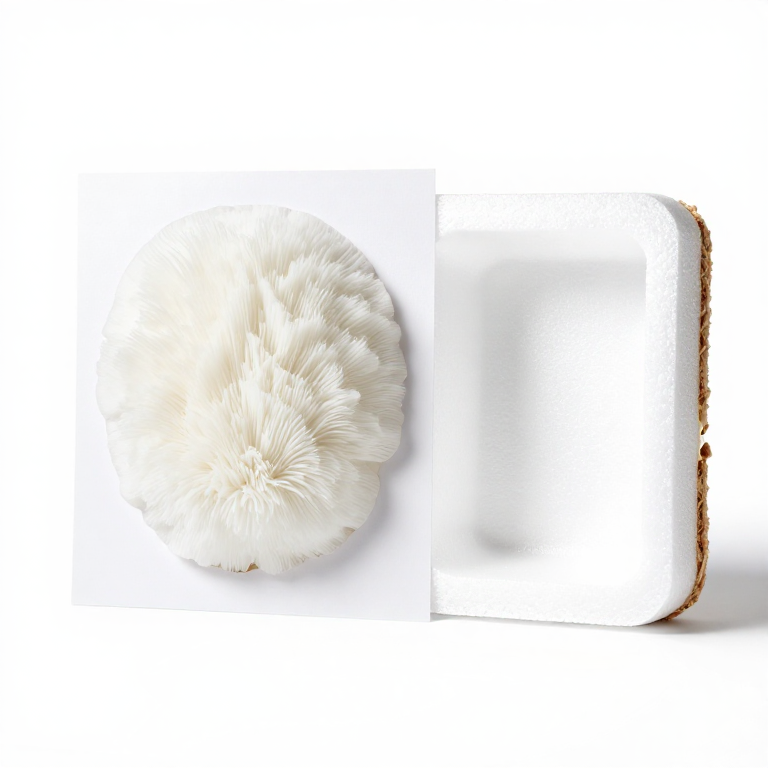


Growing Mycelium Packaging Material — Biodegradable Foam Alternative
ការណែនាំ
Pasteurize the Substrate
Pasteurize the Substrate
Chop the agricultural waste (hemp hurd, straw, or corn stalks) into pieces approximately 1-3cm long. Submerge in water and heat to 65-80 degrees C for 60-90 minutes. This pasteurization kills competing moulds and bacteria that would outcompete the mycelium, without sterilizing the substrate completely (some beneficial microorganisms survive and actually aid mycelium growth). Drain the substrate thoroughly — it should be damp but not dripping. Squeeze a handful: a few drops of water should emerge, but it should not stream. Excess moisture causes bacterial contamination (anaerobic conditions), while too-dry substrate will not support mycelium growth.
សម្ភារៈសម្រាប់ជំហាននេះ៖
 ចំបើងកាត់1-2 kg គក
 ម្សៅប្រើប្រាស់ទូទៅ50g ក្រ
ឧបករណ៍ដែលត្រូវការ៖
 ឆ្នាំងធំ
Inoculate and Pack the Mould
Inoculate and Pack the Mould
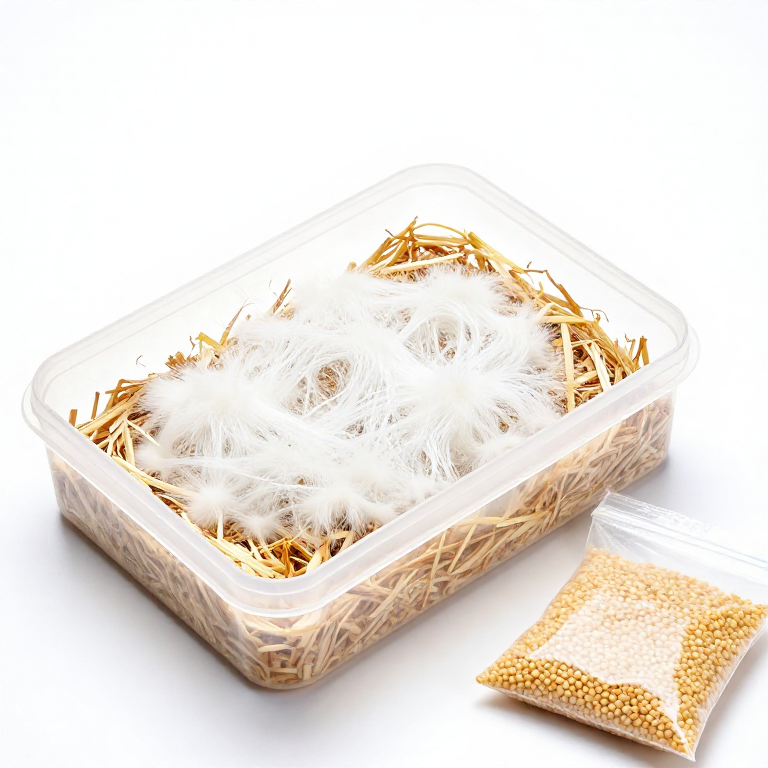
Break the grain spawn into individual grains and mix thoroughly with the cooled, drained substrate at a ratio of 10-15% spawn to substrate by weight. Higher spawn ratios colonize faster and resist contamination better. Pack the inoculated substrate firmly into your mould — the material must be compressed to ensure the mycelium fibers bind the particles into a solid mass. Loose packing produces crumbly, weak material. Wrap the filled mould loosely in plastic to maintain humidity (the mycelium needs high humidity but also some gas exchange). Poke a few small holes in the plastic for air.
សម្ភារៈសម្រាប់ជំហាននេះ៖
 ពូជផ្សិត200-300g ក្រ
ឧបករណ៍ដែលត្រូវការ៖
 ពុម្ពរាងវេចខ្ចប់
Incubate for Colonization
Incubate for Colonization
Place the wrapped moulds in a dark, warm location (24-28 degrees C) for 5-7 days. The mycelium grows from each grain spawn point, sending out white hyphae (threadlike filaments) that penetrate and bind the substrate particles together. By day 3-4, white mycelium should be visible on the surface. By day 5-7, the entire surface should be covered with a dense white mat, and the material should hold together as a solid block when the mould is removed. If green or black mould appears instead of white mycelium, the substrate was contaminated — discard it and start over with more thorough pasteurization or a higher spawn ratio.
ឧបករណ៍ដែលត្រូវការ៖
 សន្លឹកផ្លាស្ទិក
Unmould and Skin
Unmould and Skin
Once fully colonized, remove the material from the mould. It should be a solid, self-supporting block that holds its shape. For a smoother, more finished surface, leave the unmoulded piece at room temperature in indirect light for 1-2 additional days. The mycelium will grow a dense outer skin over all exposed surfaces, sealing the material and giving it a smooth, white appearance similar to polystyrene foam. This skinning phase is what gives mycelium packaging its professional appearance and improved water resistance compared to unskinned material.
Dry and Heat-Kill
Dry and Heat-Kill
To halt growth and prevent the material from producing mushroom fruiting bodies (which would deform the packaging), heat-kill the mycelium by placing the formed piece in an oven at 80-100 degrees C for 2-4 hours. This dries the material and kills the fungal organism while preserving the structural integrity of the mycelium network. The finished material is lightweight (density approximately 50-100 kg per cubic metre, comparable to expanded polystyrene), insulating, shock-absorbing, fire-resistant (mycelium does not melt or produce toxic fumes like polystyrene), and fully compostable. It decomposes in a home compost or garden soil within 30-90 days, returning nutrients to the soil rather than persisting as plastic waste for centuries.
ឧបករណ៍ដែលត្រូវការ៖
 ឡដុតនំ
សម្ភារៈ
5- 1-2 kg គកកន្លែងទុក
- 50g ក្រកន្លែងទុក
- 200-300g ក្រកន្លែងទុក
- 1-2 kg ដុំកន្លែងទុក
- 50g ដុំកន្លែងទុក
ឧបករណ៍ចាំបាច់
6- កន្លែងទុក
- កន្លែងទុក
- កន្លែងទុក
- កន្លែងទុក
- កន្លែងទុក
CC0 សាធារណៈ
ប្លង់នេះត្រូវបានចេញផ្សាយក្រោម CC0។ អ្នកមានសិទ្ធិចម្លង កែប្រែ ចែកចាយ និងប្រើប្រាស់ដោយមិនចាំបាច់សុំអនុញ្ញាត។
គាំទ្រអ្នកបង្កើតដោយទិញផលិតផលតាមរយៈប្លង់របស់ពួកគេ ដែលពួកគេទទួលបាន កម្រៃជើងសារអ្នកបង្កើត កំណត់ដោយអ្នកលក់ ឬបង្កើតកំណែថ្មីនៃប្លង់នេះ ហើយបញ្ចូលជាការតភ្ជាប់ក្នុងប្លង់របស់អ្នកដើម្បីចែករំលែកចំណូល។