

Plasterboard (Drywall)
For centuries, an interior wall was made wet, by hand, and slowly: a lattice of thin wooden lath nailed up, then two or three coats of wet plaster troweled on and left to dry for weeks. It was skilled, filthy, and every wall in a building had to wait for the plaster to cure before anything else could happen.
Sackett's board delivers the plaster dry, flat, and ready to nail up in minutes. A core of set gypsum plaster is sandwiched between two sheets of heavy paper. The paper holds the brittle gypsum together and gives it a surface; the gypsum gives the paper rigidity and fire resistance. You cut it with a knife, nail it to the studs, and the wall is up — no waiting, no wet trades.
Gypsum is the quiet hero: it is full of chemically bound water, so in a fire it releases steam and stays cool, shielding the structure behind it.
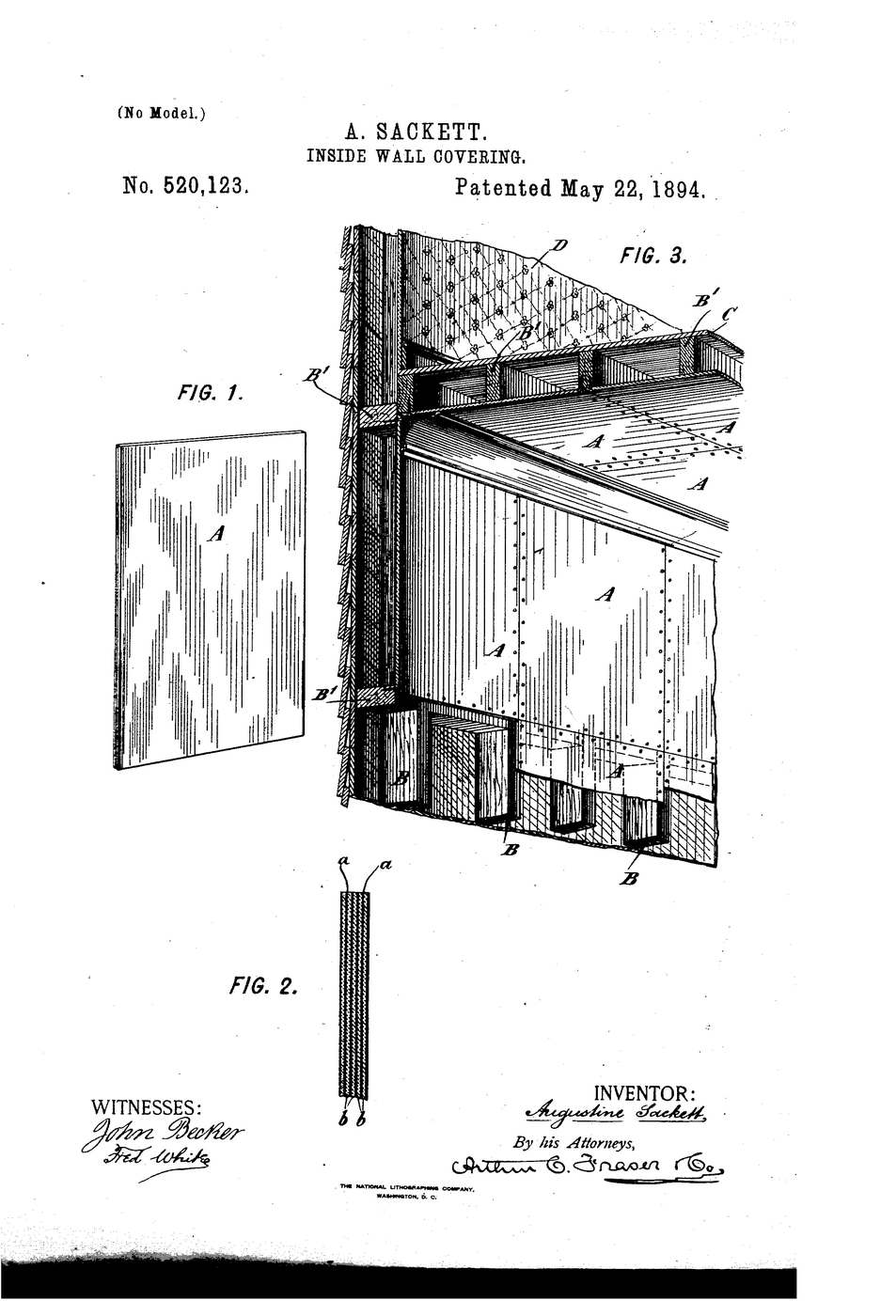
US Patent 520,123, "Inside-wall covering", granted 22 May 1894 to Augustine Sackett of New York.
ការណែនាំ
Read the claim: a board that IS the plaster
Read the claim: a board that IS the plaster
Sackett claims a wall covering of set gypsum sandwiched between sheets of paper — the plaster delivered as a dry, ready board. Note: the paper and the gypsum each do a job.
Try to handle a slab of bare set gypsum
Try to handle a slab of bare set gypsum
Cast a thin slab of plaster, let it set, and pick it up. It is rigid but brittle — it cracks and crumbles at the edges. Bare gypsum cannot be a board on its own.
សម្ភារៈសម្រាប់ជំហាននេះ៖
 ជីបស៊ូម (ស៊ុលហ្វាតកាល់ស្យូម)500 ក្រ
Feel a sheet of paper on its own
Feel a sheet of paper on its own
Hold a sheet of heavy paper. It is tough and flexible but completely floppy — no stiffness at all. Paper alone is not a wall either.
សម្ភារៈសម្រាប់ជំហាននេះ៖
 សន្លឹកក្រដាសកាតុងរលក1 សន្លឹក
Lay paper, pour gypsum, lay paper
Lay paper, pour gypsum, lay paper
Put down a sheet of paper, spread a thin even layer of wet gypsum on it, and lay a second sheet on top. Press flat. This sandwich is the board.
Let it set and lift it
Let it set and lift it
Let the gypsum set and pick the board up. Now it is stiff AND it holds together — the paper bandages the brittle core; the core stiffens the floppy paper. Together they are a wall.
Compare its stiffness with steps 2 and 3
Compare its stiffness with steps 2 and 3
Bend the finished board a little, then the bare gypsum, then the paper. The board is far tougher than the gypsum and far stiffer than the paper. The composite beats both parts.
ឧបករណ៍ដែលត្រូវការ៖
 ឧបករណ៍វាស់កម្លាំង (ជញ្ជីងរ៉ឺស័រ)
Score and snap it to size
Score and snap it to size
Cut the paper on one face with a knife and snap the board along the line, then cut the back paper. It sizes in seconds with a knife — no saw, no dust cloud. This ease is half the invention.
ឧបករណ៍ដែលត្រូវការ៖
 កាំបិតសិប្បកម្ម
Nail it to a wooden frame
Nail it to a wooden frame
Nail the board to two battens. It takes a nail without shattering (the paper holds the gypsum) and the wall is instantly up — dry, flat, finished.
សម្ភារៈសម្រាប់ជំហាននេះ៖
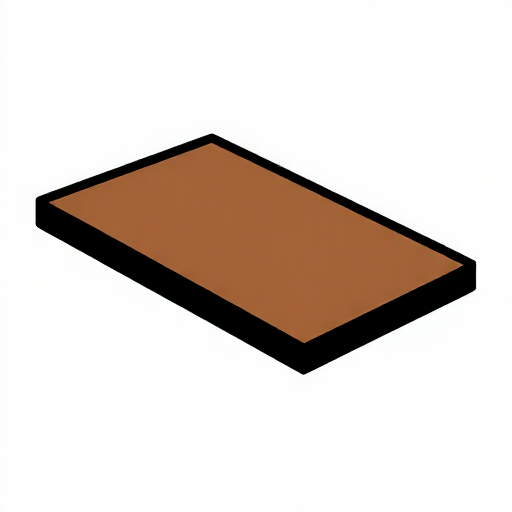 សន្លឹកឈើបាសវូដ1 សន្លឹក
Compare against wet lath-and-plaster
Compare against wet lath-and-plaster
Trowel wet plaster onto a lath of thin sticks and note it must dry for a long time before use. The board skips all of that. Time is the difference: minutes versus weeks.
Hold a flame to the board
Hold a flame to the board
Bring a flame to the board's face (outdoors, briefly). The paper chars but the gypsum core does not burn and stays cool — the fire-resistance that made it valuable. Note the difference from a bare wooden panel.
ឧបករណ៍ដែលត្រូវការ៖
 វ៉ែនតាសុវត្ថិភាពថ្លា
Understand why gypsum resists fire
Understand why gypsum resists fire
Set gypsum is calcium sulfate with water chemically locked inside it. In a fire that water is driven off as steam, which takes heat away and keeps the board's far side cool until the water is gone. Write down why that shields the studs behind.
Butt two boards and fill the joint
Butt two boards and fill the joint
Set two boards edge to edge and fill the seam with a little wet gypsum. Smoothed over, the joint disappears into one flat wall. That is how a room of boards becomes a seamless surface.
History & Context — the wall that stopped being wet
History & Context — the wall that stopped being wet
The patent. US 520,123, "Inside-wall covering", granted 22 May 1894 to Augustine Sackett of New York (filed 1890). Sackett was a Rensselaer-trained engineer, and his "Sackett Board" is the direct prototype of what the world now calls drywall, plasterboard, gypsum board or Sheetrock — used today in the great majority of new homes.
The invention is a composite, and the point is that neither material works alone. Set gypsum is rigid and fireproof but brittle — a bare slab crumbles at a touch (step 2). Heavy paper is tough but utterly floppy (step 3). Sandwich them and each cures the other's weakness: the paper acts as a continuous bandage and a nailing surface that stops the gypsum shattering, while the gypsum stiffens the paper into a rigid panel (steps 5 and 6). It is the same idea as reinforced concrete or plywood — a strong-but-brittle material carried by a tough-but-weak one — applied to the humblest surface in the building, the interior wall.
Why it changed how buildings go up. Traditional lath-and-plaster was a wet trade: skilled plasterers, multiple coats, and weeks of drying during which the building sat idle and could not be painted, wired-out or occupied. Sackett's board moved all of that curing into the factory, so the plaster arrives dry and finished; a wall goes up in minutes with a knife and nails (steps 7-9), by less-skilled labour, in any weather. That single change — from a wet, slow, skilled trade to a fast, dry, cuttable board — is a large part of why twentieth-century housing could be built quickly and cheaply enough to house a booming population.
The fire story is not a footnote. Gypsum is calcium sulfate dihydrate — it holds water in its crystal structure — so in a fire it releases that water as steam and stays cool, shielding the timber or steel behind it long enough for people to get out (steps 10-11). That is why building codes require gypsum board around structural members and between dwellings. The modest grey panel you nailed up in step 8 is, quietly, one of the most important fire-safety devices ever built into ordinary walls.
សម្ភារៈ
3- 500 ក្រកន្លែងទុក
- 1 សន្លឹកកន្លែងទុក
- 1 សន្លឹកកន្លែងទុក
ឧបករណ៍ចាំបាច់
3- កន្លែងទុក
- កន្លែងទុក
- កន្លែងទុក
ប្លង់ពាក់ព័ន្ធ
ប្លង់ទាំងនេះចែករំលែកចំណេះដឹង — បច្ចេកទេស សម្ភារៈ ឬគោលការណ៍

CC0 សាធារណៈ
ប្លង់នេះត្រូវបានចេញផ្សាយក្រោម CC0។ អ្នកមានសិទ្ធិចម្លង កែប្រែ ចែកចាយ និងប្រើប្រាស់ដោយមិនចាំបាច់សុំអនុញ្ញាត។
គាំទ្រអ្នកបង្កើតដោយទិញផលិតផលតាមរយៈប្លង់របស់ពួកគេ ដែលពួកគេទទួលបាន កម្រៃជើងសារអ្នកបង្កើត កំណត់ដោយអ្នកលក់ ឬបង្កើតកំណែថ្មីនៃប្លង់នេះ ហើយបញ្ចូលជាការតភ្ជាប់ក្នុងប្លង់របស់អ្នកដើម្បីចែករំលែកចំណូល។