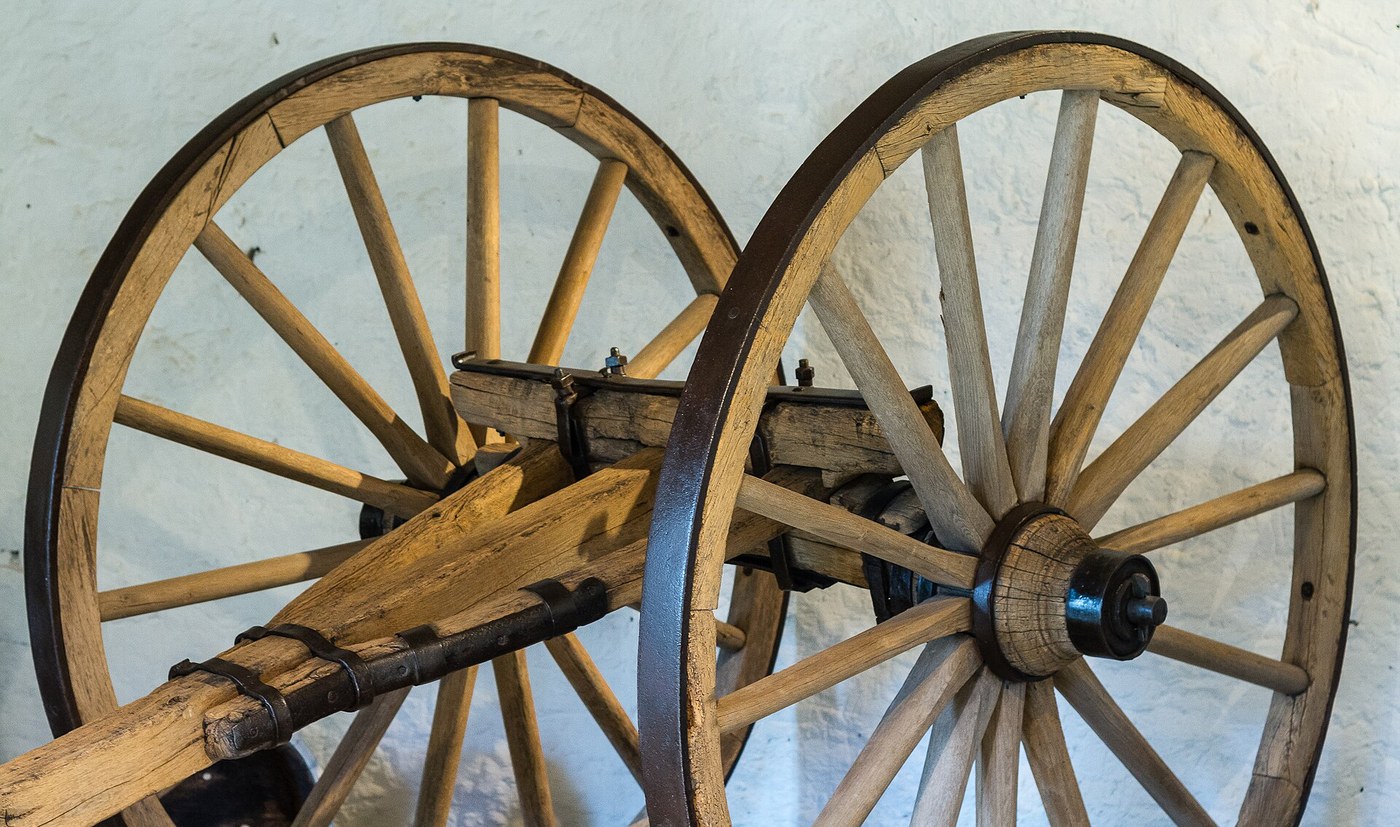


Spoked Wheel
ការណែនាំ
Compare a disc against spokes
Compare a disc against spokes
Establish why anyone bothered.
- Cut a solid disc wheel and a spoked wheel of the same diameter from the same board.
- Weigh both.
- Load each at the rim and look for flexing or splitting.
សម្ភារៈសម្រាប់ជំហាននេះ៖
 ក្តារឈើអុកស1 board
 ជញ្ជីងឌីជីថលផ្ទះបាយ1 ដុំ
Choose three woods for three jobs
Choose three woods for three jobs
A traditional wheel is not made of one timber, and the choices are reasoned.
- Hub (nave) — elm, because its interlocked grain resists splitting when a dozen mortises are cut into it.
- Spokes — oak, strong in compression along the grain.
- Rim (felloes) — ash, which bends and takes shock without splintering.
សម្ភារៈសម្រាប់ជំហាននេះ៖
 បន្ទះឈើអែលអាមេរិក1 board
 ក្តារឈើអាស1 board
Dish the wheel
Dish the wheel
A cart wheel is not flat. It is a shallow cone, and this surprises people.
- Set the spokes so they angle slightly outward from the hub, making a dish.
- Mount the wheel on an axle angled downward at the outer end, so the bottom spoke stands VERTICAL.
- Load it and see the bottom spoke take the weight in pure compression.
សម្ភារៈសម្រាប់ជំហាននេះ៖
 ប្រដាប់វាស់មុំ1 ដុំ
Shrink the tyre on
Shrink the tyre on
The final assembly step is done with heat, and it is what makes the wheel rigid. Two people, gloves, water to hand.
- Make the iron tyre slightly SMALLER in circumference than the wheel.
- Heat it until it expands enough to drop over the rim.
- Drop it on and quench immediately with water.
សម្ភារៈសម្រាប់ជំហាននេះ៖
 ដែកបន្ទះទន់1 bar
History and context
History and context
Spoked wheels appear around 2000 BC in the Near East and transform the vehicle: a solid-wheeled ox cart is a slow load carrier, a light spoked wheel makes the war chariot possible. The technology spreads with astonishing speed, which is usually a sign that the advantage was overwhelming.
Wheelwrighting was a serious trade with its own tools and vocabulary — nave, felloe, stock, dish, strake — and it survived essentially unchanged into the twentieth century. George Sturt's The Wheelwright's Shop (1923) is the classic first-hand account of the craft as motor transport ended it, and it is unusually good on how much of the knowledge was in the hands rather than in writing.
The suspension insight is worth naming. In a modern wire-spoked bicycle wheel the spokes are in TENSION and the hub hangs from the upper spokes — the opposite of a cart wheel, whose wooden spokes work in compression and where the hub sits on the lower ones. Both are correct; wood is strong in compression and thin steel wire has no compressive strength at all, so each material dictates its own structure. Confusing the two is the commonest misunderstanding about wheels.
What ended it: pneumatic tyres and steel or alloy wheels. The last serious users of wooden spoked wheels were early motor cars — artillery wheels — and the trade now survives in restoration, carriage driving and the occasional gun carriage.
សម្ភារៈ
6- 1 boardកន្លែងទុក
- 1 ដុំកន្លែងទុក
- 1 boardកន្លែងទុក
- 1 boardកន្លែងទុក
- 1 ដុំកន្លែងទុក
- 1 barកន្លែងទុក
ប្លង់ពាក់ព័ន្ធ
ប្លង់ទាំងនេះចែករំលែកចំណេះដឹង — បច្ចេកទេស សម្ភារៈ ឬគោលការណ៍
CC0 សាធារណៈ
ប្លង់នេះត្រូវបានចេញផ្សាយក្រោម CC0។ អ្នកមានសិទ្ធិចម្លង កែប្រែ ចែកចាយ និងប្រើប្រាស់ដោយមិនចាំបាច់សុំអនុញ្ញាត។
គាំទ្រអ្នកបង្កើតដោយទិញផលិតផលតាមរយៈប្លង់របស់ពួកគេ ដែលពួកគេទទួលបាន កម្រៃជើងសារអ្នកបង្កើត កំណត់ដោយអ្នកលក់ ឬបង្កើតកំណែថ្មីនៃប្លង់នេះ ហើយបញ្ចូលជាការតភ្ជាប់ក្នុងប្លង់របស់អ្នកដើម្បីចែករំលែកចំណូល។