សិល្បៈ
សម្រស់ និង សុខុមាលភាព
សិប្បកម្ម
វប្បធម៌ និង ប្រវត្តិសាស្ត្រ
ការកម្សាន្ត
បរិស្ថាន
ម្ហូប និង ភេសជ្ជៈ
វិស្វកម្មបញ្ច្រាស
វិទ្យាសាស្ត្រ
កីឡា
បច្ចេកវិទ្យា
ប្រដាប់ដែលស្លៀក
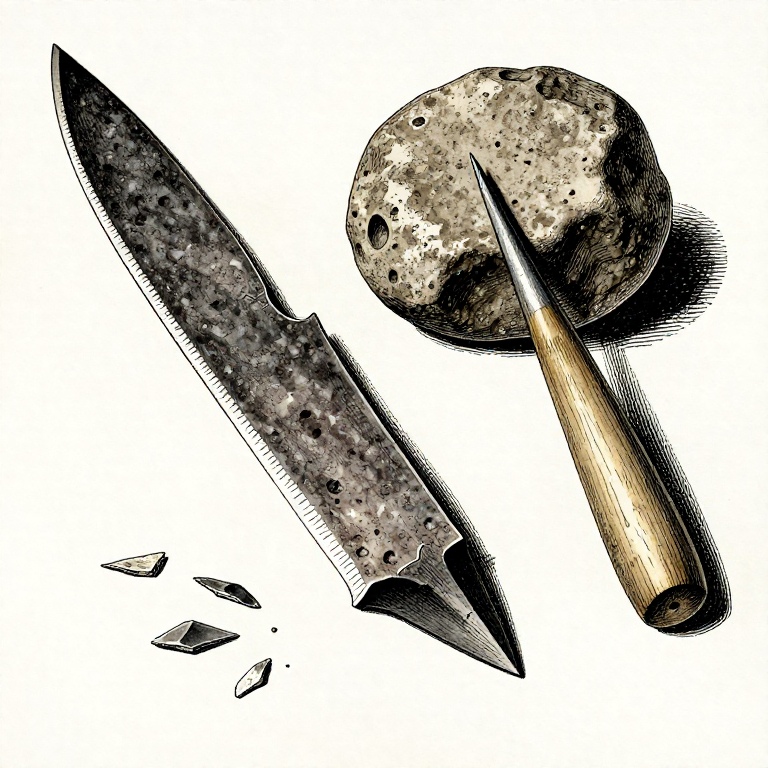


Knapping a Flint Knife — Stone Age Cutting Tool
Flint knapping: 2 million years old, still sharper than surgical steel. Learn percussion flaking to produce a usable knife from stone. Safety: wear eye protection and gloves.
កម្រិតខ្ពស់
1-2 hours
ការណែនាំ
1
1
Select Stone
Select Stone
Flint, chert, or obsidian. Waxy luster, rings when tapped, no granular texture. Check riverbeds and limestone outcrops. Avoid cracked stones.
2
2
Platform & Primary Flaking
Platform & Primary Flaking
Strike off a small piece to create a flat platform. Hit 1cm from the edge with hammerstone — strike through the stone, not at it. Each flake creates a new platform.
ការរចនា
Diagram: striking angle, platform edge, flake removal direction
សម្ភារៈសម្រាប់ជំហាននេះ៖
 ថ្មបុក1 ដុំ
3
3
Shape the Blade
Shape the Blade
Work around the nodule removing flakes to create a leaf shape. Alternate sides to thin evenly. Target: 10-15cm long, thin enough for a sharp edge.
សម្ភារៈសម្រាប់ជំហាននេះ៖
 ដុំថ្មភ្លើង1 ដុំ
4
4
Refine Edge
Refine Edge
Switch to antler or hardwood baton. Lighter strikes, thinner flakes. Work along the cutting edge for a straight, sharp line.
សម្ភារៈសម្រាប់ជំហាននេះ៖
 ញញួរស្នែង1 ដុំ
5
5
Haft (Optional)
Haft (Optional)
Split a wooden handle, insert blade, bind with cordage and pine pitch glue.
សម្ភារៈ
6- 1 ដុំកន្លែងទុក
- 1 ដុំកន្លែងទុក
- 1 ដុំកន្លែងទុក
- 1 ដុំកន្លែងទុក
- 1 ដុំកន្លែងទុក
- 1 ដុំកន្លែងទុក
ឧបករណ៍ចាំបាច់
3- កន្លែងទុក
- កន្លែងទុក
- កន្លែងទុក
CC0 សាធារណៈ
ប្លង់នេះត្រូវបានចេញផ្សាយក្រោម CC0។ អ្នកមានសិទ្ធិចម្លង កែប្រែ ចែកចាយ និងប្រើប្រាស់ដោយមិនចាំបាច់សុំអនុញ្ញាត។
គាំទ្រអ្នកបង្កើតដោយទិញផលិតផលតាមរយៈប្លង់របស់ពួកគេ ដែលពួកគេទទួលបាន កម្រៃជើងសារអ្នកបង្កើត កំណត់ដោយអ្នកលក់ ឬបង្កើតកំណែថ្មីនៃប្លង់នេះ ហើយបញ្ចូលជាការតភ្ជាប់ក្នុងប្លង់របស់អ្នកដើម្បីចែករំលែកចំណូល។