កិច្ចសហប្រតិបត្តិការ
សិល្បៈ
សម្រស់ និង សុខុមាលភាព
សិប្បកម្ម
វប្បធម៌ និង ប្រវត្តិសាស្ត្រ
ការកម្សាន្ត
បរិស្ថាន
ម្ហូប និង ភេសជ្ជៈ
វិស្វកម្មបញ្ច្រាស
វិទ្យាសាស្ត្រ
កីឡា
បច្ចេកវិទ្យា
ប្រដាប់ដែលស្លៀក

Thompson (Nlaka'pamux) Smoked Buckskin: Scraped on a Leaning Poplar Log with a Deer Ulna, Soap-Soaked, Wrung, Pounded Soft, Smoked (Teit, 1900)
The Thompson (Nlaka'pamux) buckskin James Teit saw made around 1900: a soaked hide scraped on a peeled poplar log leaning against a tree with a deer's ulna or a horse rib used like a draw-knife, smoked over a small pit of smouldering rotten wood, soaked a day in soapy water, wrung with dry grass on a log and stick, pounded soft on a frame and smoked again.
កម្រិតខ្ពស់
About a week
ការណែនាំ
1
1
Read Teit
Read Teit
"It is said that, after being smoked, the skin does not shrink so much when it gets wet as it otherwise would."
2
2
Soak and set up the log
Soak and set up the log
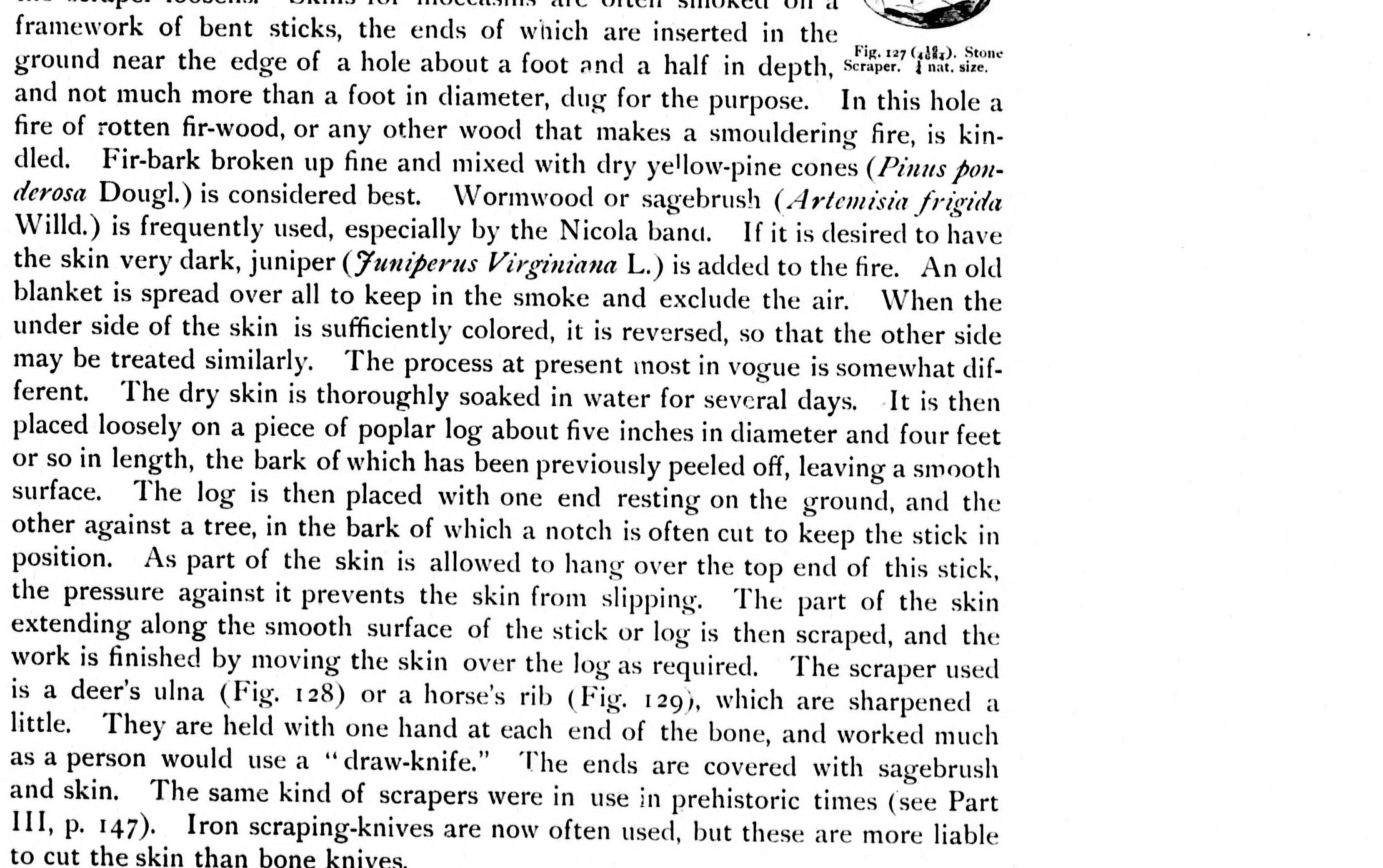
Soak the dry skin in water for several days. Peel a poplar log about 5 in. (13 cm) thick and 4 ft (1.2 m) long; stand one end on the ground and lean the other against a tree, in a notch cut in its bark.
សម្ភារៈសម្រាប់ជំហាននេះ៖
 ស្បែកឆៅ1 ដុំ
 ទឹក1 ដុំ
 បង្គោលឈើស្រស់1 ដុំ
ឧបករណ៍ដែលត្រូវការ៖
 ដុំឈើកោសស្បែក
3
3
Scrape both sides
Scrape both sides
Lay the skin loosely over the log with some hanging over the top so the pressure holds it. Scrape the flesh side with a slightly sharpened deer ulna or horse rib held at both ends like a draw-knife, moving the skin as you go; then the hair side, taking the dark outer skin off with the hair. Bone cuts the skin less than iron.
ឧបករណ៍ដែលត្រូវការ៖
 កាំបិតកោសស្បែកដុំឈើកោសស្បែក
4
4
Dry and smoke
Dry and smoke
Hang it over a pole to dry. Dig a hole about 1½ ft (45 cm) deep and a little over 1 ft (30 cm) across, light a smouldering fire of rotten fir wood (fir bark with dry pine cones is best; juniper for a very dark colour), set a frame of bent sticks over it, spread the skin on it and cover all with an old blanket. Turn it to smoke the other side.
សម្ភារៈសម្រាប់ជំហាននេះ៖
 ឈើពុក1 ដុំ
 មែកវីឡូ1 ដុំ
ឧបករណ៍ដែលត្រូវការ៖
 ប៉ែល
 រណ្ដៅភ្លើង
 ក្រណាត់កាន់វ៉ាស់
 បង្គោលឈើ
5
5
Soap, wring and pound
Soap, wring and pound
Soak it 24 hours or more in warm water with a strong soap solution. Roll it lengthwise with a little dry grass, tie one end to a log with a rope, fold the other round a short stout stick and turn until the water is wrung out. Stretch it on a frame and pound the inside until quite dry and soft (warm it by a fire in cold weather), then smoke it again.
សម្ភារៈសម្រាប់ជំហាននេះ៖
 សាប៊ូ1 ដុំទឹក1 ដុំ
 ចំបើងស្ងួត1 ដុំ
ឧបករណ៍ដែលត្រូវការ៖
 ឆ្នាំងជ្រលក់ពណ៌ធំ
 ខ្សែពួរ
 ចង្វះឈើបង្គោលឈើ
6
6
Troubleshooting
Troubleshooting
Smoked buckskin troubleshooting.
Flow
Loading...
7
7
History and honest limits
History and honest limits
From James Teit, *The Thompson Indians of British Columbia*, **Memoirs of the American Museum of Natural History, Jesup North Pacific Expedition** vol. I part IV (1900), pp. 185-186 and Figs. 127-129 (checked on the archive.org scan cihm_16242). Some said smoking came from the Okanagon; many held that a skin rubbed with brains needs no smoking (see the Navajo brain-tan blueprint). Corncob smoke gave a bright yellow. Frame size and hay for the dry grass are ours.
សម្ភារៈ
7- 1 ដុំកន្លែងទុក
- 2 ដុំកន្លែងទុក
- 1 ដុំកន្លែងទុក
- 1 ដុំកន្លែងទុក
- 1 ដុំកន្លែងទុក
- 1 ដុំកន្លែងទុក
- 1 ដុំកន្លែងទុក
ប្លង់នេះធ្វើ
ប្លង់ពាក់ព័ន្ធ
ប្លង់ទាំងនេះចែករំលែកចំណេះដឹង — បច្ចេកទេស សម្ភារៈ ឬគោលការណ៍
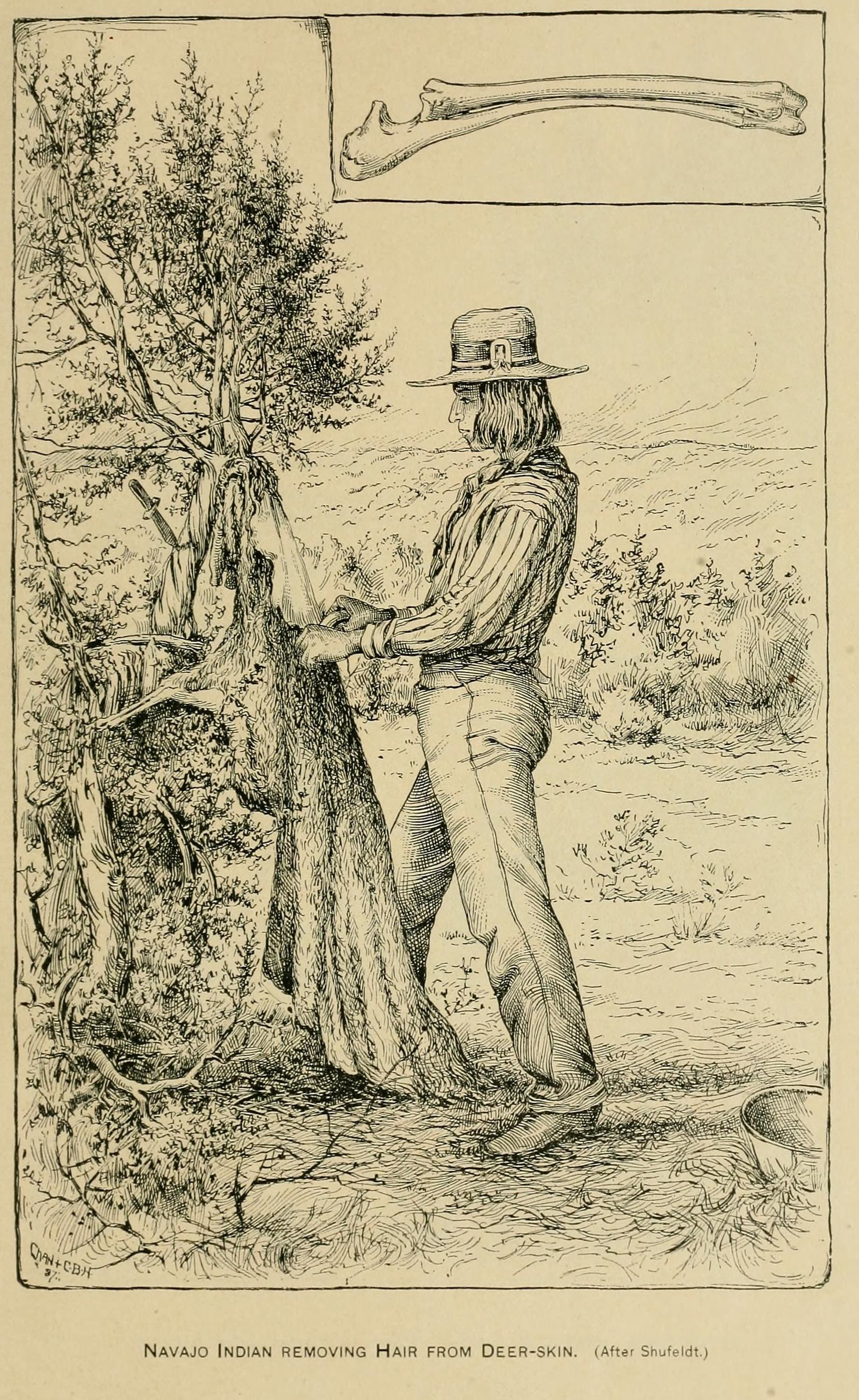
Navajo Buckskin: Hair Shaved with the Deer's Own Foreleg Bone, Brains Rubbed In, Wrung on a Tree, Worked Dry over the Feet (Shufeldt, 1888)
ដោយ Tex
វាយនភណ្ឌ និង ស្បែក
4
0
0
0
0
0
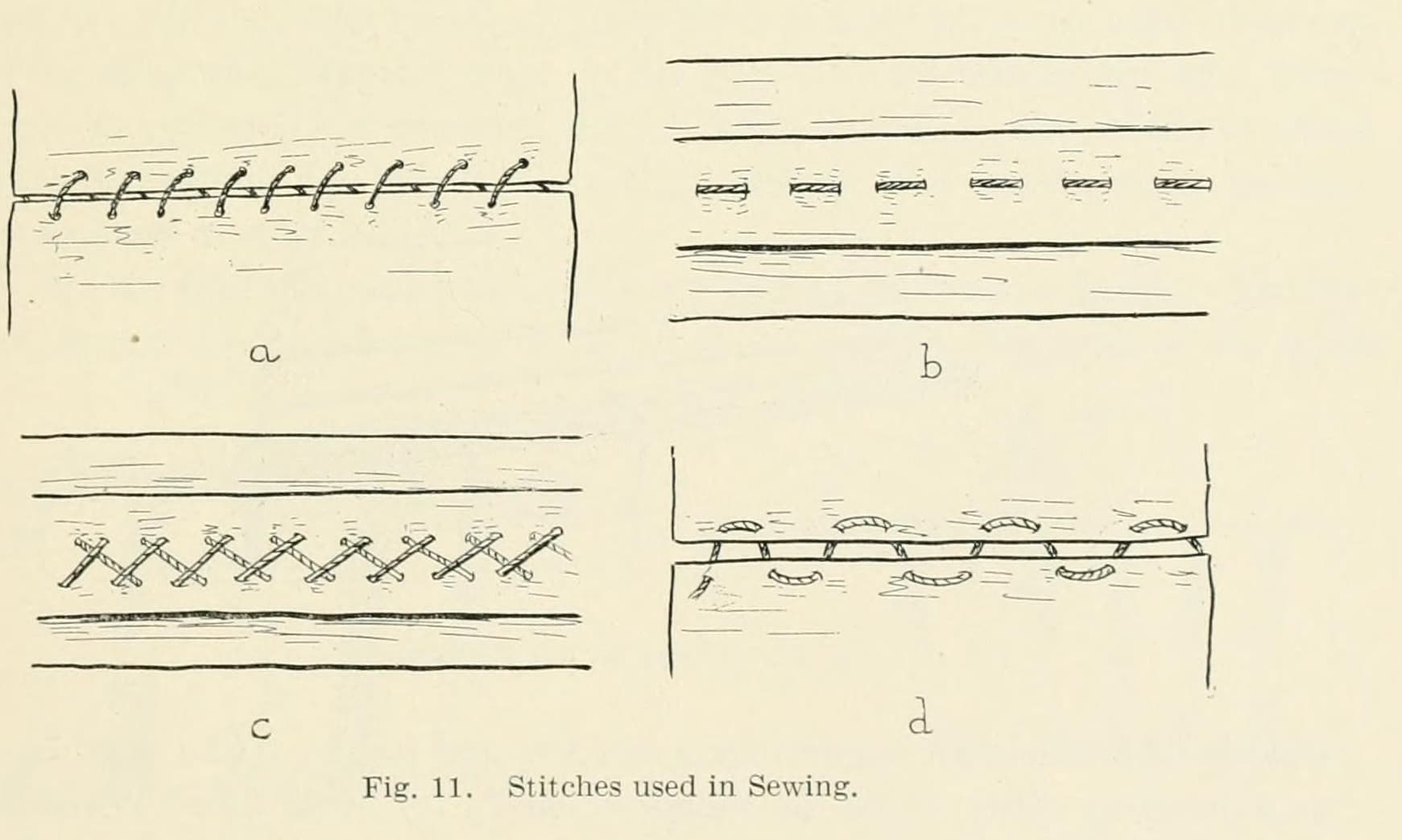
Blackfoot Sinew Thread: Dried Leg and Neck Sinew Shredded, Softened and Rolled Between the Palms (Wissler, 1910)
ដោយ Tex
វាយនភណ្ឌ និង ស្បែក
6
0
0
0
0
0
CC0 សាធារណៈ
ប្លង់នេះត្រូវបានចេញផ្សាយក្រោម CC0។ អ្នកមានសិទ្ធិចម្លង កែប្រែ ចែកចាយ និងប្រើប្រាស់ដោយមិនចាំបាច់សុំអនុញ្ញាត។
គាំទ្រអ្នកបង្កើតដោយទិញផលិតផលតាមរយៈប្លង់របស់ពួកគេ ដែលពួកគេទទួលបាន កម្រៃជើងសារអ្នកបង្កើត កំណត់ដោយអ្នកលក់ ឬបង្កើតកំណែថ្មីនៃប្លង់នេះ ហើយបញ្ចូលជាការតភ្ជាប់ក្នុងប្លង់របស់អ្នកដើម្បីចែករំលែកចំណូល។