

Making Steel in a Bessemer Converter — Mass Steel by Blowing Air Through Iron
Crucible steel was superb but slow, made a few kilograms at a time. In 1856 Henry Bessemer found a way to make steel by the tonne in about twenty minutes, and the price of steel collapsed from a luxury to a commodity. Rails, ships, bridges, and the first steel-framed buildings all became possible almost overnight.
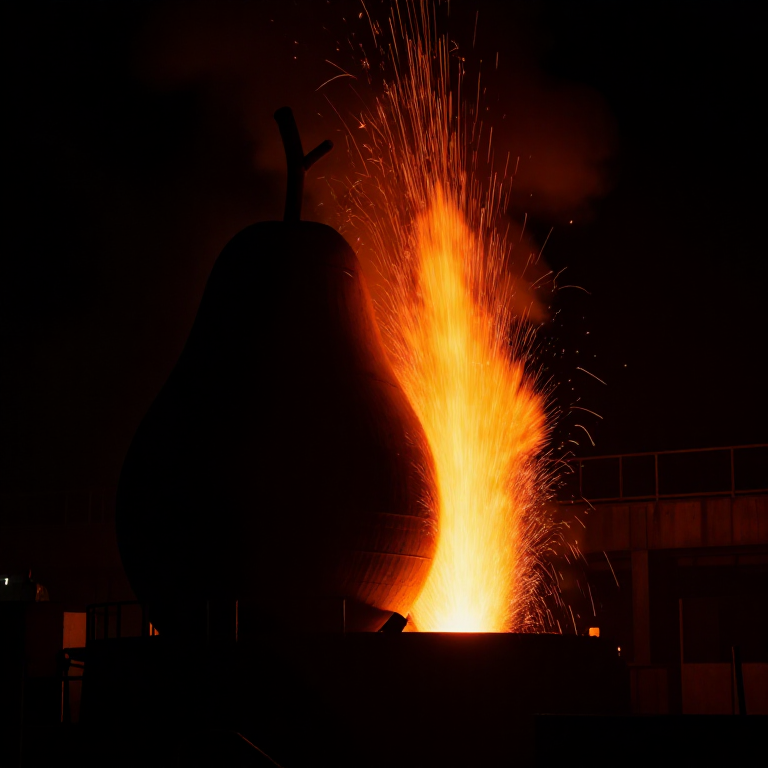
His method sounds reckless: blow cold air straight up through a vessel of molten pig iron. The oxygen in the blast burns out the silicon, manganese, and carbon that make pig iron brittle — and because those reactions give off enormous heat, the metal does not cool but actually gets hotter, staying liquid with no added fuel. A volcano of flame and sparks roars from the converter's mouth while the carbon burns away.
The trick is knowing when to stop. The operator reads the flame, and the instant the carbon is gone, halts the blow and adds back a precise dose of carbon-rich spiegeleisen to hit the exact steel he wants. Tilt, pour, and there is a ladle of molten steel where minutes before there was crude pig iron.
안내
Understand the converter
Understand the converter
Build and line the converter
Build and line the converter
이 단계의 재료:
 내화 벽돌120 개
필요한 도구:
 모종삽
모종삽Charge molten pig iron
Charge molten pig iron
이 단계의 재료:
 선철 덩이100 kg
Start the blast
Start the blast
필요한 도구:
 송풍기
송풍기Burn out the impurities
Burn out the impurities
Read the flame
Read the flame
필요한 도구:
 밀폐형 보안경
Stop at the drop
Stop at the drop
Recarburise with spiegeleisen
Recarburise with spiegeleisen
이 단계의 재료:
 경면철8 kg
Handle phosphoric iron
Handle phosphoric iron
이 단계의 재료:
 생석회10 kg
Pour into the ladle
Pour into the ladle
필요한 도구:
 잉곳 주형
잉곳 주형Strip and roll
Strip and roll
필요한 도구:
 압연기
압연기Appreciate the impact
Appreciate the impact
연결된 블루프린트 재료

관련 블루프린트
이 블루프린트들은 지식을 공유합니다 — 기술, 재료 또는 원리


CC0 퍼블릭 도메인
이 블루프린트는 CC0로 공개되었습니다. 어떤 목적으로든 자유롭게 복사, 수정, 배포 및 사용할 수 있습니다.
제품 구매를 통해 메이커를 지원하세요. 판매자가 설정한 메이커 커미션 을 받거나, 이 블루프린트의 새로운 반복을 만들어 연결로 포함시킬 수 있습니다.