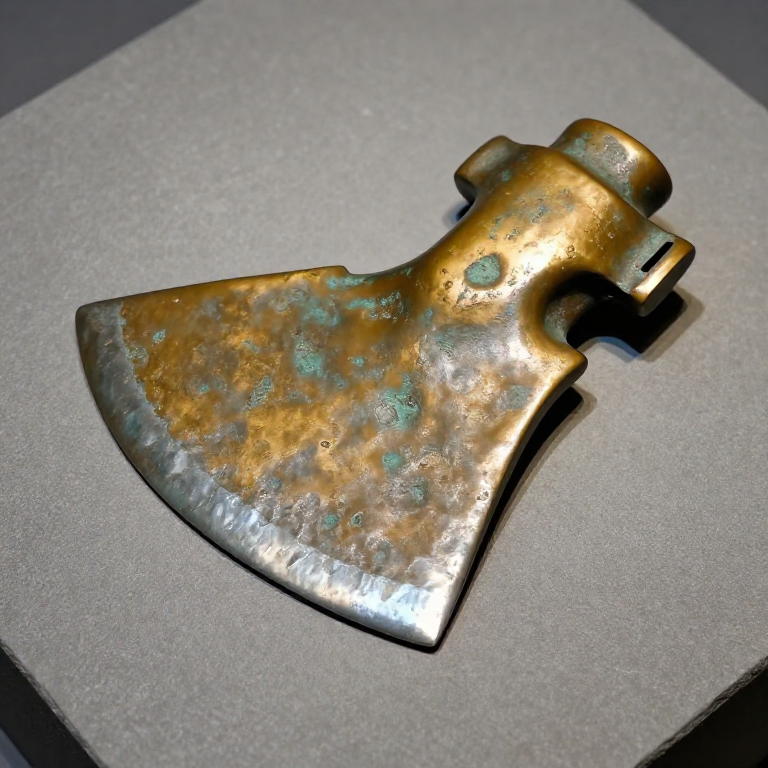


Casting a Bronze Flat Axe — The First Metal Cutting Tool
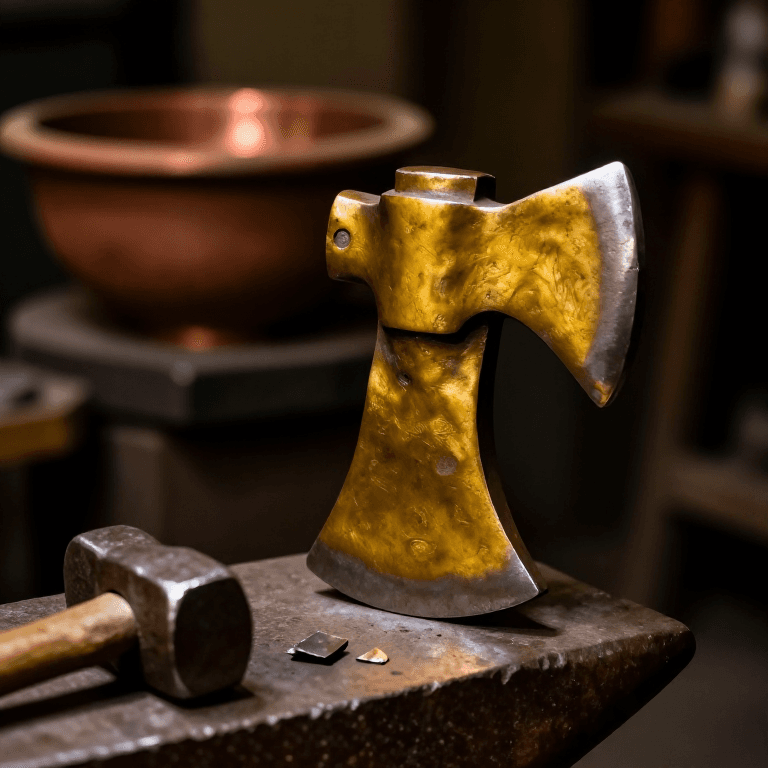
The flat axe was the first metal tool to surpass its stone predecessor in every way — sharper, more durable, and resharpened by simple hammering rather than knapping a new edge. Cast from bronze (roughly 90% copper, 10% tin), these axes appeared across Europe, the Near East, and East Asia from around 3300 BCE.
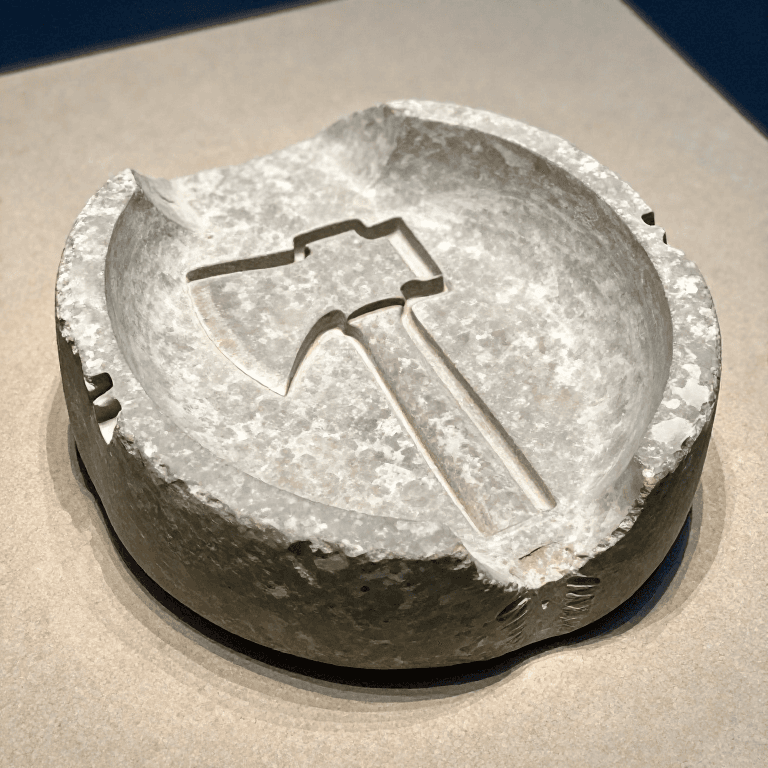
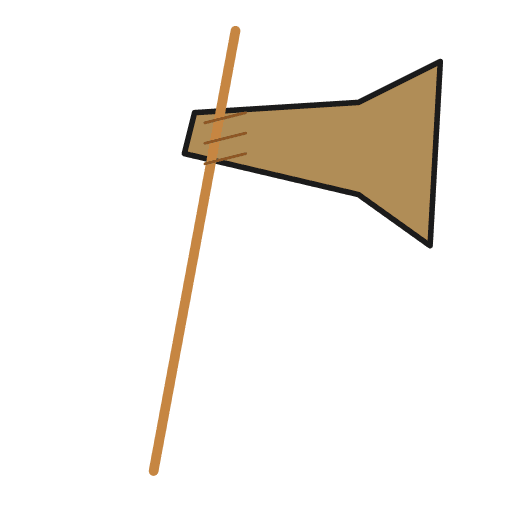
This blueprint uses an open-face stone mould — the simplest casting method. Molten bronze is poured into a carved soapstone cavity and allowed to cool. The resulting casting has one flat face (from the mould floor) and one slightly convex face (from the open top where the metal surface tensions). After demoulding, the axe is cold-hammered to harden the cutting edge, ground to shape, and hafted onto a wooden handle with rawhide lashing.
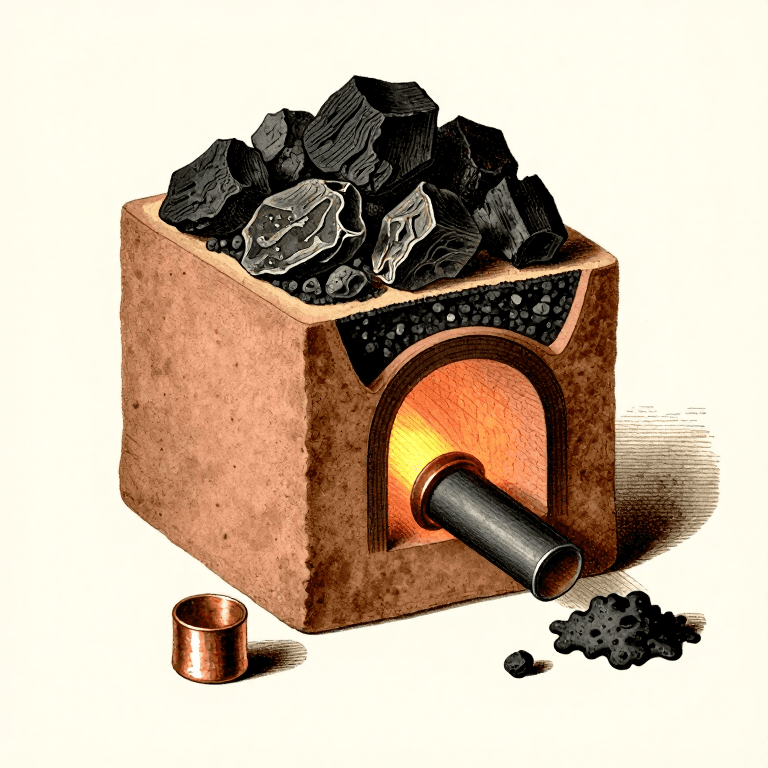
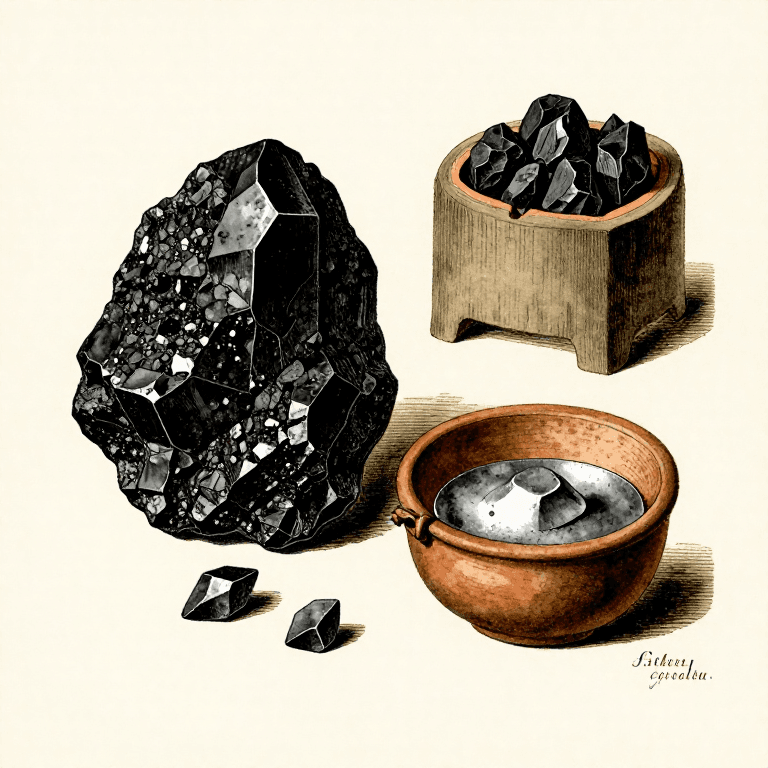
A single flat axe required the combined knowledge of mining, smelting, alloying, crucible-making, mould-carving, and woodworking — making it one of the most knowledge-intensive objects of its era.
안내
Prepare the mould
Prepare the mould
이 단계의 재료:
 동물 기름 (우지)30 g
Charge the crucible with bronze
Charge the crucible with bronze
이 단계의 재료:
 구리판270 g
Melt and alloy the bronze
Melt and alloy the bronze
이 단계의 재료:
 숯3 kg
숯3 kgPour the bronze into the mould
Pour the bronze into the mould
필요한 도구:
 도가니 집게
Cool and demould
Cool and demould
Remove the pour channel and flash
Remove the pour channel and flash
필요한 도구:
 망치돌
망치돌Cold-hammer the cutting edge
Cold-hammer the cutting edge
필요한 도구:
 평평한 돌판
Grind and sharpen
Grind and sharpen
이 단계의 재료:
 사암(연마재)1 개
 숫돌1 개
숫돌1 개Shape the haft
Shape the haft
Bind the axe head to the haft
Bind the axe head to the haft
이 단계의 재료:
 생가죽 끈2 m
재료
7- 30 g플레이스홀더
- 270 g플레이스홀더
- 3 kg플레이스홀더
- 1 개플레이스홀더
- 1 개플레이스홀더
- 2 m플레이스홀더
- 1 개플레이스홀더
연결된 블루프린트 재료
이 블루프린트로 만드는 것
관련 블루프린트
이 블루프린트들은 지식을 공유합니다 — 기술, 재료 또는 원리
CC0 퍼블릭 도메인
이 블루프린트는 CC0로 공개되었습니다. 어떤 목적으로든 자유롭게 복사, 수정, 배포 및 사용할 수 있습니다.
제품 구매를 통해 메이커를 지원하세요. 판매자가 설정한 메이커 커미션 을 받거나, 이 블루프린트의 새로운 반복을 만들어 연결로 포함시킬 수 있습니다.