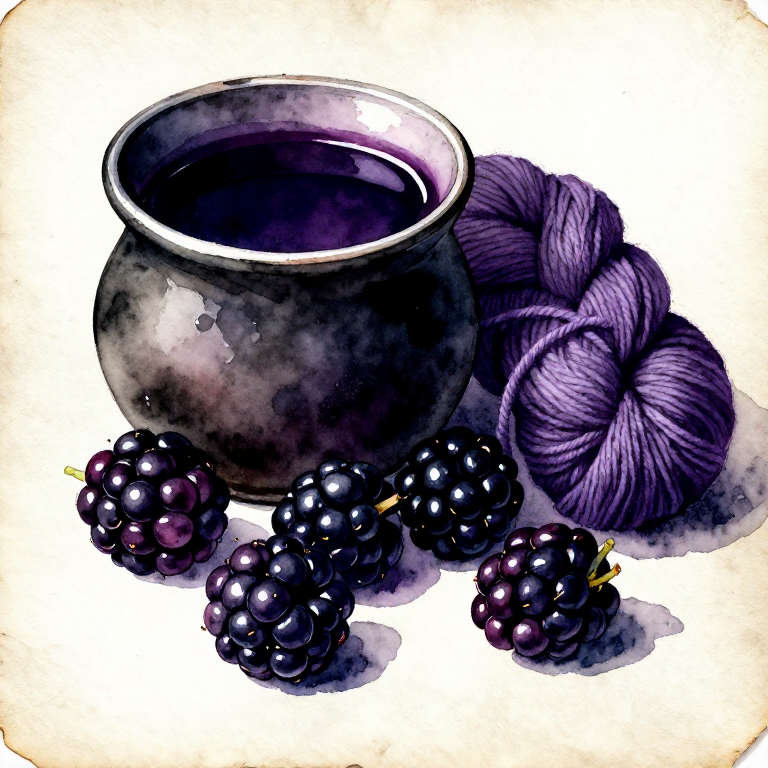


Dyeing Purple-Grey with Blackberries — The Hedgerow Dye of Prehistoric Europe
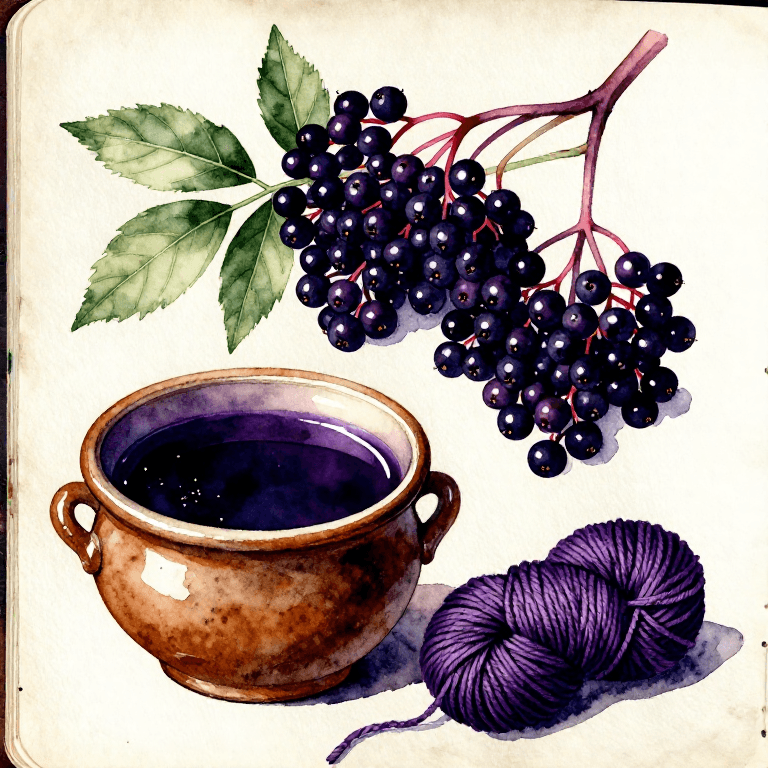
Blackberries (Rubus fruticosus and related species) have been used as a dye source since the earliest periods of human habitation in Europe. The ripe berries contain anthocyanin pigments — the same class of compounds that colour elderberries, blueberries, and red cabbage. On alum-mordanted wool, blackberry juice produces a range of soft purple-grey to dusty mauve shades. The colour is gentle and muted rather than vivid — a characteristic lavender-grey that is difficult to achieve from other natural dye sources.
Blackberries are among the most abundant wild fruits in temperate Europe and eastern North America, growing aggressively in hedgerows, woodland edges, and waste ground. Their availability made them one of the first dye sources discovered by early humans. The process is as simple as dyeing gets: crush berries, simmer, strain, add wool. No specialised knowledge or equipment is required.
The limitation of blackberry dye — and the reason it was superseded by more sophisticated dyes in later periods — is its poor lightfastness. Anthocyanin pigments are inherently unstable to light and washing. The beautiful purple-grey fades to brownish-grey within weeks of sunlight exposure. This does not diminish blackberry's value as a beginner's dye or for items stored away from light, but it explains why historical dyers moved to madder, indigo, and other more permanent dyes when they became available.
안내
Gather and weigh the ripe blackberries
Gather and weigh the ripe blackberries
Use 300-400% WOF of ripe blackberries. For 100 g of wool, gather 300-400 g of fully ripe berries. Blackberries must be completely ripe — dark purple-black all over, soft, and juicy. Under-ripe berries (with red sections) contain less anthocyanin and produce weak, pinkish results. Frozen blackberries work well — freezing breaks cell walls and releases more juice. Wash to remove insects and debris.
이 단계의 재료:
 블랙베리(생)350 g
필요한 도구:
 디지털 주방 저울
Crush the berries and add water
Crush the berries and add water
Place the blackberries in a dye pot and crush them thoroughly with a potato masher or wooden spoon. Add 4 litres of water. The mixture will be a vivid dark purple. Break up all whole berries — unbroken berries waste their dye content. The seeds are small and hard and will be strained out later.
필요한 도구:
 스톡 팟(깊은 냄비)
 나무 젓는 주걱
Simmer gently at 70-75°C for 30 minutes
Simmer gently at 70-75°C for 30 minutes
Bring the pot to a gentle simmer (70-75°C) and hold for 30 minutes. Do not boil — anthocyanins degrade rapidly at high temperatures, shifting the colour from purple toward dull brown. Keep the temperature moderate and stir occasionally. The liquid will be a deep, opaque purple.
필요한 도구:
 조리용 온도계
Strain out the berry pulp
Strain out the berry pulp
Strain the dye liquor through a fine mesh strainer into a clean pot. Press the pulp firmly to extract all remaining purple liquid. Seeds and pulp trapped in the wool will cause spotty, uneven colour — strain thoroughly. For cleanest results, strain a second time through muslin cloth. The strained liquor should be a clear, deep purple.
필요한 도구:
 고운 체
고운 체Dye alum-mordanted wool at 70°C for 45 minutes
Dye alum-mordanted wool at 70°C for 45 minutes
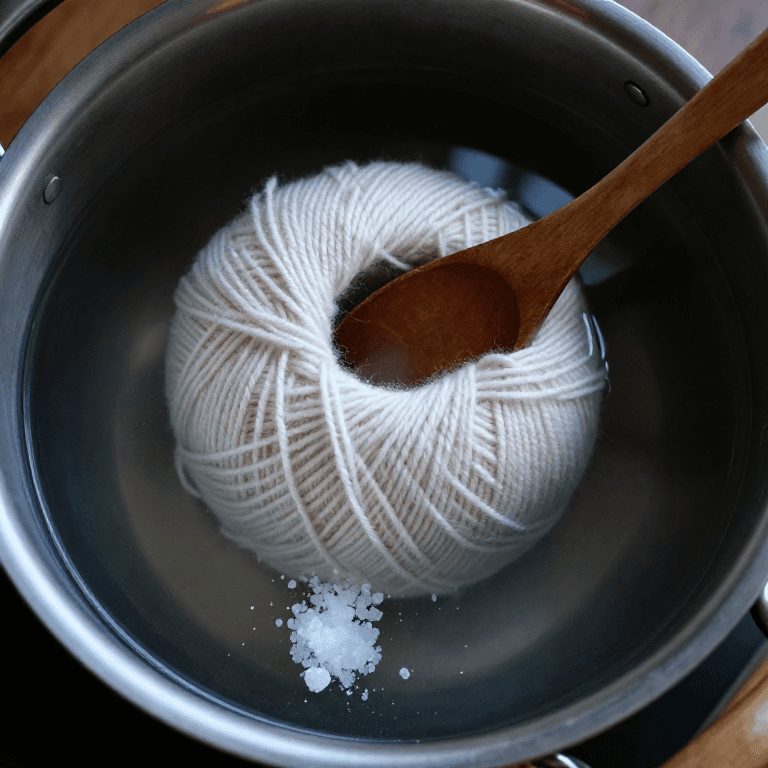
Pre-wet the alum-mordanted wool in lukewarm water for 15 minutes, squeeze gently, and lower it into the blackberry dye bath at room temperature. Slowly raise to 70°C over 15 minutes, then hold for 45 minutes. Turn gently every 10 minutes. The wool will develop a soft purple-grey to dusty mauve. The alum mordant helps fix the anthocyanins and produces a cleaner purple tone than un-mordanted wool, which tends toward grey.
이 단계의 재료:
 양모 실타래100 g
 백반(칼륨 명반)10 g
Cool overnight, rinse, and dry in shade
Cool overnight, rinse, and dry in shade
Turn off the heat and let the wool cool in the dye bath overnight. Remove, squeeze gently, and rinse in lukewarm water — the rinse water will run purple for some time. The final colour is a soft, muted purple-grey to dusty lavender — gentle and natural-looking. Lightfastness is poor — blackberry purple will fade noticeably within a few weeks of sunlight exposure, eventually settling to a warm brownish-grey. For this reason, blackberry-dyed items should be stored away from direct sunlight. Despite this limitation, the fresh colour is beautiful and the process is an ideal introduction to natural dyeing. Dry in shade.
연결된 블루프린트 재료
이 블루프린트로 만드는 것

관련 블루프린트
이 블루프린트들은 지식을 공유합니다 — 기술, 재료 또는 원리
CC0 퍼블릭 도메인
이 블루프린트는 CC0로 공개되었습니다. 어떤 목적으로든 자유롭게 복사, 수정, 배포 및 사용할 수 있습니다.
제품 구매를 통해 메이커를 지원하세요. 판매자가 설정한 메이커 커미션 을 받거나, 이 블루프린트의 새로운 반복을 만들어 연결로 포함시킬 수 있습니다.