예술
뷰티 및 웰니스
공예
문화 및 역사
엔터테인먼트
환경
음식 및 음료
역공학
과학
스포츠
기술
웨어러블
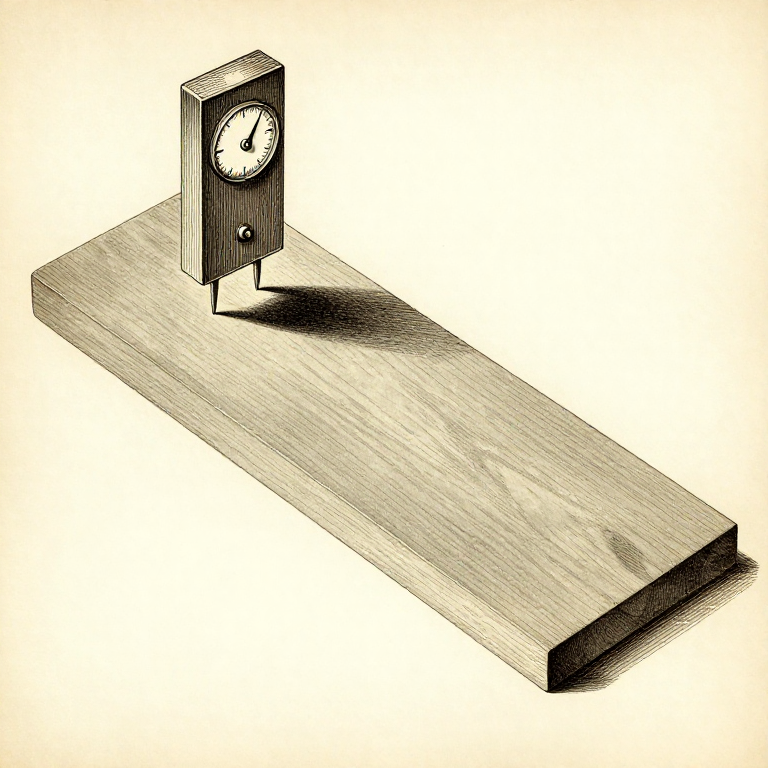


Equilibrium Moisture Content: The Wood Is Always Chasing the Room
Wood does not dry to a final value and stop. It settles towards whatever moisture content matches the air around it — its EQUILIBRIUM MOISTURE CONTENT — and when the air changes, it starts moving again.
So "kiln dried" says where the timber has BEEN, not where it is now. A board dried to 8% and then stored in an unheated shed at 80% relative humidity will be sitting near 16% within weeks, and it will shed all of that again indoors.
Which makes the most important step in woodworking one that involves no work at all: bring the timber into the room where the finished thing will live, and leave it there until it stops changing.
중급
3 hours
안내
1
1
What EMC actually depends on
What EMC actually depends on
Relative humidity is nearly all of it. Temperature has a small effect, and the species has almost none — an oak board and a pine board in the same room settle to within a percentage point of each other.
Rough figures worth carrying: 30% RH gives about 6% MC, 50% RH about 9%, 70% RH about 13%, 85% RH about 18%. Those are the numbers behind the seasonal swing, and they are why a heated house in winter is the harshest environment wood meets.
There is a lag, and it is useful. A thick board takes weeks to follow a change in the air, so a piece does not track every wet afternoon — it tracks the season. Thin stock follows much faster, which is why veneer and thin panels can move within days.
이 단계의 재료:
 경목 판재1 개
필요한 도구:
 습도계
습도계 함수율계
함수율계2
2
Acclimatise before you cut anything
Acclimatise before you cut anything
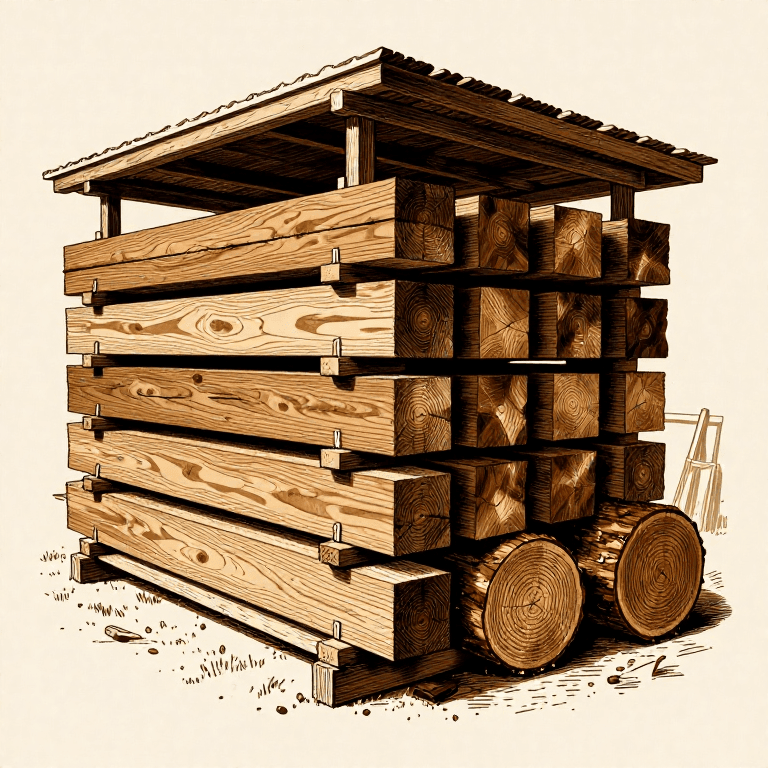
Bring the timber inside, sticker it so air reaches every face, and leave it. Two weeks is a reasonable minimum for boards up to about 25 mm; thicker stock and bigger changes need longer.
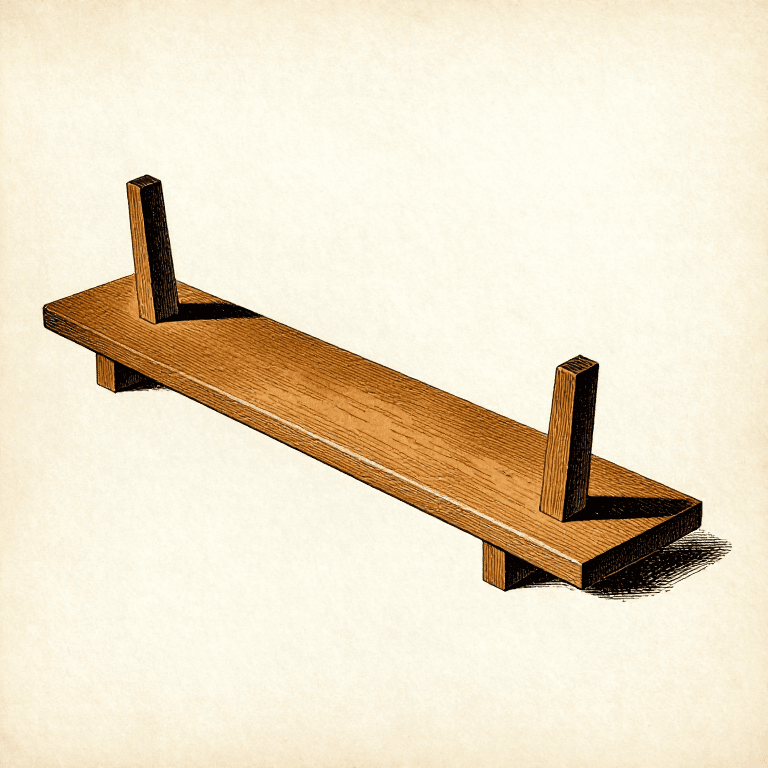
Stickering matters more than the waiting. A stack of boards face to face dries only at the edges, so the middle of the stack is still at the old moisture content when you start work — and it will move after the piece is finished. Thin sticks at 400 mm intervals, aligned vertically, let air at every surface.
Weigh a sample board instead of guessing when it is ready. The wood stops losing mass when it has reached equilibrium, and that is the same dry-to-constant-mass loop the chemistry batch uses — measurement, not judgement.
이 단계의 재료:
경목 판재1 개 마른 침엽수 판재1 개
필요한 도구:
 정밀 저울함수율계습도계
3
3
What a year of humidity does to a finished piece
What a year of humidity does to a finished piece
Jupyter 노트북 불러오는 중…
이 단계의 재료:
경목 판재1 개필요한 도구:
 데스크톱 컴퓨터습도계함수율계
4
4
A moisture meter, and what it is actually telling you
A moisture meter, and what it is actually telling you
A pin meter measures electrical resistance between two pins, which tracks moisture content well between about 7% and 25%. Outside that range it is guessing, and below 7% it reads badly.
Set the species correction if the meter has one, and push the pins IN LINE with the grain — readings across the grain come out high. Measure at several places and at different depths: the surface of a board can be 3 points drier than its core, and the core is what will move later.
The oven-dry method is the reference when it matters: weigh a small offcut, dry it until the mass stops changing, weigh again, and the moisture content is the mass lost divided by the dry mass. It destroys the sample and it is the only method that cannot be fooled.
이 단계의 재료:
경목 판재1 개필요한 도구:
 핀식 목재 함수율 측정기정밀 저울
관련 블루프린트
이 블루프린트들은 지식을 공유합니다 — 기술, 재료 또는 원리
CC0 퍼블릭 도메인
이 블루프린트는 CC0로 공개되었습니다. 어떤 목적으로든 자유롭게 복사, 수정, 배포 및 사용할 수 있습니다.
제품 구매를 통해 메이커를 지원하세요. 판매자가 설정한 메이커 커미션 을 받거나, 이 블루프린트의 새로운 반복을 만들어 연결로 포함시킬 수 있습니다.