
주석을 함유한 광석에서 주석 추출 — 팬닝 및 제련
안내
주석석(캐시터라이트) 이해하기
주석석(캐시터라이트) 이해하기
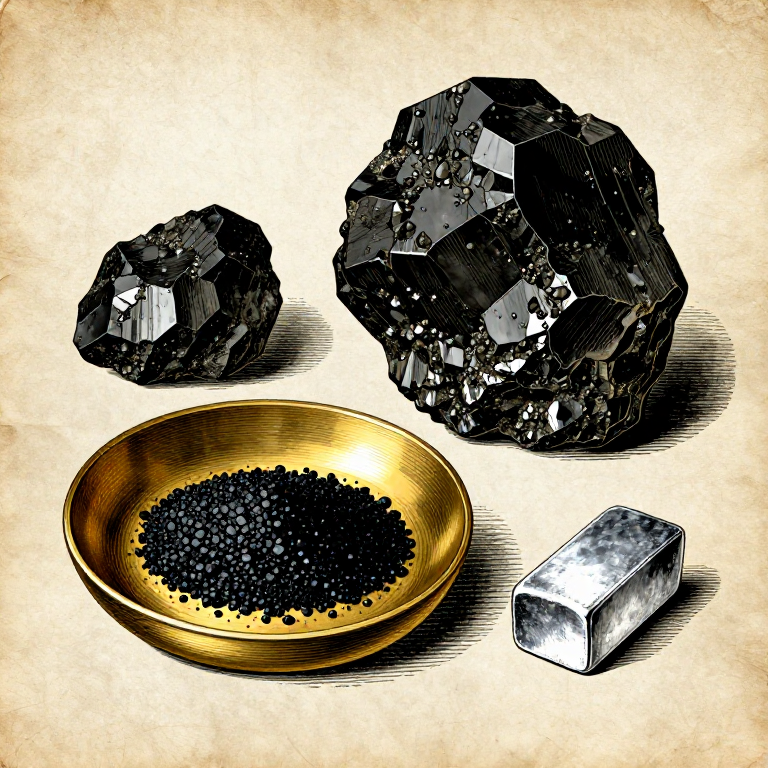
주석석(SnO₂)은 이산화주석으로, 주석의 주요 광석입니다. 모스 경도 6-7, 비중 6.8-7.1로 매우 높으며(일반 모래의 2.6보다 훨씬 무거움), 색상은 검은색부터 적갈색까지 다양합니다. 높은 밀도 덕분에 사금 채취와 유사한 방법인 비중 선별(패닝)로 쉽게 분리할 수 있습니다.
충적층 주석석 찾기
충적층 주석석 찾기
주석석은 주석 함유 화강암 하류의 충적(하천) 퇴적물에서 무거운 검은색 또는 짙은 갈색 입자로 발견됩니다. 하천 자갈 속, 무거운 광물이 모이는 강 굽이의 안쪽, 큰 바위 뒤를 찾아보세요. 역사적인 주석 산지로는 콘월(영국), 동남아시아, 볼리비아, 중앙아프리카가 있습니다.
Collect stream gravel
Collect stream gravel
Shovel gravel and sand from locations where heavy minerals accumulate: bedrock crevices, behind boulders, and the inside of river bends. Fill a bucket with raw gravel. The cassiterite grains are small (1-5 mm) and mixed with ordinary sand, quartz, and other minerals.
이 단계의 재료:
 개울 자갈20 kilogram
필요한 도구:
 삽
삽 20리터 양동이
Pan for cassiterite
Pan for cassiterite
Use a gold pan or wide shallow bowl. Add a scoop of gravel and fill halfway with water. Swirl and tilt to wash away light material. Heavy cassiterite grains sink to the bottom center. Continue washing until only black heavy grains remain. This is identical to gold panning technique.
필요한 도구:
 사금 팬
사금 팬Identify cassiterite grains
Identify cassiterite grains
Cassiterite grains are: black to dark reddish-brown, very heavy (noticeably heavier than quartz), have a brilliant adamantine (diamond-like) luster when scratched, and a white to pale brown streak. Magnetite (another heavy black mineral) is magnetic — test with a magnet to separate it from cassiterite.
필요한 도구:
 자석
자석 휴대용 확대경 10배
Concentrate the ore
Concentrate the ore
Repeat panning until you have a concentrate of mostly cassiterite. Use the magnet to remove any magnetite grains. You need at least 500 g of clean cassiterite concentrate for a worthwhile smelt. From 20 kg of gravel in a good tin-bearing stream, expect 100-500 g of concentrate.
Dry the concentrate
Dry the concentrate
Spread the cassiterite concentrate on a flat surface in the sun to dry completely. Wet ore in a hot crucible causes dangerous steam explosions. Drying takes 2-4 hours in direct sunlight. The dry concentrate should feel gritty and pour freely.
Prepare the crucible and charcoal
Prepare the crucible and charcoal
Use a clay or graphite crucible that can withstand 1200°C. Mix the dry cassiterite with an equal volume of powdered charcoal. The charcoal provides carbon for reduction: SnO₂ + 2C → Sn + 2CO₂. Tin melts at only 232°C, far below the smelting temperature, so it collects as liquid at the bottom.
이 단계의 재료:
 덩어리 숯500 gram
 내화 점토 도가니1 개
Set up the forge
Set up the forge
Place the loaded crucible in a charcoal forge with bellows. Tin smelting requires lower temperature than copper or iron — about 1000-1200°C is sufficient for reduction. Pack charcoal around and above the crucible. Put on safety equipment: leather apron, face shield, leather gloves.
이 단계의 재료:
 숯 원반10 kilogram
필요한 도구:
 풀무
풀무 가죽 앞치마
 얼굴 가리개
Smelt for 1-2 hours
Smelt for 1-2 hours
Pump the bellows to bring the forge to operating temperature. Maintain heat for 1-2 hours. The cassiterite reduces to metallic tin which, being liquid above 232°C, pools at the bottom of the crucible below a layer of slag and ash. Tin smelting is one of the easiest metal reductions.
Pour the molten tin
Pour the molten tin
Using crucible tongs, lift the crucible from the forge. Carefully pour the contents into a preheated sand or stone mold. The heavy molten tin pours first (bottom of crucible), followed by lighter slag. Tin is silvery-white when molten and solidifies quickly due to its low melting point.
필요한 도구:
 도가니 집게
 사암 잉곳 주형
Cool and extract the ingot
Cool and extract the ingot
Tin solidifies within minutes. Once cool, remove the ingot from the mold. The tin ingot will be covered with a thin layer of slag — break this off by tapping. Clean tin is silvery-white and very soft — you can scratch it with a fingernail (Mohs hardness 1.5).
Verify it is tin
Verify it is tin
Tin has distinctive properties: bending a tin bar produces an audible crackling sound called 'tin cry' caused by crystal twinning. It is very soft (scratched by a coin), silvery-white, and does not rust. When heated, it melts easily at 232°C — far below a candle flame temperature.
Weigh and record yield
Weigh and record yield
Weigh the clean tin ingot. From 500 g of good cassiterite concentrate, expect 300-350 g of metallic tin (60-70% yield). Record the source location, concentrate weight, smelt time, and tin yield. This tin is ready for alloying with copper to make bronze, or for tinplating, soldering, and pewterwork.
필요한 도구:
 디지털 주방 저울
연결된 블루프린트 재료

CC0 퍼블릭 도메인
이 블루프린트는 CC0로 공개되었습니다. 어떤 목적으로든 자유롭게 복사, 수정, 배포 및 사용할 수 있습니다.
제품 구매를 통해 메이커를 지원하세요. 판매자가 설정한 메이커 커미션 을 받거나, 이 블루프린트의 새로운 반복을 만들어 연결로 포함시킬 수 있습니다.