예술
뷰티 및 웰니스
공예
문화 및 역사
엔터테인먼트
환경
음식 및 음료
역공학
과학
스포츠
기술
웨어러블
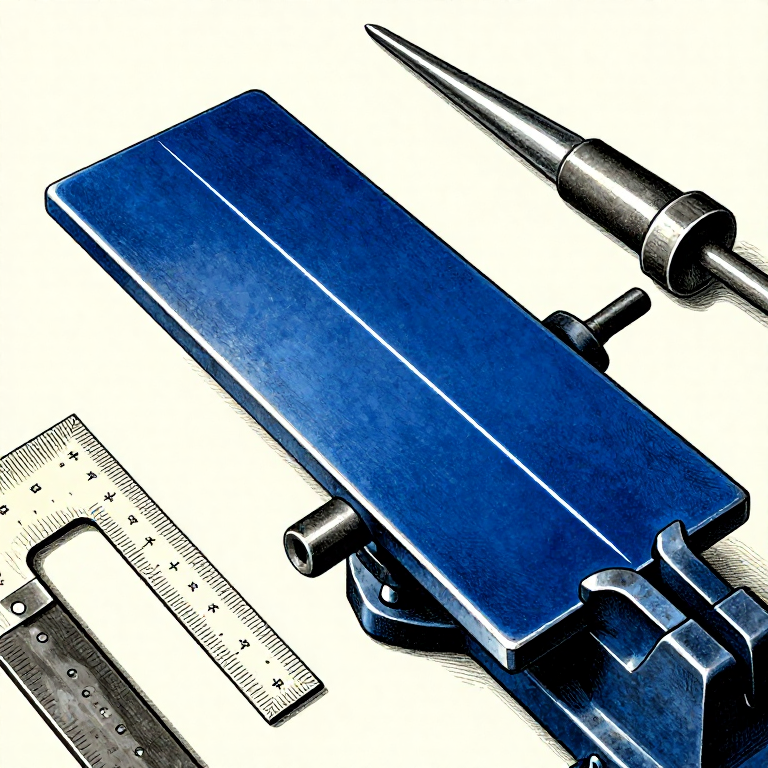


Filing to a Line: Marking Out, and Knowing When to Stop
A file does not know where to stop. That is the whole problem: the part is right until one stroke too many, and there is no way back.
So the work is done before any filing starts. A line scribed into the metal, not drawn on it; the line left visible rather than filed away; and the discipline of approaching it from the safe side, slowing down as you get close.
This is also where filing stops being a rough operation. A part filed to a scribed line by hand can hold a tenth of a millimetre, which is tighter than most people expect and quite good enough for most of what gets made.
중급
3 hours
안내
1
1
Scribe a line — never draw one
Scribe a line — never draw one
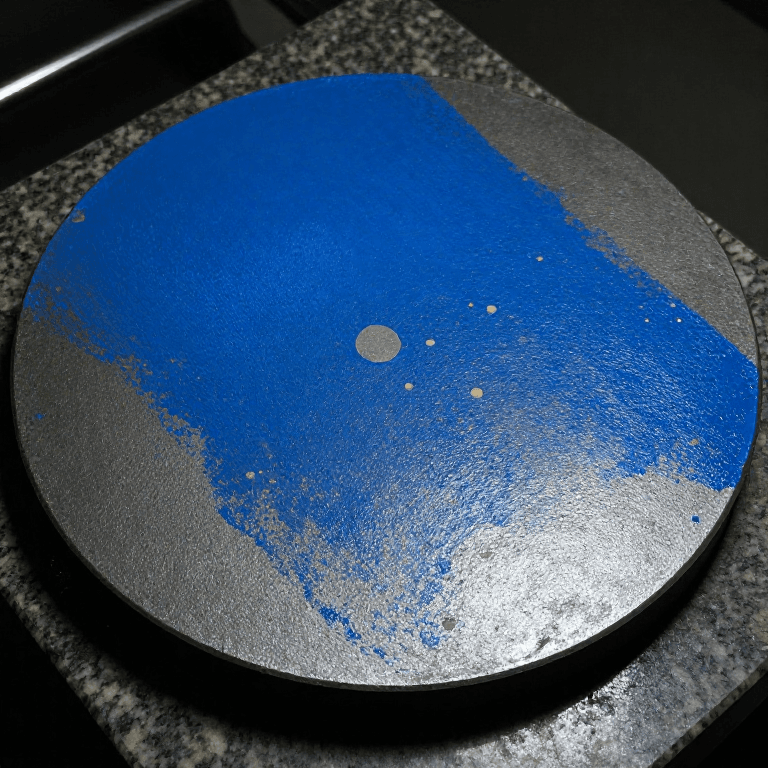
Coat the surface with marking blue, let it dry, then cut the line with a scriber held against a square or a rule. The scriber removes the blue and cuts a fine groove into the metal, so the line is bright, thin and permanent.
A pencil line is about 0.5 mm wide and rubs off; a marker line is wider still and dissolves in cutting oil. Neither can be filed to accurately, because half the width of the line is more than the tolerance you are working to.
Scribe once, firmly. Going over a line repeatedly produces two or three parallel grooves and then you have to decide which one you meant. On soft metal like aluminium or brass a scriber cuts deeply, so a lighter hand is needed.
이 단계의 재료:
 청색 마킹 페이스트1 개
필요한 도구:
 금긋개
금긋개 직각자
직각자 직각 자
직각 자2
2
File to the line, not through it
File to the line, not through it
Work until the scribed groove is just being touched along its whole length, and stop there. The finished surface should still show the line, or half of it.
Which half is a decision made before you start. For a part that must fit INTO something, leave the line on — file up to it and no further. For one that something must fit into, take the line off. Deciding halfway through is how a part ends up a millimetre undersize.
Getting the line to be touched evenly along its whole length is the real skill. If it is being reached at one end first, that end is low: ease off there and concentrate the stroke on the high end, which is the cross-filing diagnosis applied to a line instead of a surface.
필요한 도구:
 줄 (손줄)
 확대 루페
확대 루페 중량급 바이스
3
3
The tolerance a hand can actually hold
The tolerance a hand can actually hold
Jupyter 노트북 불러오는 중…
필요한 도구:
확대 루페 계산기
계산기 버니어 캘리퍼스
4
4
Saw first, file last
Saw first, file last
Cut close to the line with a hacksaw — about a millimetre outside it — and file only that last millimetre away.
The removal-rate figures in the cross-filing rung make the case: three millimetres off a small face is over an hour of filing, and a hacksaw takes it in under a minute. Filing exists to make a surface true, not to remove stock, and using it for bulk removal is the commonest reason a beginner decides hand tools are hopeless.
Leave enough to clean up the saw marks and the wander — a millimetre is comfortable, half is tight, and sawing exactly to the line means any wander cuts INTO the finished part with nothing left to correct it.
이 단계의 재료:
 연강판1 개
필요한 도구:
 쇠톱(핵소)줄 (손줄)중량급 바이스
 투명 보안경
관련 블루프린트
이 블루프린트들은 지식을 공유합니다 — 기술, 재료 또는 원리
CC0 퍼블릭 도메인
이 블루프린트는 CC0로 공개되었습니다. 어떤 목적으로든 자유롭게 복사, 수정, 배포 및 사용할 수 있습니다.
제품 구매를 통해 메이커를 지원하세요. 판매자가 설정한 메이커 커미션 을 받거나, 이 블루프린트의 새로운 반복을 만들어 연결로 포함시킬 수 있습니다.