
How to build a Forge Trip Hammer
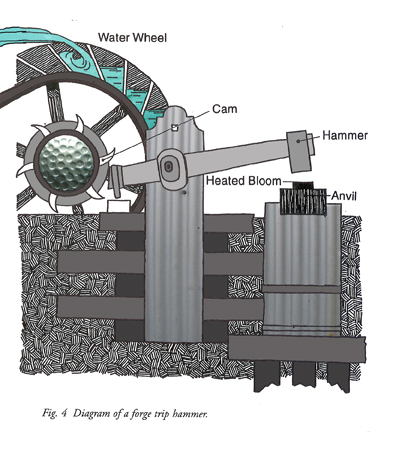
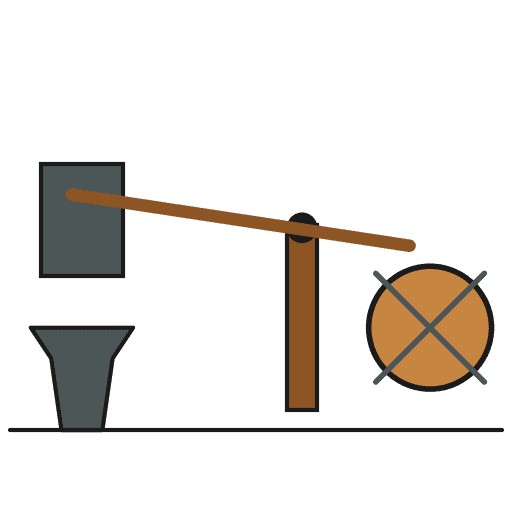
A trip hammer (helve or tilt hammer) is a water-powered forging hammer used by blacksmiths to pound metal far faster than a hand hammer — a technology in use for over 2,000 years and the backbone of the medieval hammer mill. Flowing water turns a wheel; the wheel's axle carries protruding cams that repeatedly catch the tail of a heavy pivoted beam (the helve), lifting the iron hammer head and then releasing it to fall under gravity onto the anvil below.
This blueprint documents the mechanism and assembly sequence of the classic water-powered forge trip hammer. It converts the steady rotation of a water wheel into the vertical, repetitive striking force needed to consolidate a bloom and shape wrought iron and steel. Many historical forges paired it with a trompe — a falling-water air compressor that blasts the forge with no mechanical bellows. Source: Wikipedia — Trip hammer; mechanism diagram after Fig. 4 (forge trip hammer).
안내
Divert flowing water to the wheel
Divert flowing water to the wheel
Cut a channel (a leat or sluice) that diverts part of a stream or river to the site and delivers a steady flow to where the wheel will sit. A gate at the head of the channel lets you start, stop and throttle the flow. The whole machine runs on this moving water — gravity and flow are the only power source.
이 단계의 재료:
 수로 수문1 개
필요한 도구:
 삽
삽Build the water wheel on an iron axle
Build the water wheel on an iron axle
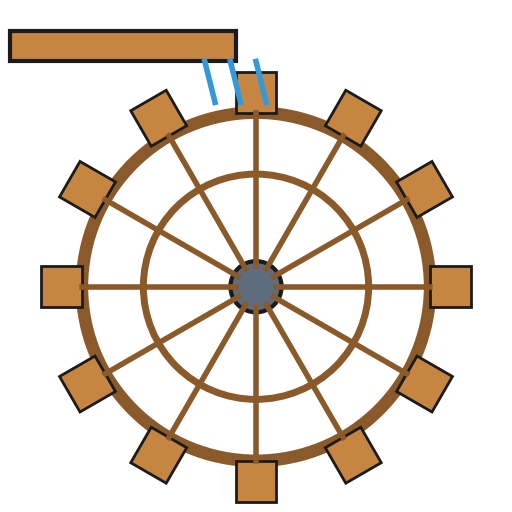
Build a water wheel and mount it on a strong iron axle turning in fixed bearings. Position it so the diverted water strikes the wheel — over the top (overshot) or against the lower blades (undershot). The pushing water gives constant rotational torque at the axle.
이 단계의 재료:
 물레방아1 개
 철 차축1 개
필요한 도구:
 목공용 톱
목공용 톱Fit the camshaft
Fit the camshaft
Couple a heavy timber or iron camshaft to the water wheel's axle so it turns with the wheel. This rotating shaft is what will drive the hammer.
이 단계의 재료:
 나무 캠축1 개
필요한 도구:
 자귀
자귀Space iron cams around the camshaft
Space iron cams around the camshaft
Fit protruding curved iron cams (lugs) around the camshaft. Each cam is the finger that will catch and lift the hammer beam once per pass. More cams around the shaft means more blows per rotation.
이 단계의 재료:
 철 캠1 세트
필요한 도구:
 대장간 화덕
Make the helve (hammer beam) and pivot
Make the helve (hammer beam) and pivot
Shape a heavy timber beam — the helve — and mount it on a fixed pivot (fulcrum) so it rocks like a see-saw: the tail on the camshaft side, the head on the anvil side.
이 단계의 재료:
 해머 자루 보1 개
 나무 들보1 개
필요한 도구:
목공용 톱Forge and fit the iron hammer head
Forge and fit the iron hammer head
Forge a heavy iron hammer head and fix it to the working end of the helve. This is the mass that does the pounding; its weight, dropping from height, delivers the blow.
이 단계의 재료:
 철 해머 머리1 개
필요한 도구:
대장간 화덕 대장간 망치
Set the anvil under the head
Set the anvil under the head
Bed a heavy iron anvil into a solid base directly beneath the hammer head, aligned so the head lands square on the anvil face. The workpiece sits here to be struck.
이 단계의 재료:
 모루1 개
모루1 개필요한 도구:
삽Align the cams to the helve tail
Align the cams to the helve tail
Position the helve so its tail sits in the path of the cams. As the camshaft rotates, each cam must catch the underside of the tail, lift it, then release it cleanly as the cam rotates past.
필요한 도구:
자귀Run it: lift and drop
Run it: lift and drop
Open the sluice. The wheel turns, the camshaft turns, and each cam lifts the helve tail — raising the head. The instant the cam passes, the tail drops and the head falls under gravity onto the anvil. One cam pass = one blow. This is the whole cycle, repeating as long as the water flows.
Regulate the blow with the sluice gate
Regulate the blow with the sluice gate
Control the hammer with the gate at the head of the channel: more water means a faster wheel and faster, harder blows; less water slows or stops it. The gate is the throttle.
이 단계의 재료:
수로 수문1 개Optional — add a trompe for the forge blast
Optional — add a trompe for the forge blast
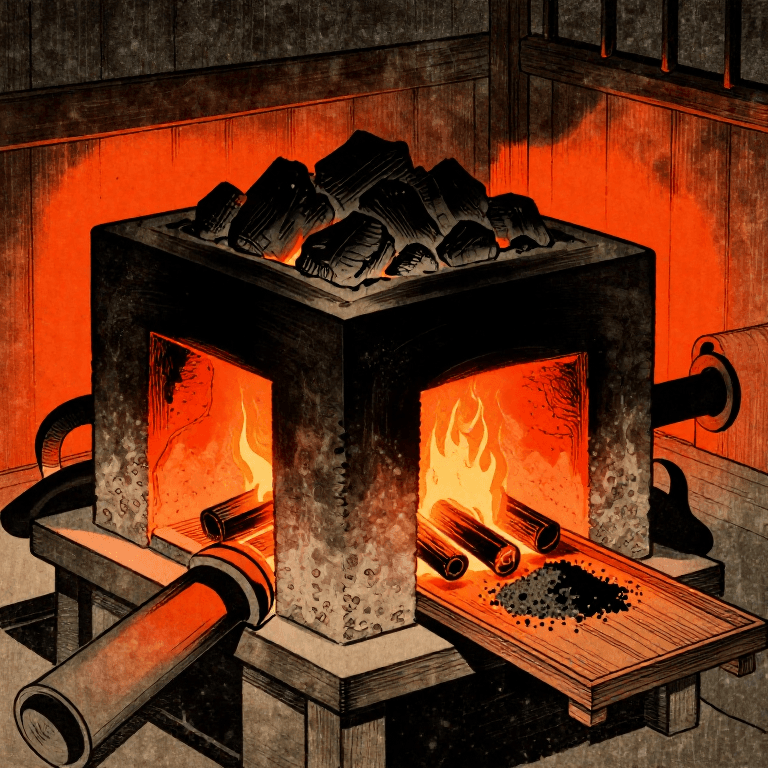
Many historical forges added a trompe: water falling down a pipe draws air in with it, compresses it in a chamber below, and pipes that steady blast to the forge fire — no bellows, no fan. It powers the forge from the same falling water that drives the hammer.
이 단계의 재료:
 나무 트롱프 관1 개
Forge under the hammer
Forge under the hammer
Heat the workpiece in the forge — for consolidating a spongy iron bloom, or drawing out a bar. Hold it on the anvil under the falling head and let the hammer do the work: consolidating the bloom, drawing, and shaping far faster than a hand hammer ever could.
이 단계의 재료:
 해면철 덩이1 개
필요한 도구:
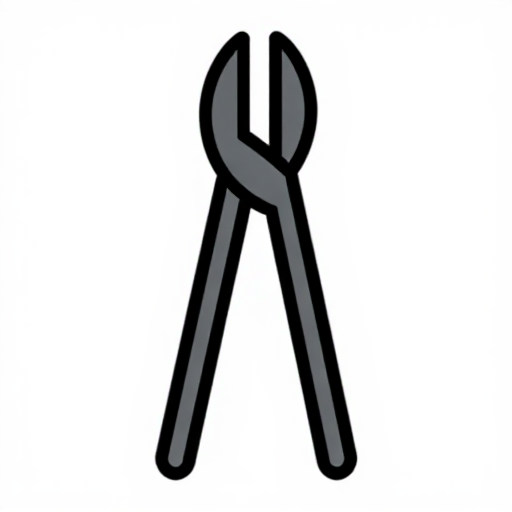 대장간 집게
How it works, and why it mattered
How it works, and why it mattered
The core idea: a trip hammer converts the rotational energy of a water wheel into a vertical, repeating blow. The cam is a lifter, not a driver — it only raises the head; gravity delivers the force. Blows-per-minute is set by the number of cams times the wheel speed; blow force is set by the head's mass and how high it is lifted.
Why it mattered: before steam, this is how the world's wrought iron and steel was shaped where water was available — over 2,000 years of blooms consolidated and bars drawn under water power. The same principle scaled up into the steam hammer of the 1840s and the industrial revolution that followed. A handful of water-powered forge hammers are still worked by hand today.
재료
11- 1 개플레이스홀더
- 1 개플레이스홀더
- 1 개플레이스홀더
- 1 개플레이스홀더
- 1 세트플레이스홀더
- 1 개플레이스홀더
- 1 개플레이스홀더
- 1 개플레이스홀더
- 1 개플레이스홀더
- 1 개플레이스홀더
- 1 개플레이스홀더
연결된 블루프린트 재료
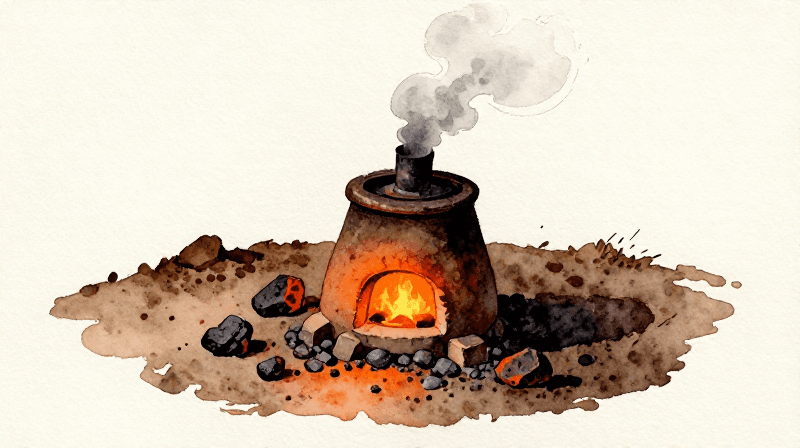
이 블루프린트로 만드는 것
관련 블루프린트
이 블루프린트들은 지식을 공유합니다 — 기술, 재료 또는 원리
CC0 퍼블릭 도메인
이 블루프린트는 CC0로 공개되었습니다. 어떤 목적으로든 자유롭게 복사, 수정, 배포 및 사용할 수 있습니다.
제품 구매를 통해 메이커를 지원하세요. 판매자가 설정한 메이커 커미션 을 받거나, 이 블루프린트의 새로운 반복을 만들어 연결로 포함시킬 수 있습니다.