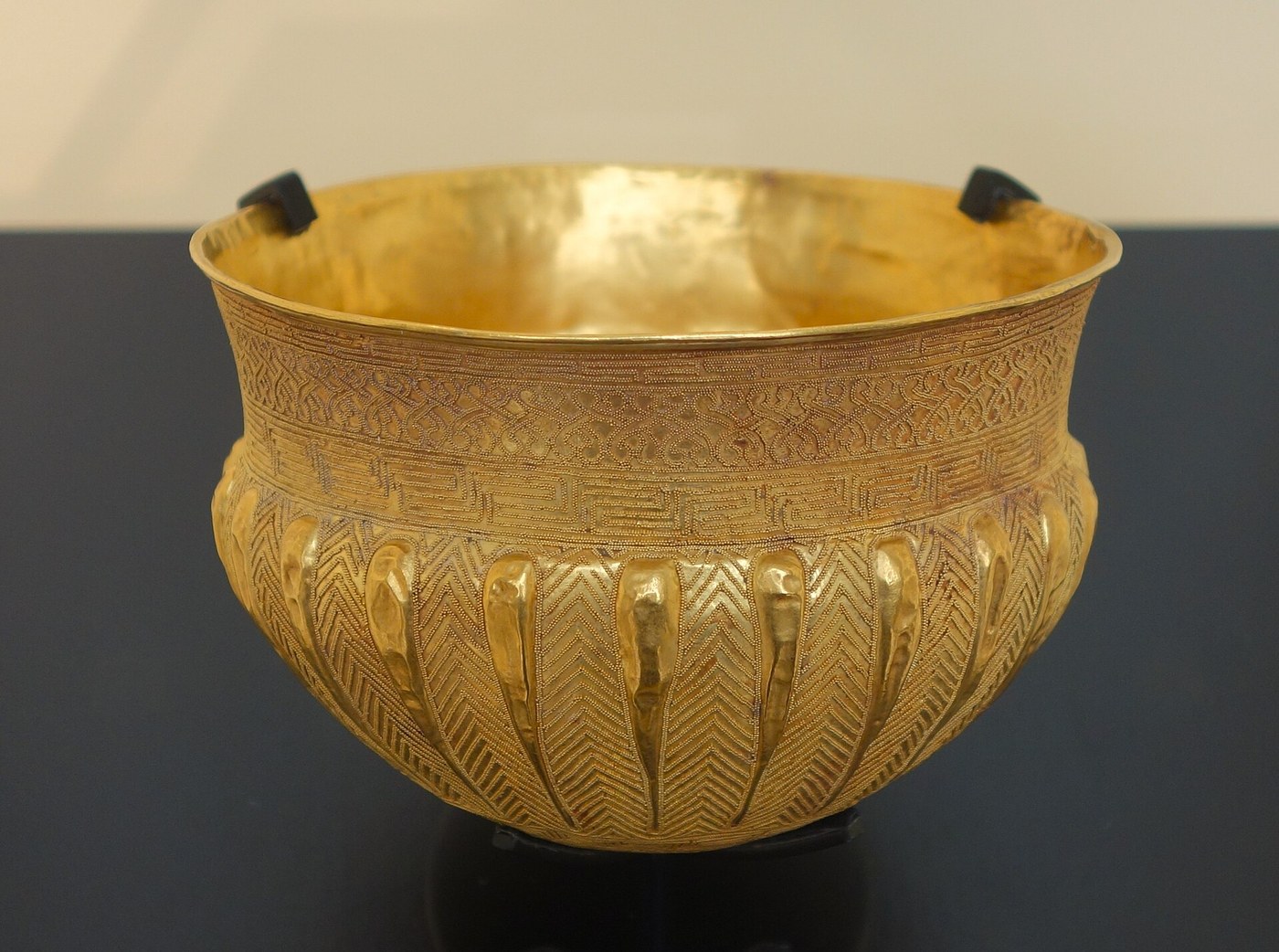


Granulazione Etrusca — Sfere d'Oro senza Saldatura
Gli Etruschi attaccavano all'oro delle sferette minuscole — fino a 0,14 millimetri — e il punto di attacco non si vede. Niente saldatura, niente grumo, niente alone. Per secoli nessuno ha capito come facessero.
Il trucco non è una saldatura ma una lega eutettica. Metti un pochino di rame fra la sfera e la lastra, scaldi fino a circa 890 gradi — ben sotto i 1064 gradi di fusione dell'oro — e all'interfaccia si forma una lega rame-oro che fonde a quella temperatura più bassa. Cola per un attimo, lega i due pezzi, e si risolidifica. Il rame è così poco che il giunto sparisce.
Serve mano ferma e un controllo della fiamma che si impara solo sbagliando. Fai le prove su ritagli prima di toccare il pezzo buono.
안내
Taglia la lamina d'oro in ritagli piccolissimi
Taglia la lamina d'oro in ritagli piccolissimi
Taglia la lamina sottile in quadratini da mezzo millimetro. Più uniformi sono i ritagli, più uniformi verranno le sfere.
이 단계의 재료:
 24K 금박판 0.13 mm1 장
필요한 도구:
 보석 실톱
보석 실톱Disponi i ritagli sul carbone
Disponi i ritagli sul carbone
Metti i ritagli su un blocco di carbone, ben separati. Se si toccano, fondendo diventano una sfera sola più grande.
필요한 도구:
 숯 덩이
숯 덩이Scalda finché non si arrotolano da sole
Scalda finché non si arrotolano da sole
Passa la fiamma sui ritagli. Appena fondono, la tensione superficiale li tira in sfera perfetta da sola. Non serve fare nulla — l'oro liquido vuole già essere una sfera.
필요한 도구:
 프로판 토치
Setaccia le sfere per misura
Setaccia le sfere per misura
Passa le sfere in setacci di maglie diverse. In un motivo le sfere devono essere della stessa misura: una sola più grossa si nota subito.
Prepara la colla di rame
Prepara la colla di rame
Mescola un sale di rame con una colla organica leggera (colla animale o gomma) e acqua, fino a una pasta liquida. Il rame è il segreto; la colla serve solo a tenere ferme le sfere fino al calore.
이 단계의 재료:
 탄산구리10 g
 아교50 ml
Metti pochissimo rame
Metti pochissimo rame
Usa la quantità minima possibile. Troppo rame e il giunto si vede: resta un alone rossastro e la superficie non è più oro pulito.
Posiziona le sfere con un pennello a punta
Posiziona le sfere con un pennello a punta
Con un pennello bagnato prendi una sfera per volta e posala sul disegno. Lavora con la lente: a questa misura l'occhio nudo non basta.
필요한 도구:
 휴대용 확대경 10배
Asciuga completamente
Asciuga completamente
Lascia asciugare tutto prima di scaldare. Se resta acqua, il vapore fa saltare via le sfere e il motivo si scompone.
Scalda lentamente fino a bruciare la colla
Scalda lentamente fino a bruciare la colla
Scalda piano: prima la colla brucia e il carbonio riduce il rame a metallo. Questa fase va fatta con calma, altrimenti le sfere si spostano.
필요한 도구:
프로판 토치 내화 벽돌
내화 벽돌Porta a circa 890 gradi e togli la fiamma
Porta a circa 890 gradi e togli la fiamma
Alza la fiamma e guarda la superficie. Nell'istante in cui vedi un lampo umido — la lega eutettica che cola — togli subito la fiamma. Un secondo in più e le sfere affondano nella lastra.
필요한 도구:
프로판 토치Raffredda e controlla la tenuta
Raffredda e controlla la tenuta
Fai raffreddare all'aria, poi passa uno spazzolino morbido. Le sfere staccate non erano legate: rimettile e ripeti solo su quella zona.
Decapa e lucida
Decapa e lucida
Decapa in acido citrico per togliere l'ossido di rame in superficie, poi lucida leggermente. Non strofinare forte: le sfere sono attaccate solo in un punto minuscolo.
이 단계의 재료:
 시트르산100 g
Storia e contesto
Storia e contesto
Che cosa succede davvero. La granulazione etrusca si descrive come saldatura colloidale, ma il termine più preciso è diffusione eutettica. A una temperatura ben sotto i 1064 °C di fusione dell'oro, all'interfaccia oro-rame si forma una lega eutettica che cola quanto basta per creare un legame metallurgico permanente, e poi si risolidifica tenendo la temperatura ferma o abbassandola un poco. Il rame introdotto è talmente poco che il giunto è quasi invisibile e la superficie d'oro sembra continua.
Quanto erano piccole. Gli Etruschi arrivavano a granuli di 0,14 mm. Per confronto: i Sumeri usavano grani da circa 2 mm, i Troiani da 1,1 a 0,4 mm, i Greci circa 0,25 mm. Non è solo bravura manuale — sfere così piccole hanno un rapporto superficie/volume che rende il processo eutettico molto più delicato da controllare.
Il mistero e i Castellani. Per secoli studiosi e metallurgisti non riuscirono a capire come gli Etruschi ottenessero la granulazione senza traccia di saldatura. Nella prima metà dell'Ottocento gli scavi intorno a Roma riportarono alla luce oreficerie etrusche che finirono sotto gli occhi della famiglia Castellani, orafi romani, che ci lavorò sopra per anni. Il problema della saldatura colloidale fu risolto del tutto solo all'inizio del Novecento, dopo la morte di Castellani.
Perché la tensione superficiale fa il lavoro. Nel passo 3 non modelli niente: l'oro fuso diventa sfera da solo perché la sfera è la forma con la superficie minima a parità di volume. È lo stesso motivo per cui una goccia d'acqua è tonda. Tutta la produzione dei granuli si appoggia a un fenomeno fisico che lavora gratis.
Una nota onesta sul rischio. Qui non si maneggia nulla di tossico: oro, un pizzico di sale di rame, colla e calore. È un lavoro a caldo come la forgia o il forno da ceramica. Il rischio vero è bruciare il pezzo, non avvelenarsi.
CC0 퍼블릭 도메인
이 블루프린트는 CC0로 공개되었습니다. 어떤 목적으로든 자유롭게 복사, 수정, 배포 및 사용할 수 있습니다.
제품 구매를 통해 메이커를 지원하세요. 판매자가 설정한 메이커 커미션 을 받거나, 이 블루프린트의 새로운 반복을 만들어 연결로 포함시킬 수 있습니다.