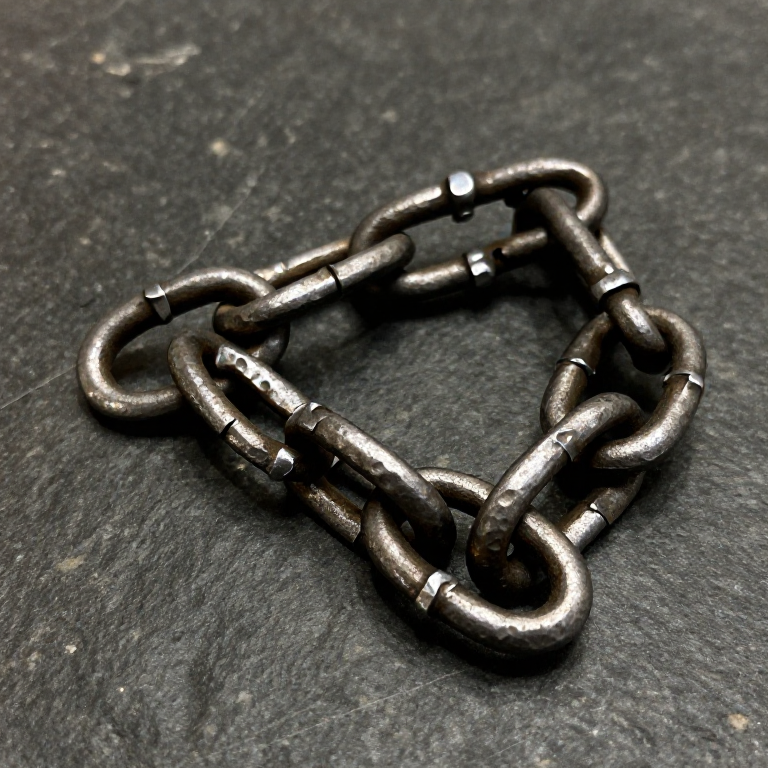


Forging an Iron Chain — Bending, Welding, and Linking
The iron chain is the strongest flexible connection in pre-industrial technology. Chains anchor ships, lift drawbridges, suspend cauldrons over fires, secure doors, and hang signs. Each link is an individual forge weld — the chain is only as strong as its weakest weld, so chain-making demands consistent technique across dozens or hundreds of identical operations.
A chain is made by bending short lengths of iron rod into open ovals, threading each new link through the previous one before closing it, and forge welding the joint shut. The rhythm is repetitive: bend, thread, heat, weld, move on. A skilled chain-maker works in a continuous cycle, keeping several links at different stages in the fire at once.
Chain-making is the ultimate test of forge welding skill. Each weld is small and must be completed quickly before the thin rod cools. There is no room to reheat and retry without risking damage to the adjacent links. It teaches economy of movement and precise heat control.
안내
Cut the link blanks
Cut the link blanks
이 단계의 재료:
 덩어리 숯5 kg
필요한 도구:
 단조 망치
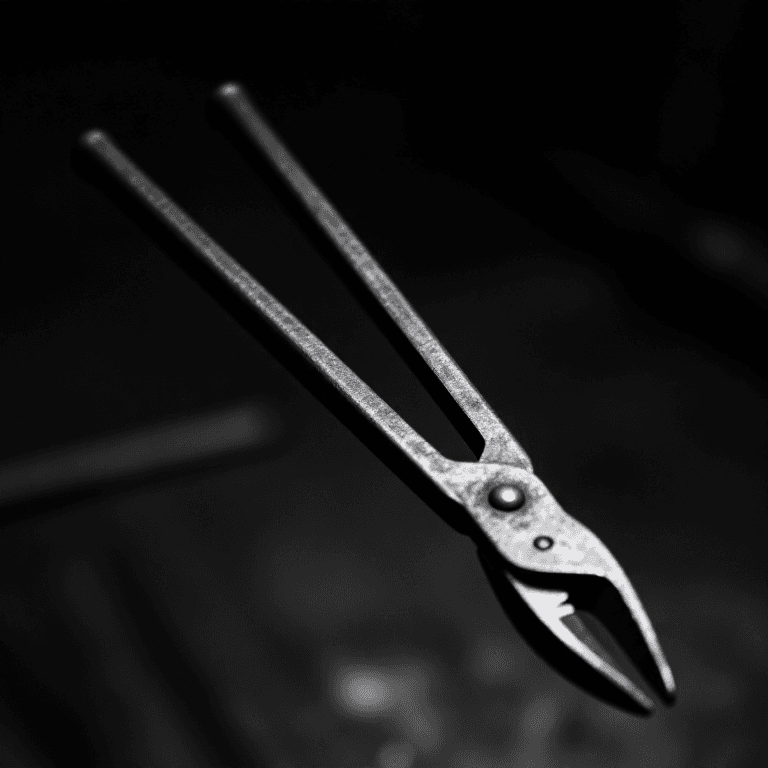
단조 망치 대장간 집게
 화덕 (대장간 불)
Scarf both ends of each blank
Scarf both ends of each blank
Bend the first link into an oval
Bend the first link into an oval
Flux and forge weld the joint
Flux and forge weld the joint
Shape the welded link
Shape the welded link
Thread and weld subsequent links
Thread and weld subsequent links
Test the chain
Test the chain
연결된 블루프린트 재료
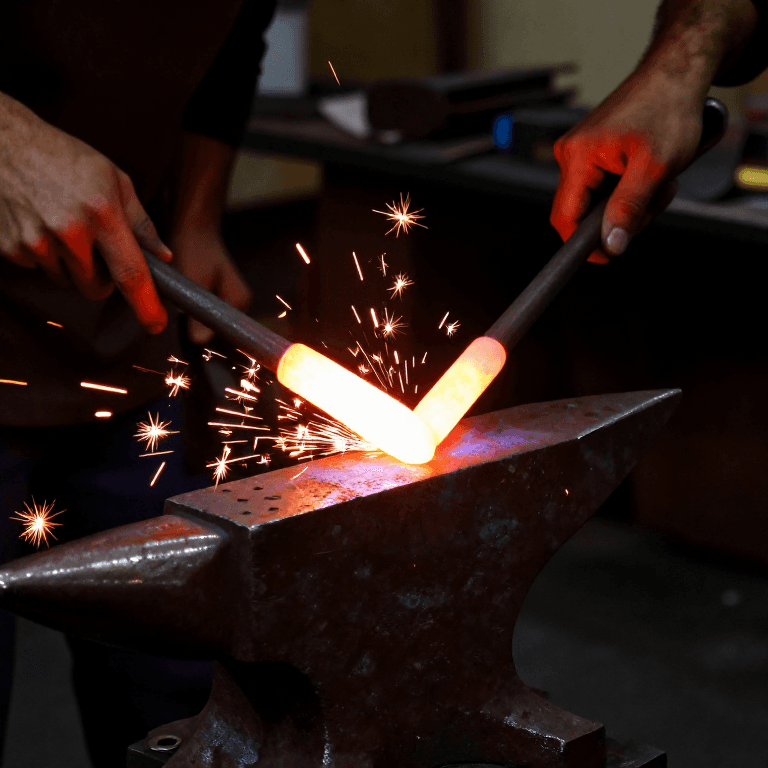
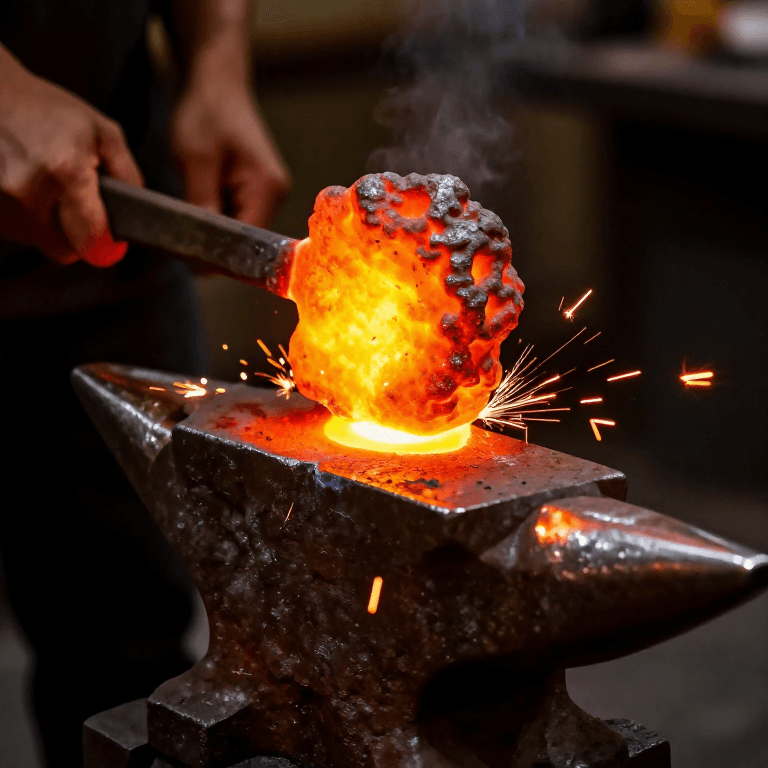
관련 블루프린트
이 블루프린트들은 지식을 공유합니다 — 기술, 재료 또는 원리
CC0 퍼블릭 도메인
이 블루프린트는 CC0로 공개되었습니다. 어떤 목적으로든 자유롭게 복사, 수정, 배포 및 사용할 수 있습니다.
제품 구매를 통해 메이커를 지원하세요. 판매자가 설정한 메이커 커미션 을 받거나, 이 블루프린트의 새로운 반복을 만들어 연결로 포함시킬 수 있습니다.