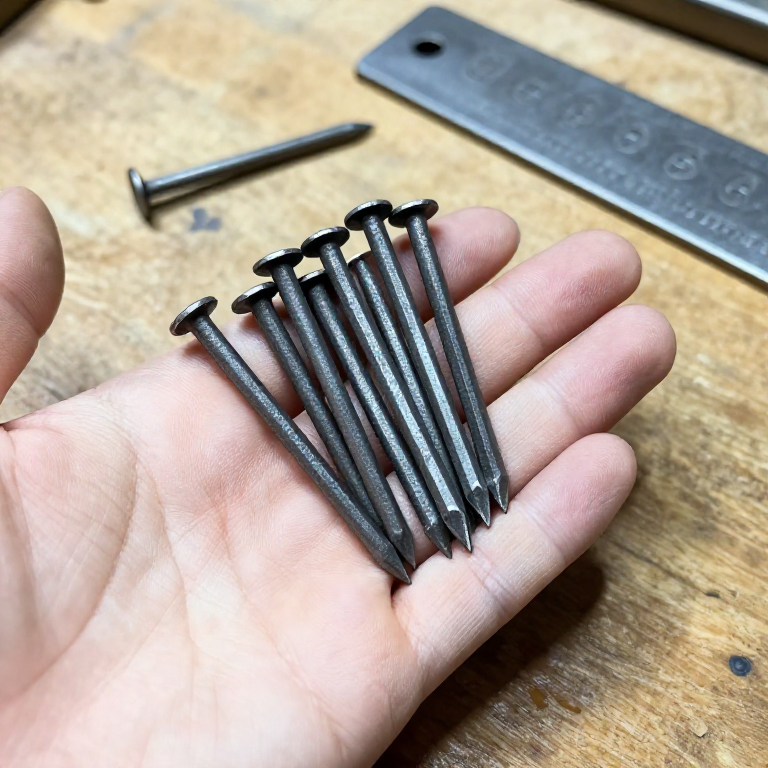


Forging Iron Nails by Hand — Drawing, Cutting, and Heading
Before wire-drawing machines and nail-cutting factories, every nail was forged individually by hand. A skilled nailer could produce 200-300 nails per day — and millions were needed. The Roman army alone consumed an estimated 7 tonnes of iron nails for a single fortress. Medieval cathedrals, Viking longships, and colonial farmhouses all depended on hand-forged nails.
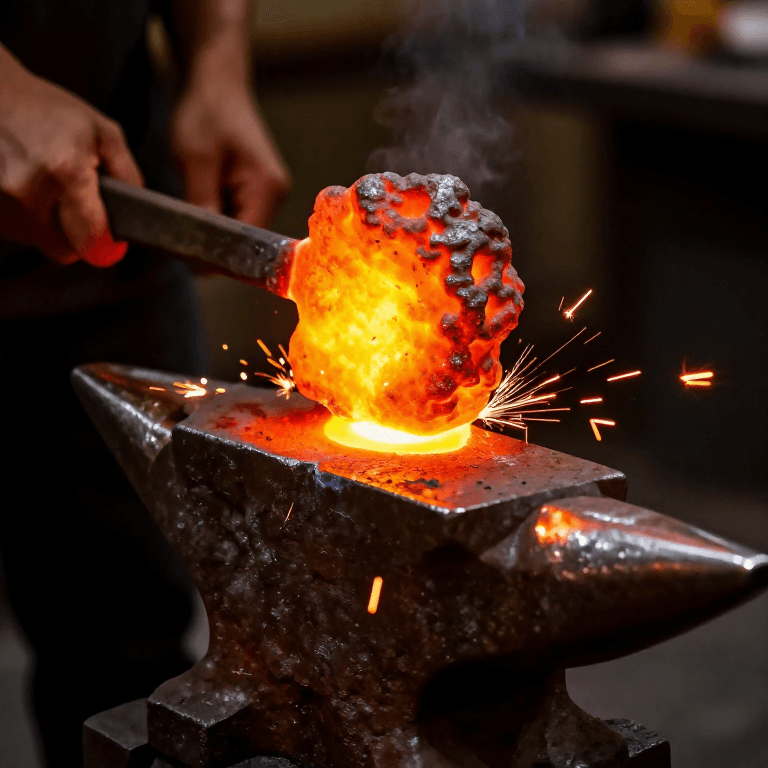
The process is deceptively simple: heat an iron rod, draw it to a taper, cut it to length, insert the cut end into a heading plate, and hammer the protruding end into a head. Each nail takes about 30 seconds for an experienced nailer — making it one of the fastest and most repetitive forge operations.
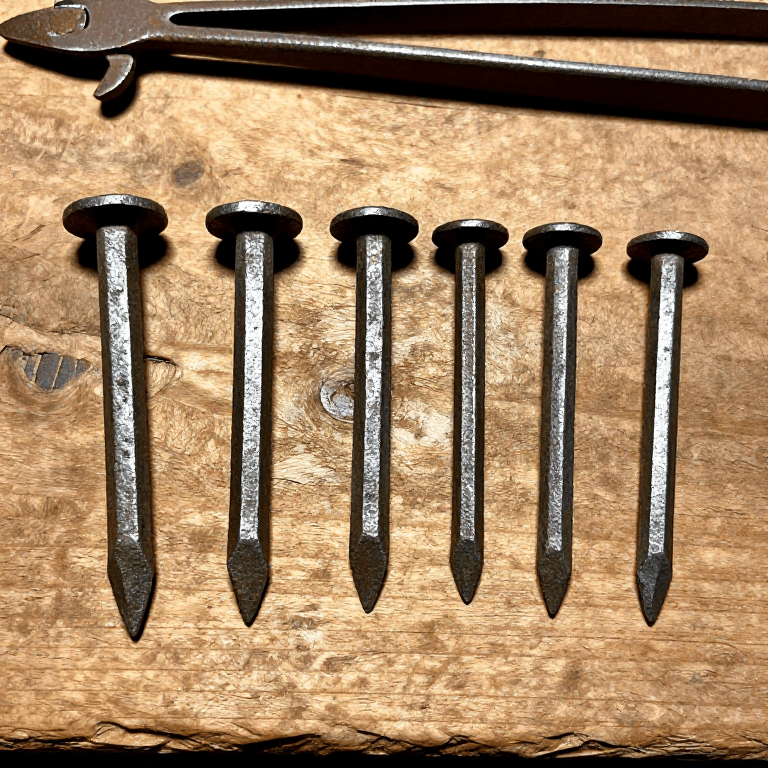
Hand-forged nails have a characteristic square cross-section (from the square rod stock) and an irregular rose head from the final heading blows. This is the blueprint for the most-produced iron object in human history.
안내
Prepare the nail rod
Prepare the nail rod
이 단계의 재료:
 덩어리 숯2 kg
Heat the tip to forging temperature
Heat the tip to forging temperature
필요한 도구:
 화덕 (대장간 불)
Draw the taper
Draw the taper
필요한 도구:
 단조 망치
단조 망치 대장간 집게
Cut nearly through at the nail length
Cut nearly through at the nail length
Insert into the heading plate
Insert into the heading plate
Forge the head
Forge the head
Snap free and quench
Snap free and quench
이 단계의 재료:
 물2 l
물2 lRepeat for the batch
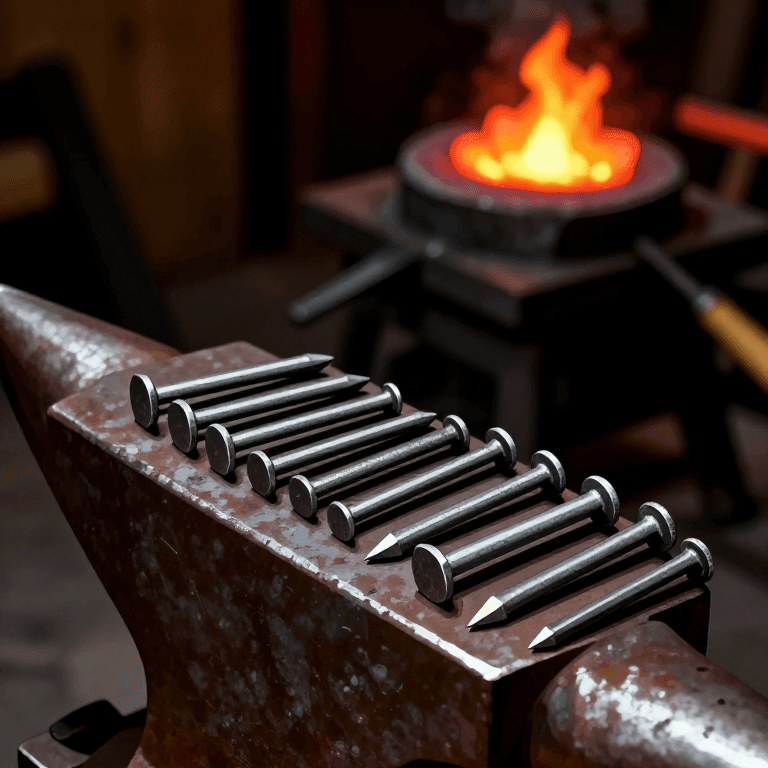
Repeat for the batch
연결된 블루프린트 재료
관련 블루프린트
이 블루프린트들은 지식을 공유합니다 — 기술, 재료 또는 원리
CC0 퍼블릭 도메인
이 블루프린트는 CC0로 공개되었습니다. 어떤 목적으로든 자유롭게 복사, 수정, 배포 및 사용할 수 있습니다.
제품 구매를 통해 메이커를 지원하세요. 판매자가 설정한 메이커 커미션 을 받거나, 이 블루프린트의 새로운 반복을 만들어 연결로 포함시킬 수 있습니다.