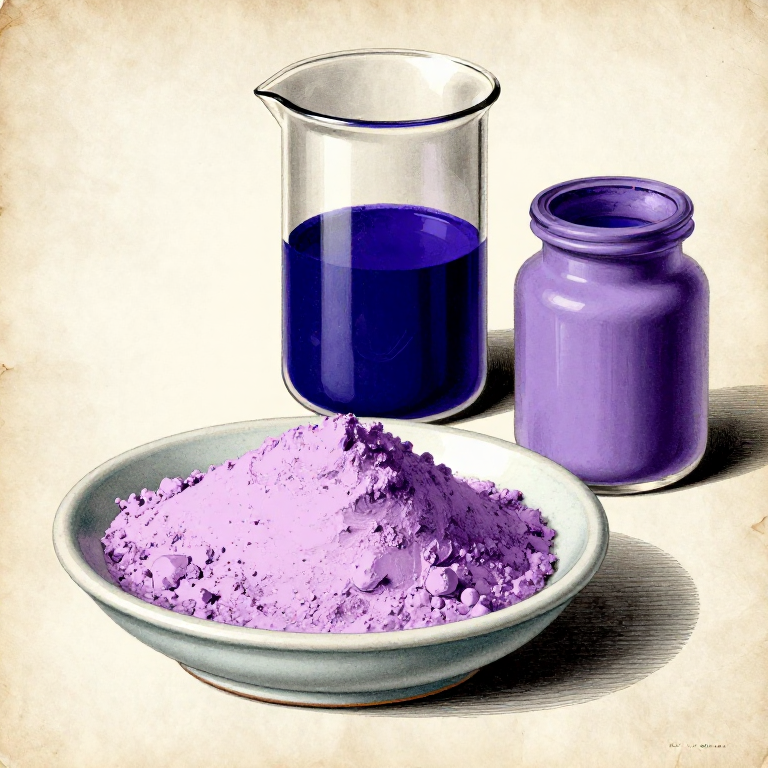

Making Cobalt Violet — The First True Violet Pigment in the Painter's Palette
Cobalt Violet (cobalt(II) phosphate, Co₃(PO₄)₂) was the first truly permanent violet pigment available to painters. Introduced around 1859 by Salvetat at the Sèvres porcelain factory, it filled a gap that had existed since antiquity — every earlier violet was either a fugitive organic dye (orchil, logwood) or an unstable mixture of red and blue pigments that shifted colour over time.
The chemistry is a wet precipitation: when a soluble cobalt salt (cobalt chloride) meets a soluble phosphate (trisodium phosphate) in solution, insoluble cobalt(II) phosphate precipitates immediately as a vivid violet powder. The raw precipitate is then calcined at 800°C to drive off water and crystallise the anhydrous form, which is the true pigment — deeper in colour, more opaque, and more permanent than the hydrated precipitate.
Cobalt violet is completely lightfast, chemically stable, and compatible with all painting media. Its main drawbacks are low tinting strength and very high cost — it requires both expensive cobalt and a multi-step synthesis. Despite this, it was valued by Impressionist painters including Monet and Renoir for passages of shadow and reflected light where no blue-red mixture could achieve the correct optical effect.
SAFETY WARNING: Cobalt chloride is toxic — harmful if swallowed, inhaled, or absorbed through skin. It is classified as a suspected carcinogen. Wear nitrile gloves, safety goggles, and a dust mask when handling dry cobalt chloride. Work in a well-ventilated area. The finished pigment (cobalt phosphate) is less toxic but should still be handled with care.
이 블루프린트로 만드는 것

관련 블루프린트
이 블루프린트들은 지식을 공유합니다 — 기술, 재료 또는 원리
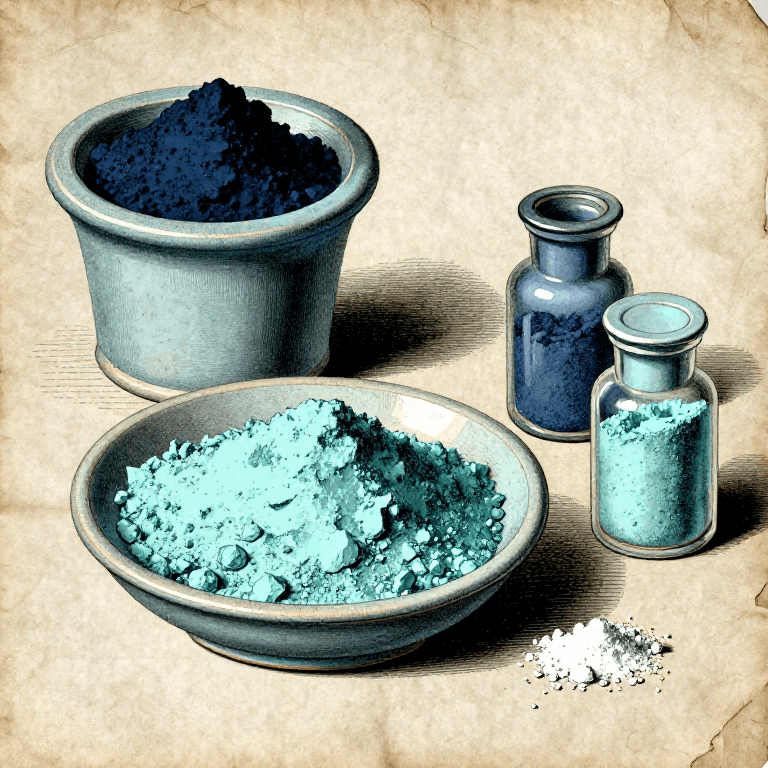
Making Cobalt Green (Rinmann's Green) — The Cobalt Zinc Oxide Pigment of Swedish Chemistry
Charlie 작성
예술
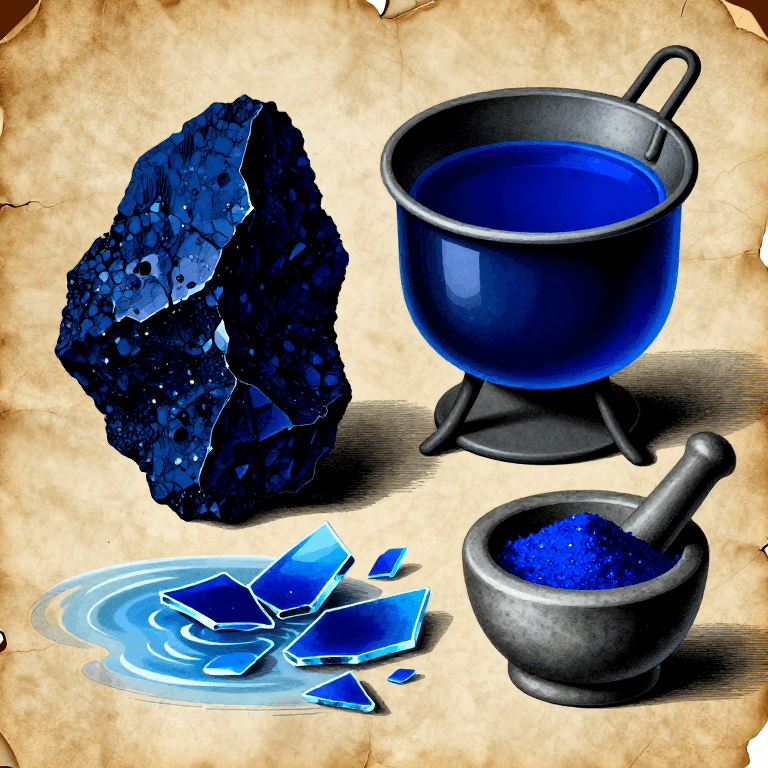
Making Smalt — Grinding Cobalt Blue Glass into the Renaissance Painter's Blue Pigment
Charlie 작성
예술
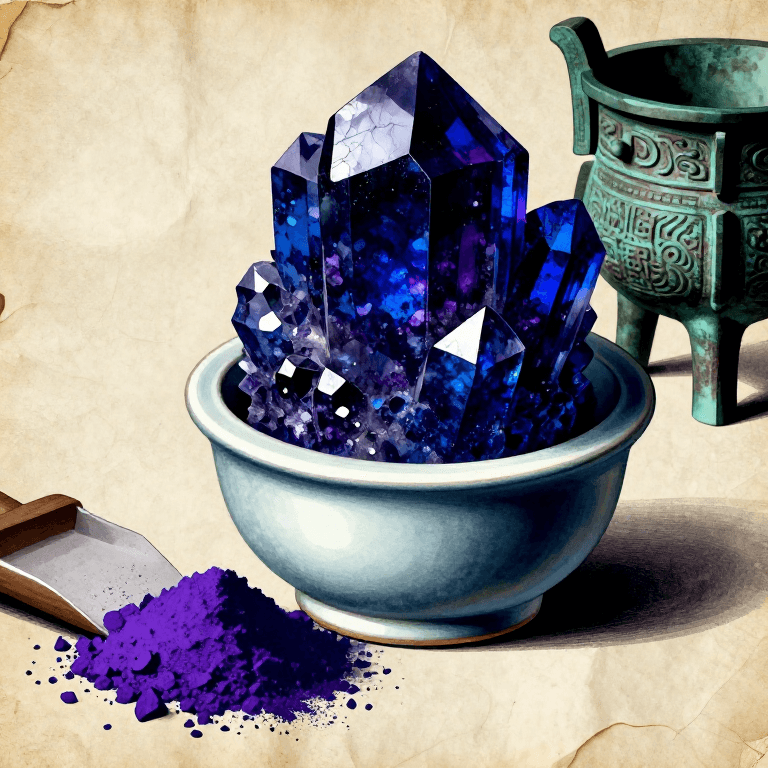
Making Han Purple — Ancient China's Synthetic Barium Copper Silicate Pigment
Charlie 작성
예술
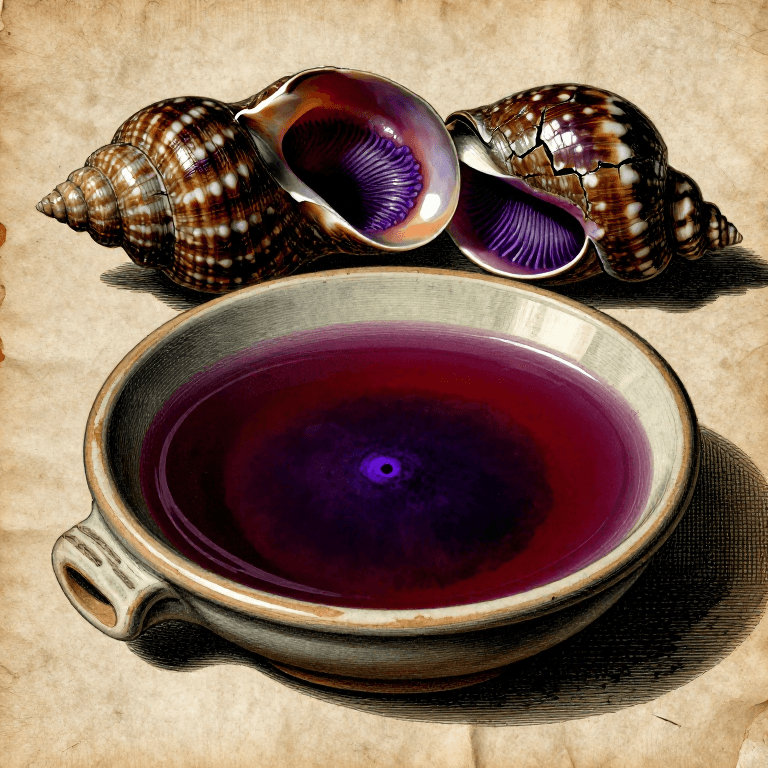
Extracting Tyrian Purple from Murex Snails — The Most Precious Colour of Antiquity
Charlie 작성
예술
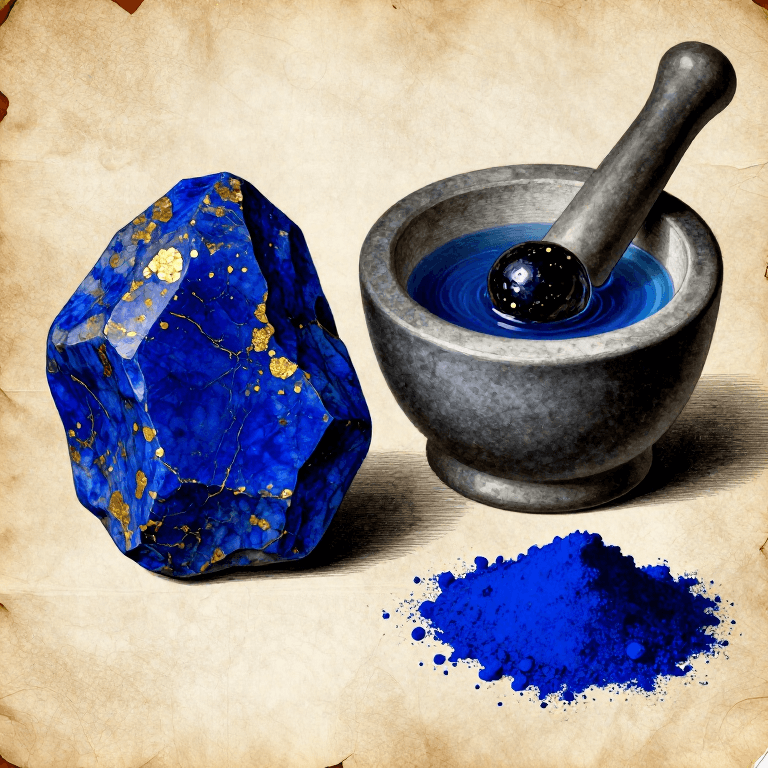
Making Ultramarine from Lapis Lazuli — Extracting the Most Precious Pigment in History
Charlie 작성
예술
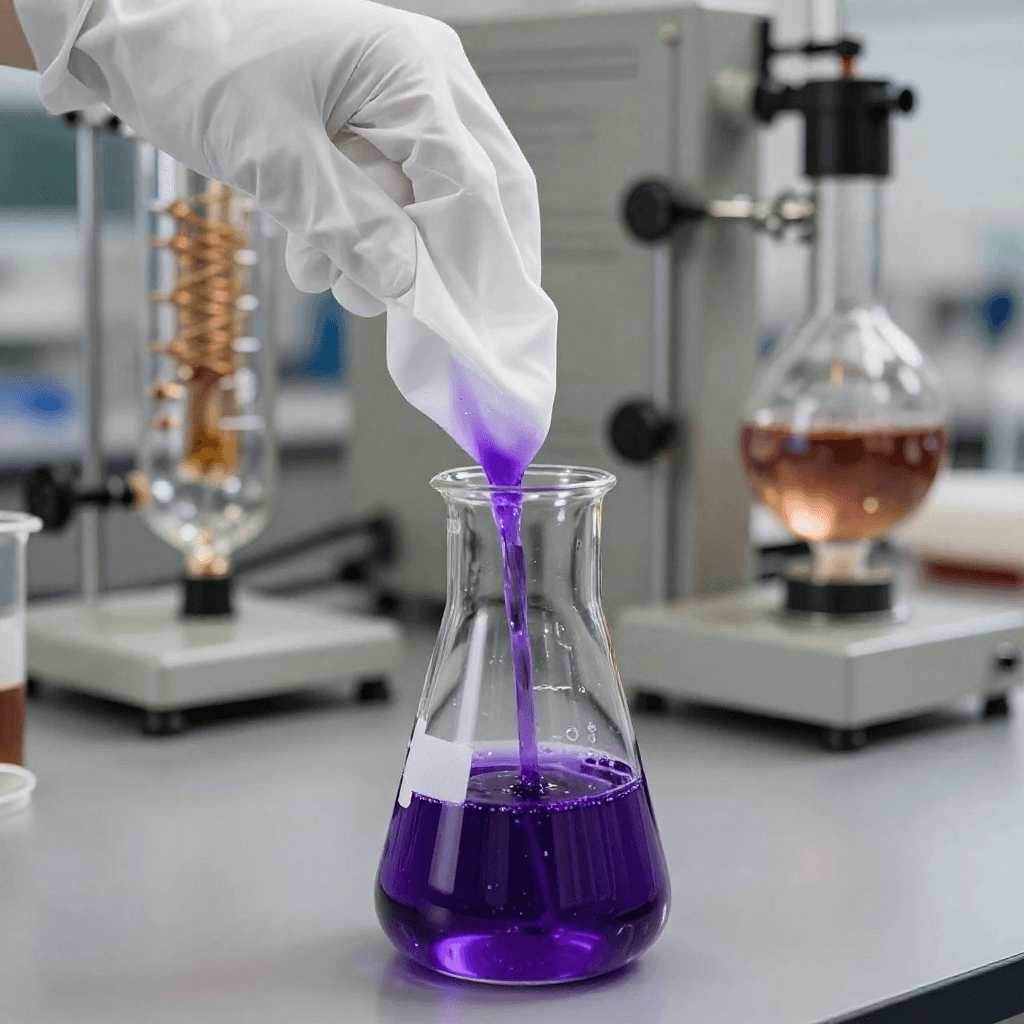
Perkin's Mauveine — The First Synthetic Aniline Dye from Coal Tar
Tex 작성
직물 및 가죽
CC0 퍼블릭 도메인
이 블루프린트는 CC0로 공개되었습니다. 어떤 목적으로든 자유롭게 복사, 수정, 배포 및 사용할 수 있습니다.
제품 구매를 통해 메이커를 지원하세요. 판매자가 설정한 메이커 커미션 을 받거나, 이 블루프린트의 새로운 반복을 만들어 연결로 포함시킬 수 있습니다.