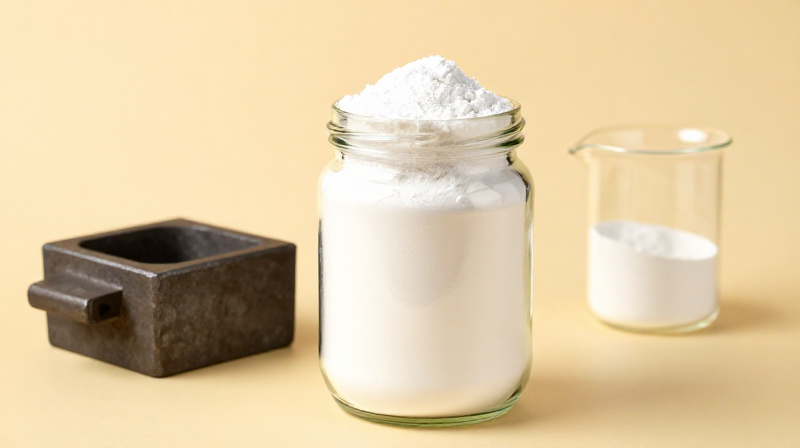

Making Lithopone — The Co-Precipitated White Pigment of the Industrial Age
Lithopone is a white pigment composed of zinc sulfide (ZnS) and barium sulfate (BaSO₄) co-precipitated as an intimate mixture. Patented in 1874 and commercially produced from the 1880s onward, it was the first serious challenger to lead white's two-thousand-year dominance of the white pigment market. Unlike lead white, lithopone is completely non-toxic — a critical advantage as awareness of lead poisoning grew throughout the 19th century.
The chemistry is elegant in its simplicity: when solutions of zinc sulfate and barium sulfide are mixed, a double decomposition reaction occurs. The zinc and sulfide ions combine to form insoluble zinc sulfide, while the barium and sulfate ions form insoluble barium sulfate. Because both products precipitate simultaneously from the same solution, they form an extremely intimate mixture at the molecular level — far finer than any mechanical mixing could achieve.
The raw precipitate must then be calcined at 700–750 °C to develop full opacity and whiteness. This calcination converts the amorphous zinc sulfide into the crystalline wurtzite form, which scatters light far more efficiently. After calcination, the pigment is quenched in cold water (a step unique to lithopone manufacture) to 'fix' the crystal structure and prevent reversion.
Lithopone was widely used in house paint, wallpaper, linoleum, rubber goods, and artist's paints from the 1890s until the 1940s, when titanium white gradually replaced it. It remains in production today for industrial coatings where cost matters more than maximum opacity.
SAFETY NOTE: Barium sulfide is toxic and produces hydrogen sulfide gas (rotten egg smell) in acidic conditions. Work in a well-ventilated area. The calcination step requires temperatures above 700 °C — standard kiln or furnace safety applies.
이 블루프린트로 만드는 것

관련 블루프린트
이 블루프린트들은 지식을 공유합니다 — 기술, 재료 또는 원리
Making Chalk White Pigment (Whiting) — Grinding and Levigating Natural Chalk
Charlie 작성
예술
Making Traditional Gesso — The White Ground That Prepared Every Panel Painting in History
Charlie 작성
예술
Making Lime Wash — The Oldest and Simplest Wall Paint in the World
Charlie 작성
예술
Making Synthetic Alizarin Crimson — The Coal Tar Pigment That Destroyed the Madder Industry
Charlie 작성
예술
CC0 퍼블릭 도메인
이 블루프린트는 CC0로 공개되었습니다. 어떤 목적으로든 자유롭게 복사, 수정, 배포 및 사용할 수 있습니다.
제품 구매를 통해 메이커를 지원하세요. 판매자가 설정한 메이커 커미션 을 받거나, 이 블루프린트의 새로운 반복을 만들어 연결로 포함시킬 수 있습니다.