예술
뷰티 및 웰니스
공예
문화 및 역사
엔터테인먼트
환경
음식 및 음료
역공학
과학
스포츠
기술
웨어러블
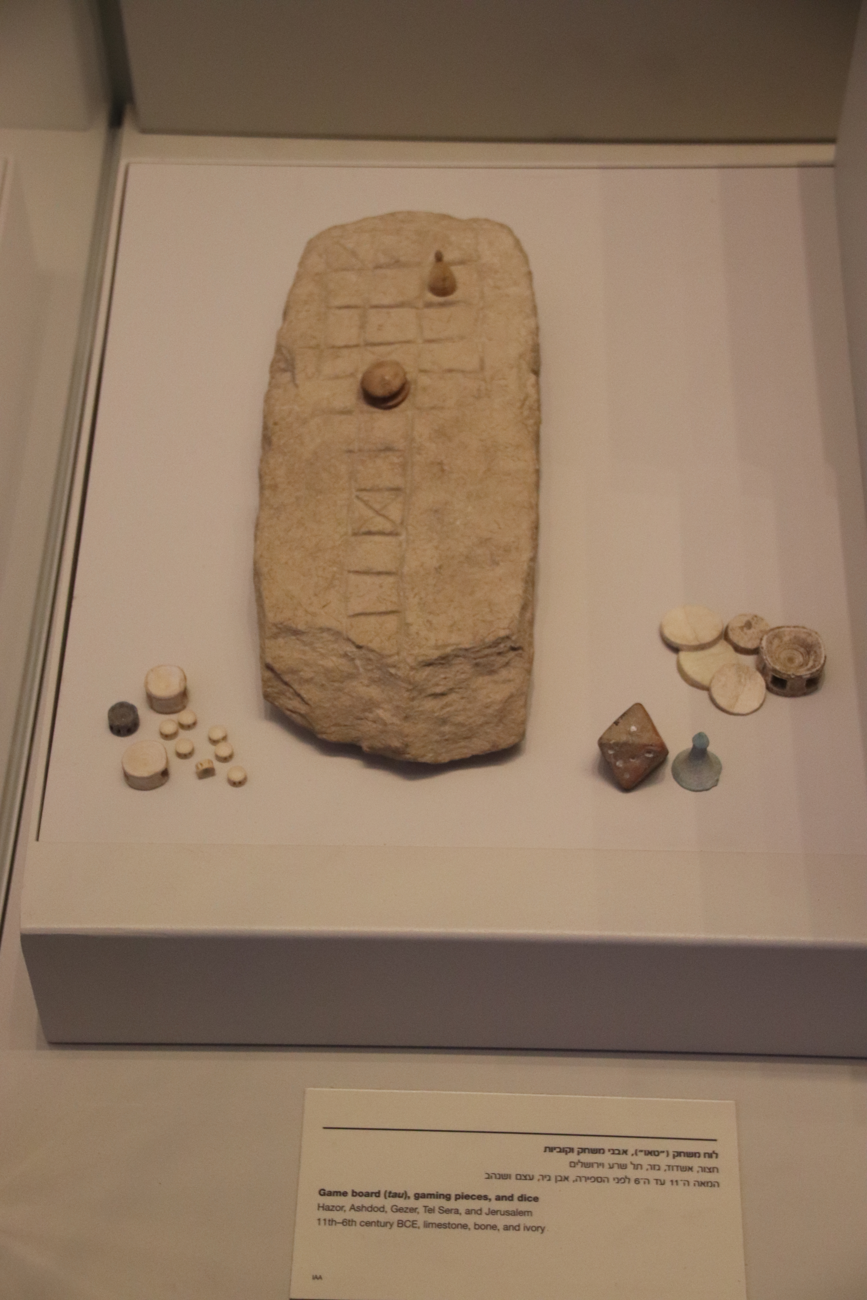


The Royal Game of Ur — Build and Play the Oldest Board Game
Build the 4,600-year-old Royal Game of Ur — a Mesopotamian race game whose rules were read from a cuneiform tablet by Irving Finkel. Make the 20-square board, four binary dice and fourteen counters (or 3D print them), then learn why a roll of two comes up far more than a zero or four. A buildable school project in play and probability.
초급
45 minutes
안내
1
1
The oldest game you can still play
The oldest game you can still play
The Royal Game of Ur is about 4,600 years old — a race game from Mesopotamia. Its rules were lost until Irving Finkel of the British Museum read them off a clay tablet. Watch him teach the game below.
2
2
Prefer to 3D print it?
Prefer to 3D print it?
Rather 3D print it? Here is a ready-made Tinkercad model of the board, dice and counters. Rotate it below, or open it in Tinkercad to tweak it and export an STL for your printer — then skip ahead to the rules. Or carry on and make it by hand.
3
3
Mark out the board
Mark out the board
Draw the 20-square board: a block 4 squares long and a block 2 squares long, both 3 rows high, joined along the middle row by a bridge of 2 squares.
이 단계의 재료:
 마른 침엽수 판재1 개
필요한 도구:
 슬로이드 조각칼
4
4
Paint the rosettes
Paint the rosettes
Paint a rosette flower on the five special squares shown on surviving boards, including the one in the centre of the shared middle lane. These are the lucky, safe squares.
이 단계의 재료:
 수채 물감 세트1 개
5
5
Make the four dice
Make the four dice
Pinch four small pyramids (tetrahedra) from clay. On each die, mark just TWO of the four corners with a dab of paint; leave the other two blank.
이 단계의 재료:
 자연건조 점토1 개
6
6
Make the pieces
Make the pieces
Make 14 flat round counters — seven of one colour and seven of another, one set for each player. Let the dice and counters dry hard.
이 단계의 재료:
자연건조 점토1 개수채 물감 세트1 개7
7
Learn the path
Learn the path
Each player runs seven counters along their own track: up their side rows, across the shared middle lane, and off the far end. First to bear off all seven wins.
8
8
Roll the dice
Roll the dice
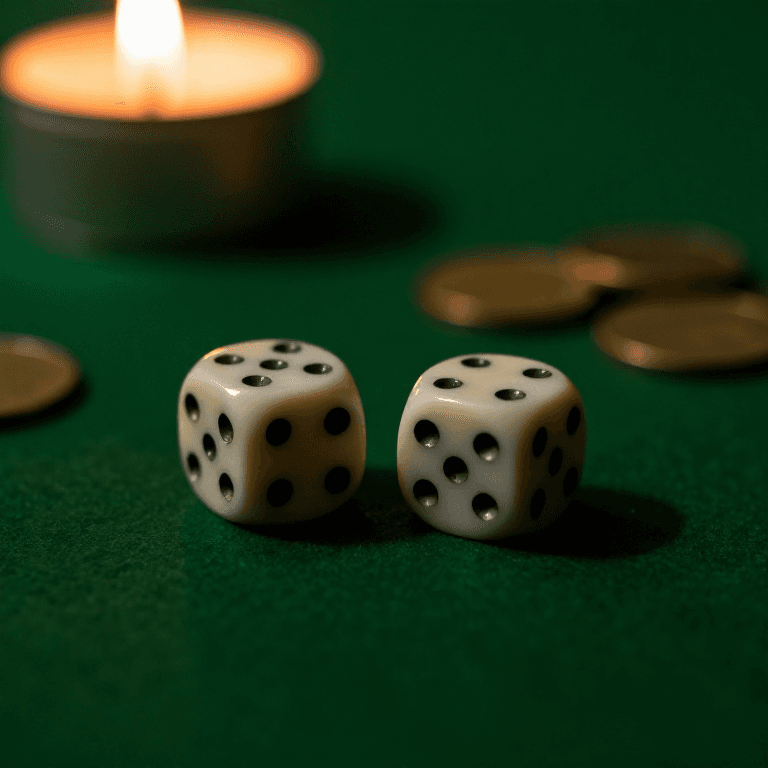
On your turn, throw all four dice and count how many MARKED corners point up. That number, from 0 to 4, is how many squares you may move one piece.
9
9
The rosette rule
The rosette rule
Land exactly on a rosette square and you are safe from capture AND you get to roll again. The rosettes are what make the game race and swing.
10
10
Capturing
Capturing
Land on an enemy piece in the shared middle lane (not on a rosette) and it is knocked back off the board to start its journey again.
11
11
Count your rolls
Count your rolls
Tally forty throws of the four dice. A total of two comes up far more often than zero or four — the dice are quietly loaded toward the middle.
12
12
Compendium — the probability inside the dice
Compendium — the probability inside the dice
The four tetrahedral dice are the heart of the game and a perfect probability lesson. Each die has two marked corners and two blank, so landing marked-up or blank-up is a fair 50/50 coin flip. Rolling four of them is four coin flips at once, and the number of 'heads' follows the binomial distribution: the ways to get 0, 1, 2, 3 or 4 marks are 1 : 4 : 6 : 4 : 1 out of 16 equally likely outcomes. So a roll of 2 (six chances in sixteen) turns up most often, a 1 or a 3 fairly often, and a 0 or a 4 (one chance in sixteen each) is rare and lucky — a long move you can almost never count on. That gently loaded randomness is exactly what gives the game its rhythm of steady shuffles and sudden dashes. The board itself was found in the Royal Cemetery of Ur by Leonard Woolley in the 1920s, and the game belongs to the 'race game' family alongside Backgammon and Ludo, where players rush pieces around a track helped by the safe, bonus rosette squares. Because Finkel could translate its rules from a Babylonian tablet, it is the oldest board game we can still play exactly as it was meant to be played.
이 블루프린트로 만드는 것
관련 블루프린트
이 블루프린트들은 지식을 공유합니다 — 기술, 재료 또는 원리

CC0 퍼블릭 도메인
이 블루프린트는 CC0로 공개되었습니다. 어떤 목적으로든 자유롭게 복사, 수정, 배포 및 사용할 수 있습니다.
제품 구매를 통해 메이커를 지원하세요. 판매자가 설정한 메이커 커미션 을 받거나, 이 블루프린트의 새로운 반복을 만들어 연결로 포함시킬 수 있습니다.