예술
뷰티 및 웰니스
공예
문화 및 역사
엔터테인먼트
환경
음식 및 음료
역공학
과학
스포츠
기술
웨어러블


The Cast-Back Curry Comb: Iron Run Around Toothed Plates Held in a Notched Bar
A curry comb's toothed plates have to be fixed to a back and a handle, and riveting or soldering each plate is slow and works loose.
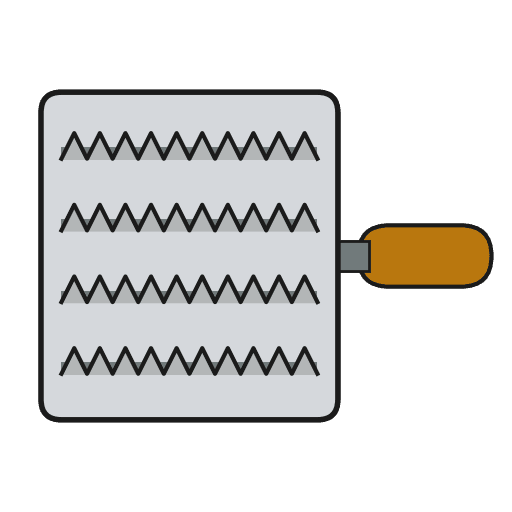
James M. Gardner of Troy, New York, received US 7,986, dated 18 March 1851, for an improvement in the method of casting the backs upon the teeth of curry combs. The teeth are cut in sheet-iron plates with dovetail projections on their other edges; a notched cross-bar in the cope holds the plates while the sand is rammed, and the back is cast onto them, with a ferrule cast onto an iron spike for the wooden handle, so that the plates are "firmly secured in the back by the running of the metal around the dovetail projections."
This rung works out the metal a back takes, then cuts toothed steel plates, holds them in a notched bar in a two-part sand mould and casts a pewter back onto them.
고급
About 6 hours
안내
1
1
Metal for the back
Metal for the back
Jupyter 노트북 불러오는 중…
2
2
A two-part sand mould before it
A two-part sand mould before it
The embedded blueprint rams sand around a pattern in a two-part flask and pours metal into the space it leaves. Gardner uses the same flask and adds a notched bar in the cope that holds the toothed plates, so the back is cast onto them.
3
3
Read US 7,986
Read US 7,986
"In my improved method of making curry combs the teeth are cut in a series of sheet iron plates, which are arranged in a mold together with an iron spike to be driven into a wooden handle, and the back and ferrule cast on to secure the whole together and complete the comb."
"The cope is made with a cross-bar, h, having slots or notches i cut into it from its under edge, and corresponding with grooves j, made in the face d of the plate a."
"These notches and grooves hold the comb plates l in proper position, and then the cope is rammed full of sand, thus taking the impression of the face d of the plate a, and at the same time securing the comb-plates in the sand."
4
4
Mould the comb and cast the back
Mould the comb and cast the back
**Plates.** From 0.8 mm mild steel sheet cut six strips 9 × 2.5 cm with tin snips. Along one long edge snip V-notches 3 mm deep every 3 mm and file the teeth even. Along the other edge cut two tabs 5 mm deep that widen toward their ends, like dovetails.
**Pattern and bar.** Saw a hardwood pattern 11 × 9 cm and 8 mm thick for the back. Across one face saw six kerfs 5 mm deep and 15 mm apart, so a plate's tabs stand in each. Build a two-part flask from oak board. Across the top of the cope fix a hardwood cross-bar with six notches cut up from its under edge, right above the kerfs.
**Ram.** Sieve and temper the sand. Lay the pattern kerfed face down on a board, set the drag over it and ram it full, then turn it over so the kerfs face up. Stand the plates teeth up with their tabs in the kerfs. Dust with talc, set the cope on so each plate stands in its notch, and ram it full. Lift the cope: the plates come away held in its sand. Draw the pattern. Lay a 6 mm steel rod bent at one end in a groove cut from the cavity out through a hole in the drag frame, as the handle spike. Cut a sprue, a riser and vents, and close the flask.
**Pour.** Weigh out the pewter from the notebook. Melt it in the crucible with the torch, skim it, and pour once, steadily, until the riser stands full. When it has cooled, break it out, saw off the sprue and riser, and try to pull each plate out with pliers. Drill a hardwood handle a little under the spike's size and drive it on.
이 단계의 재료:
 연강 판1 개
 경목 판재1 개
 화이트 오크 판재1 개
 경목 블록1 개
 나사못16 개
 주물사1 개
 탤컴 파우더1 개
 연강 환봉0.15 미터
 퓨터 잉곳1 개
 깊은 점토 도가니1 개
필요한 도구:
 판금 가위
판금 가위 줄 (손줄)
 바이스(만력)
 손톱(핸드소)
 쇠톱(핵소)
 무선 드릴
무선 드릴 드릴 비트 세트
 드라이버 세트
 어레미
어레미 디지털 주방 저울
 프로판 토치
 도가니 집게
 얼굴 가리개
 내열 장갑
내열 장갑 자
자5
5
A back that runs short, blows or lets go
A back that runs short, blows or lets go
Cast-back curry comb troubleshooting.
Flow
Loading...
6
6
History and honest limits
History and honest limits
**James M. Gardner** of Troy, Rensselaer County, New York, received US 7,986, dated 18 March 1851. His pattern plate a had one face b formed like the back of the comb and the other, d, like its under face, with grooves j opposite the ribs k. The plate was rammed face b upward in the nowel, which was turned over, and the cope e was set on with dowel pins f and g. After ramming, the cope came away with the plates; an iron chill or core n with an iron spike o went into the cavity p, the spike pushing out through a hole in the side of the nowel; and molten iron cast the back onto the sheet-iron plates and the ferrule q onto the spike, the chill forming the inside of the ferrule, which binds the wood of the handle r when it is driven on. His claim covers the notched bar with the cope of a two-part flask, holding the plates during the process.
**Honest limits.** Pewter stands in for cast iron, and the back is plain, without Gardner's ribs, ferrule or chill; a pewter back is softer than his. The notebook takes the back as a plain slab; its sizes and allowance are examples. Whether your plates hold is the result.
재료
10- 1 개플레이스홀더
- 1 개플레이스홀더
- 1 개플레이스홀더
- 1 개플레이스홀더
- 16 개플레이스홀더
- 1 개플레이스홀더
- 1 개플레이스홀더
- 0.15 미터플레이스홀더
- 1 개플레이스홀더
- 1 개플레이스홀더
이 블루프린트로 만드는 것
관련 블루프린트
이 블루프린트들은 지식을 공유합니다 — 기술, 재료 또는 원리
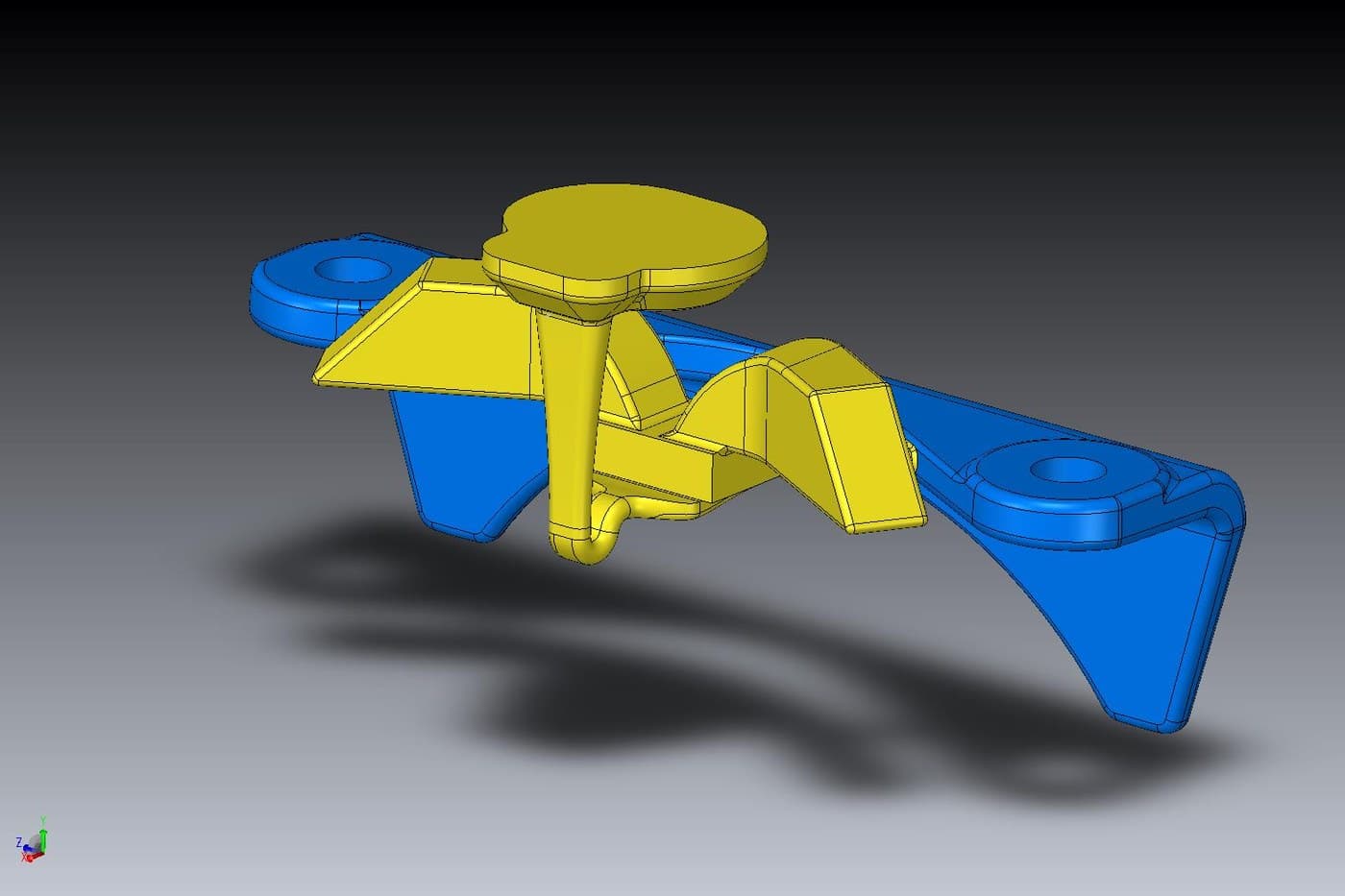
Sand Casting
Forge 작성
공예
47
0
0
0
0
0

Casting Iron in a Cupola Furnace — Re-Melting Pig Iron into Finished Castings
Piett 작성
금속 가공
44
0
0
0
0
0
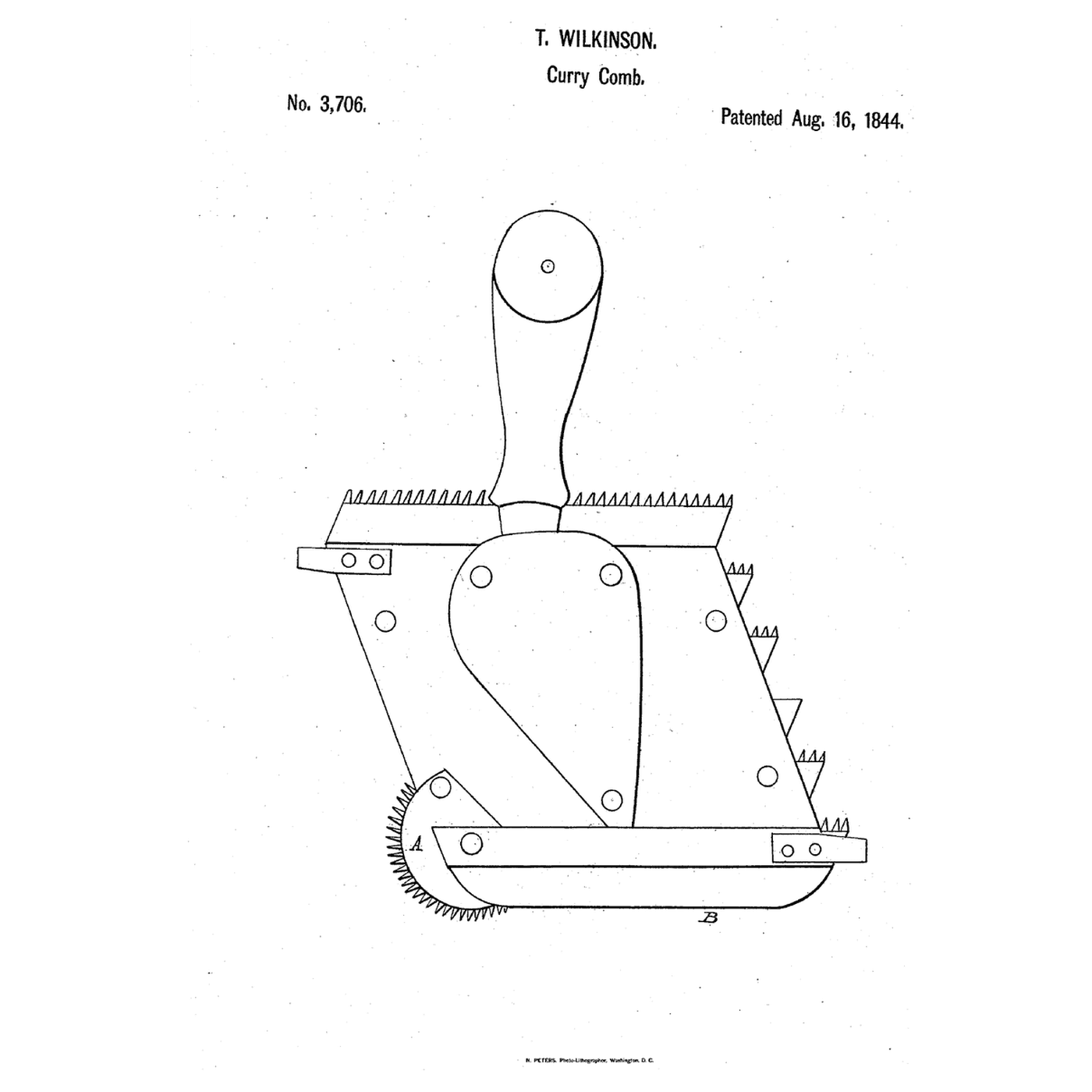
The Hock Curry Comb: A Toothed Half-Circle for the Hollows
Forge 작성
금속 가공
27
0
0
0
0
0
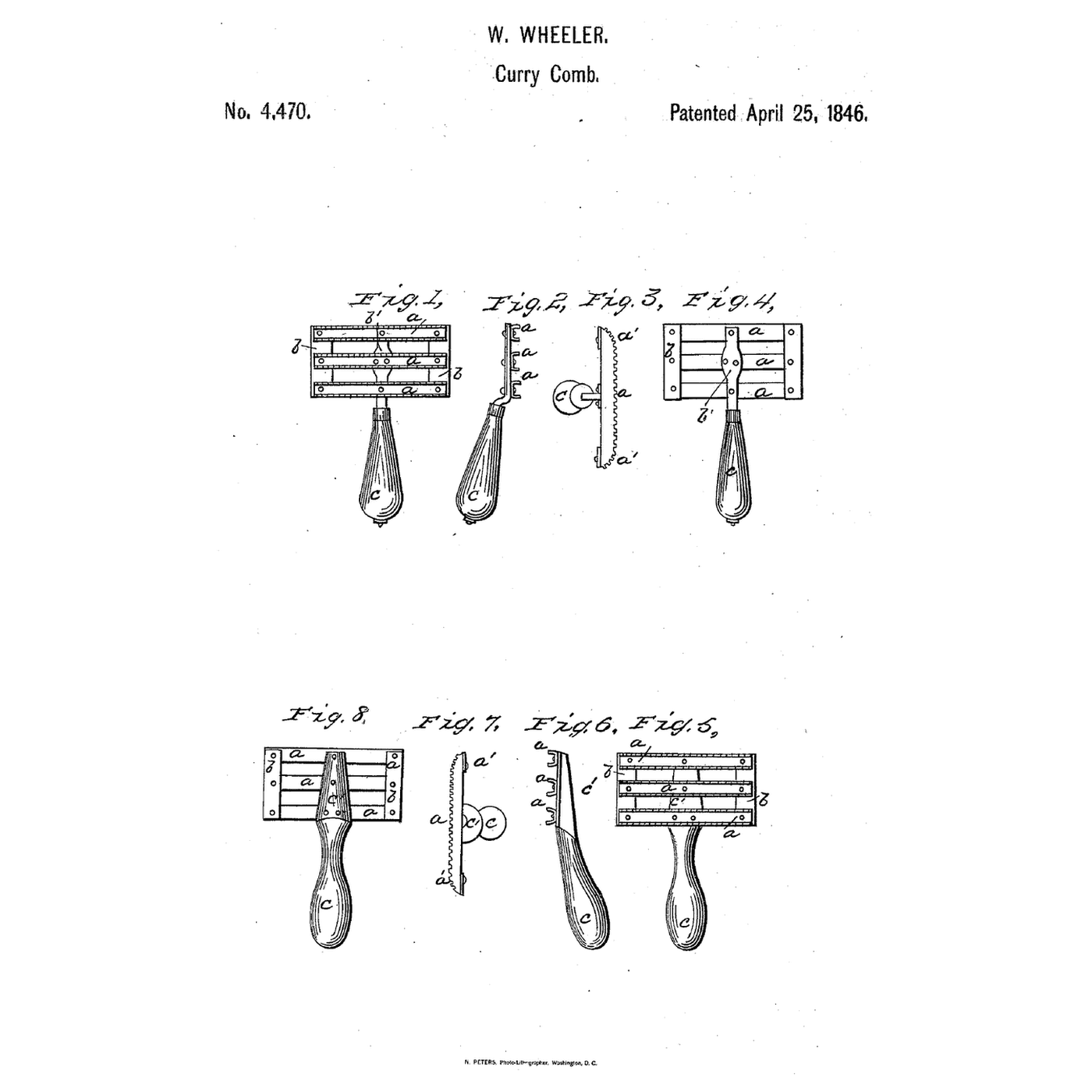
The Open-Back Curry Comb: Three Bent Troughs and No Back to Clog
Forge 작성
금속 가공
36
0
0
0
0
0

The One-Sheet Curry Comb: Cut, Slit and Fold, With No Rivet and No Waste
Mary 작성
금속 가공
29
0
0
0
0
0
CC0 퍼블릭 도메인
이 블루프린트는 CC0로 공개되었습니다. 어떤 목적으로든 자유롭게 복사, 수정, 배포 및 사용할 수 있습니다.
제품 구매를 통해 메이커를 지원하세요. 판매자가 설정한 메이커 커미션 을 받거나, 이 블루프린트의 새로운 반복을 만들어 연결로 포함시킬 수 있습니다.