

Casting Iron in a Cupola Furnace — Re-Melting Pig Iron into Finished Castings
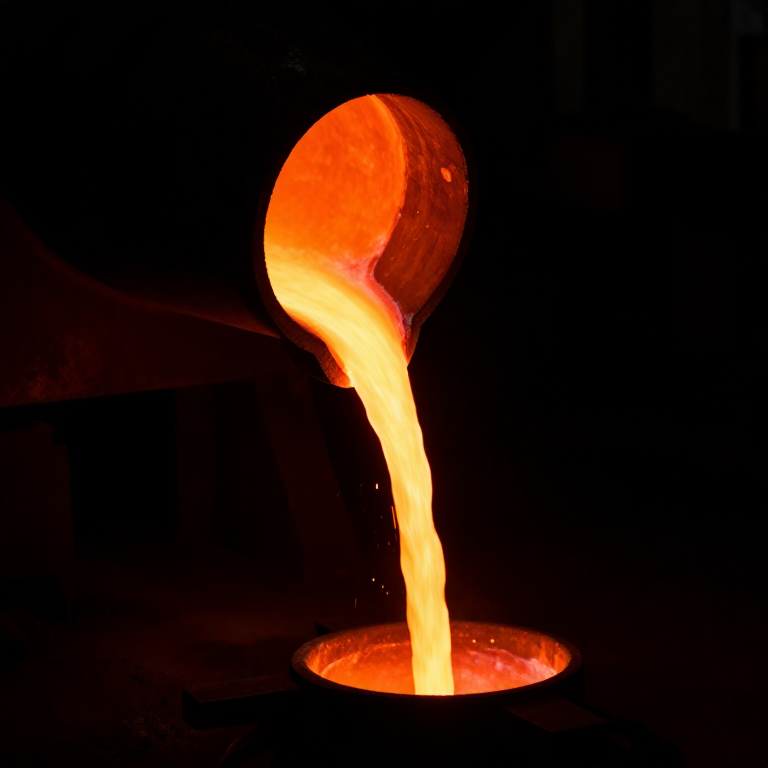
The blast furnace makes pig iron by the tonne, but pig iron in bars is not yet a useful object. To turn it into pots, pipes, stoves, and machine frames, a foundry re-melts it and pours it into moulds — and the workhorse that does the re-melting is the cupola furnace.
A cupola is a tall iron chimney lined with firebrick, charged from the top with alternating layers of coke, pig iron, and limestone, and blown with air near its base. Unlike the blast furnace it does not smelt ore; it simply melts iron that is already made, quickly and cheaply, keeping a steady stream of molten metal ready to tap. The melting iron picks up a little carbon from the coke and runs out of the tap hole as grey cast iron.
Poured into sand moulds shaped from wooden patterns, that iron sets into castings of almost any form. Cast iron is brittle but immensely strong in compression and cheap to pour into complex shapes, which made the cupola the beating heart of Victorian industry — casting everything from cooking pots and drainpipes to the columns and machines of the factories themselves.
안내
Understand the cupola
Understand the cupola
Build and line the cupola
Build and line the cupola
이 단계의 재료:
 내화 벽돌100 개
필요한 도구:
 모종삽
모종삽Light the coke bed
Light the coke bed
이 단계의 재료:
 야금용 코크스60 kg
Start the blast
Start the blast
필요한 도구:
 송풍기
송풍기Charge in layers
Charge in layers
이 단계의 재료:
 선철 덩이80 kg
 석회암 판6 kg
Melt the iron
Melt the iron
Flux off the slag
Flux off the slag
필요한 도구:
 출탕봉
출탕봉Prepare the sand moulds
Prepare the sand moulds
이 단계의 재료:
 주물사60 kg
필요한 도구:
 주물 틀상자
Tap the molten iron
Tap the molten iron
필요한 도구:
 주조용 국자
Pour the castings
Pour the castings
Shake out and clean
Shake out and clean
필요한 도구:
 앵글 그라인더
Identify cast iron
Identify cast iron
연결된 블루프린트 재료

관련 블루프린트
이 블루프린트들은 지식을 공유합니다 — 기술, 재료 또는 원리

CC0 퍼블릭 도메인
이 블루프린트는 CC0로 공개되었습니다. 어떤 목적으로든 자유롭게 복사, 수정, 배포 및 사용할 수 있습니다.
제품 구매를 통해 메이커를 지원하세요. 판매자가 설정한 메이커 커미션 을 받거나, 이 블루프린트의 새로운 반복을 만들어 연결로 포함시킬 수 있습니다.