예술
뷰티 및 웰니스
공예
문화 및 역사
엔터테인먼트
환경
음식 및 음료
역공학
과학
스포츠
기술
웨어러블


The Mechanical Pencil: Feeding a Thin Lead by a Screw
A wooden pencil gets shorter every time it is sharpened. A pencil with a permanent body needs only new leads, fed out as they wear, and a thin lead never needs sharpening.
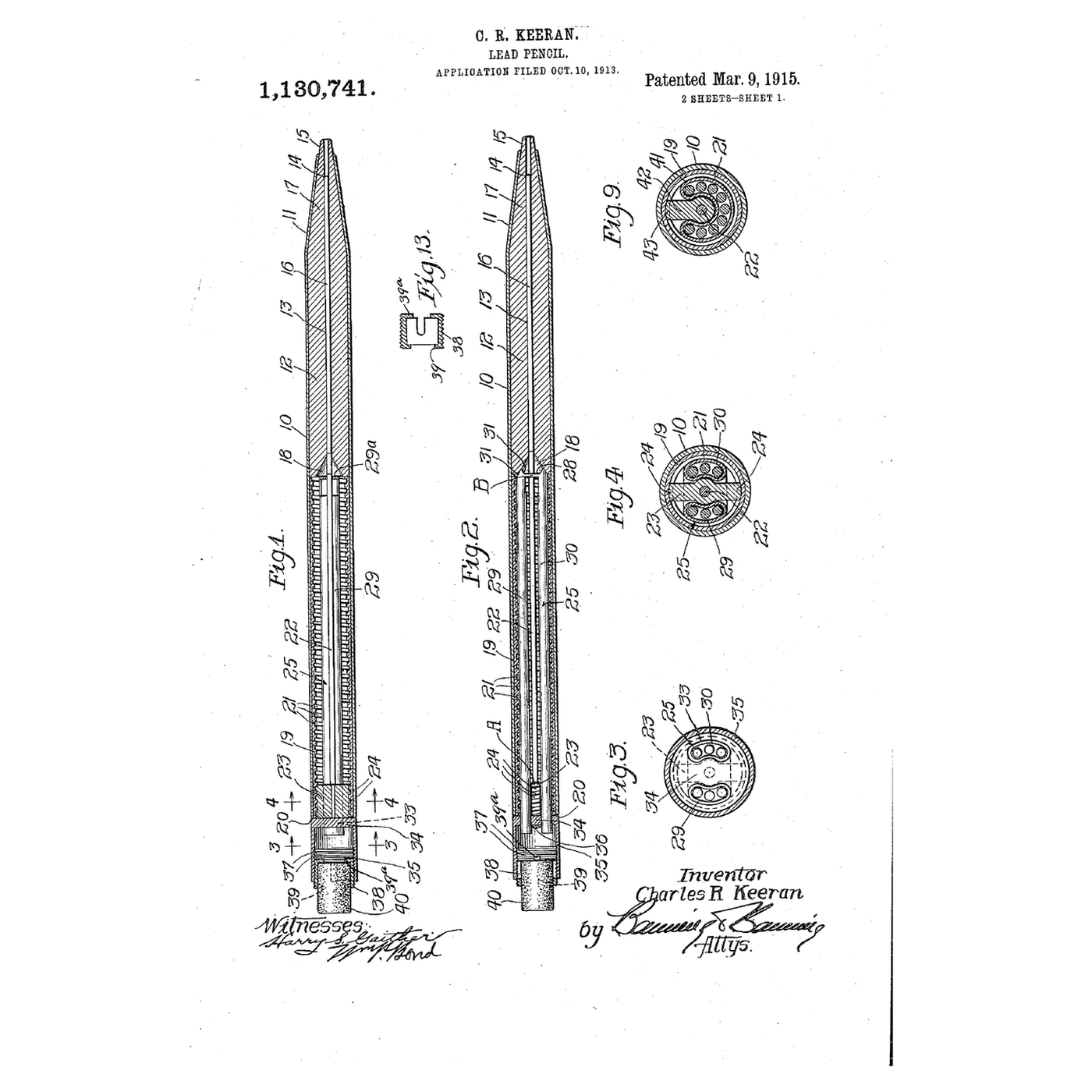
Charles R. Keeran of Bloomington, Illinois, filed US 1,130,741 on 10 October 1913; it was granted on 9 March 1915. A thin metal shell holds a fibrous core with a bore that grips the lead at its tip. A stiff wire follower with a threaded head runs in a threaded sleeve; turning a magazine that carries spare leads turns the head and pushes the lead out, and the follower's position shows how much lead is left.
This rung works out how far a thin lead can stick out before it snaps, and takes a mechanical pencil apart to find each part.
초급
About 2 hours
안내
1
1
Lead projection and feed per turn
Lead projection and feed per turn
Jupyter 노트북 불러오는 중…
2
2
The pencil it replaces
The pencil it replaces
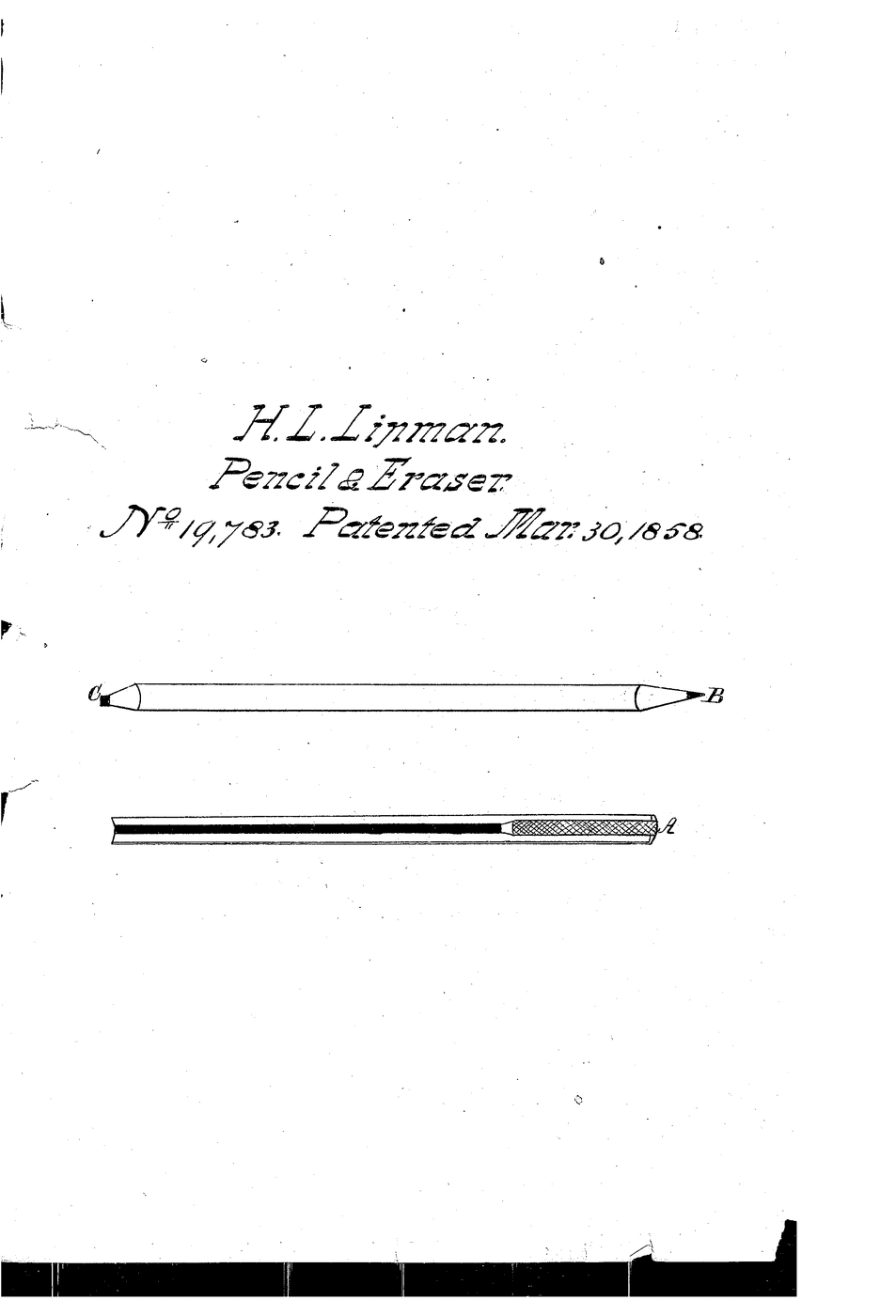
The wooden pencil with an eraser in its end is what the mechanical pencil set out to improve. The embedded blueprint covers it.
3
3
Read US 1,130,741
Read US 1,130,741
Keeran's pencil is of "that form of pencil employing a permanent body or casing into which individual leads are inserted from time to time as may be desired". Among his aims: "to provide a magazine for extra leads which will be contained within the body of the pencil", to prevent the lead breaking when a new one is put in, and "to provide an indicator for determining the length of lead left within the pencil".
The shell 10 is drawn to a taper at the front and may be thin gold or silver. Inside, a core or filler 12 "of some suitable fibrous material" has a bore 13 contracted at its front end 14, giving the lead a sliding fit along most of the bore and a clutching grip at the tip. A threaded sleeve 19 behind the filler receives the follower 22, "a stiff wire" with an enlarged head 23 of elongated cross-section, threaded on its outside to run in the sleeve.
The magazine is a tube rolled flat with a slot that the follower passes through; turning the magazine turns the head and feeds the lead. A funnel-shaped depression in the magazine centres a newly dropped lead on the follower so it is not bent sideways and broken.
4
4
Take one apart and break some leads
Take one apart and break some leads
Take a mechanical pencil apart over a sheet of paper. Identify the parts that do Keeran's jobs: the grip on the lead at the tip, the feed, the reservoir for spare leads, and anything that shows how much lead is left. Draw each part.
Then, on graph paper, write with 1 mm, 2 mm and 3 mm of lead showing, tilting the pencil to about 40°, and note the length at which the lead breaks. Compare with the notebook and estimate the lead's bending strength from your results.
이 단계의 재료:
 샤프펜슬1 개
 모눈종이1 개
필요한 도구:
 디지털 캘리퍼스 6인치
 휴대용 확대경 10배
 각도기
각도기 자
자5
5
A mechanical pencil that misbehaves
A mechanical pencil that misbehaves
Mechanical pencil troubleshooting.
Flow
Loading...
6
6
History and honest limits
History and honest limits
**Charles R. Keeran** of Bloomington, Illinois, filed US 1,130,741 on 10 October 1913; it was granted on 9 March 1915. Screw-feed pencils with a permanent body were older; his patent covers the follower, magazine, filler and centring arrangement described above.
**Honest limits.** Lead strength, writing force and thread pitch in the notebook are examples, not Keeran's figures.
관련 블루프린트
이 블루프린트들은 지식을 공유합니다 — 기술, 재료 또는 원리


CC0 퍼블릭 도메인
이 블루프린트는 CC0로 공개되었습니다. 어떤 목적으로든 자유롭게 복사, 수정, 배포 및 사용할 수 있습니다.
제품 구매를 통해 메이커를 지원하세요. 판매자가 설정한 메이커 커미션 을 받거나, 이 블루프린트의 새로운 반복을 만들어 연결로 포함시킬 수 있습니다.