예술
뷰티 및 웰니스
공예
문화 및 역사
엔터테인먼트
환경
음식 및 음료
역공학
과학
스포츠
기술
웨어러블
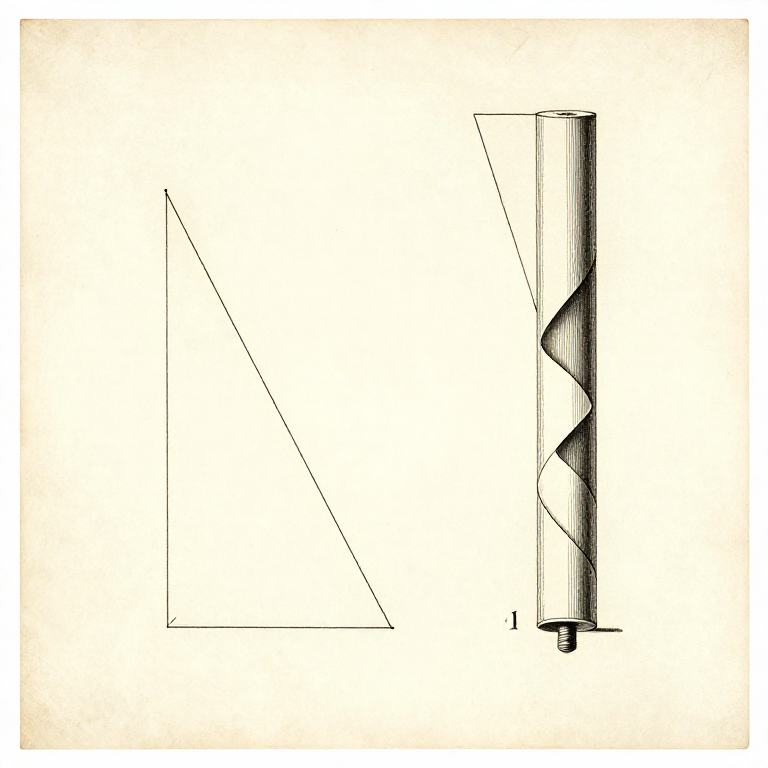


What a Screw Thread Is: A Ramp Wrapped Round a Cylinder
Unroll a screw thread and it is an inclined plane — a long shallow ramp, wrapped round a cylinder so it fits in your hand. Every property a screw has falls out of that one fact.
It explains the enormous force a small spanner produces, why a fine thread holds better and a coarse one assembles faster, why a screw does not undo itself under load, and why a jack can lift a car with one hand. None of it is mysterious once the ramp is visible.
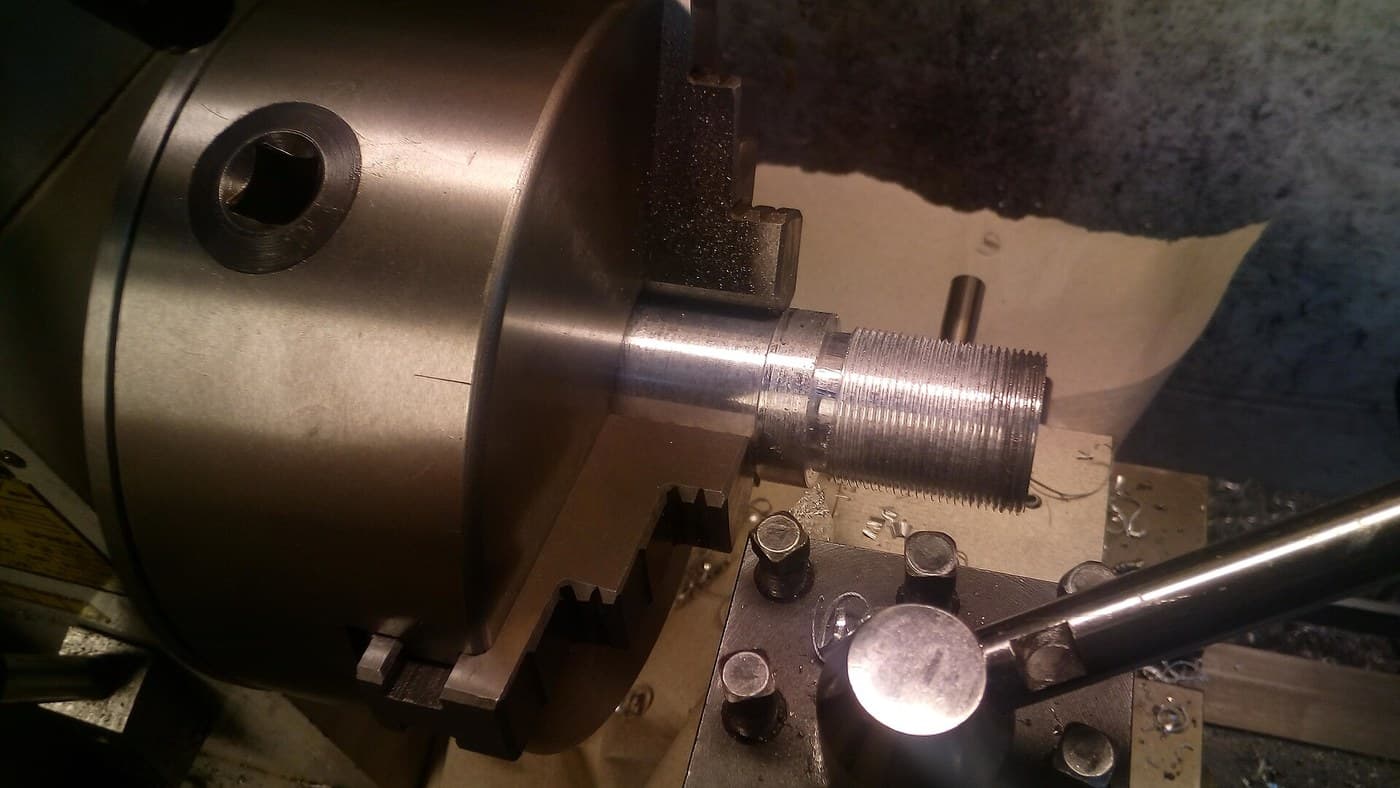
136 published blueprints on Youblob use screws, bolts, nuts or rivets. The lathe method of making a thread is published; this batch covers the way almost everyone actually does it, and starts with what the thing is.
초급
2 hours
안내
1
1
Wrap a paper triangle round a pencil
Wrap a paper triangle round a pencil
Cut a long right-angled triangle from paper — say 200 mm along the base and 20 mm high — and wind it round a pencil starting from the tall end, keeping the base edge square to the pencil.
The sloping edge traces a helix: exactly the shape of a screw thread. Wind a steeper triangle and the helix climbs faster, which is a coarse thread; a shallower one gives a fine thread. There is nothing else to it.
Hold the paper model next to a real bolt and the two match. This is worth doing rather than reading, because the helix is genuinely hard to picture and instantly obvious once it is in your hand.
필요한 도구:
 육각 볼트 모음
2
2
Pitch, lead, and the words that get confused
Pitch, lead, and the words that get confused
PITCH is the distance from one thread crest to the next. LEAD is how far the screw advances in one full turn. On an ordinary single-start thread they are the same number, which is why the words get used interchangeably.
They part company on a multi-start thread, where two or more separate helices run side by side. A two-start thread has the same pitch but twice the lead, so it advances twice as fast per turn — which is how a bottle cap or a camera tripod screw comes off in half a turn.
MAJOR DIAMETER is measured across the crests, MINOR across the roots. An M8 bolt is 8 mm across the crests, and the tapping drill for an M8 hole is much smaller because it must leave metal for the thread to be cut into.
필요한 도구:
 버니어 캘리퍼스육각 볼트 모음
 나사 게이지
3
3
The force a thread multiplies
The force a thread multiplies
Jupyter 노트북 불러오는 중…
필요한 도구:
 계산기
계산기4
4
Coarse or fine — the trade you are actually making
Coarse or fine — the trade you are actually making
A COARSE thread assembles fast, tolerates damage and dirt, cuts cleanly into soft material, and is far harder to cross-thread. It is the default, and it is right for most work.
A FINE thread has a shallower helix, so it holds a set position better under vibration, allows finer adjustment, and gives slightly more strength in thin material because more threads are engaged in the same depth. It is also fragile: one dinged crest and it will not start.
The practical rule is coarse unless something specifically demands fine — an adjustment screw, a thin-walled part, or a fastener that must resist vibration. Mixing them is the commonest workshop error: an M8 coarse bolt will start into an M8 fine nut for one turn and then jam solid.
필요한 도구:
나사 게이지육각 볼트 모음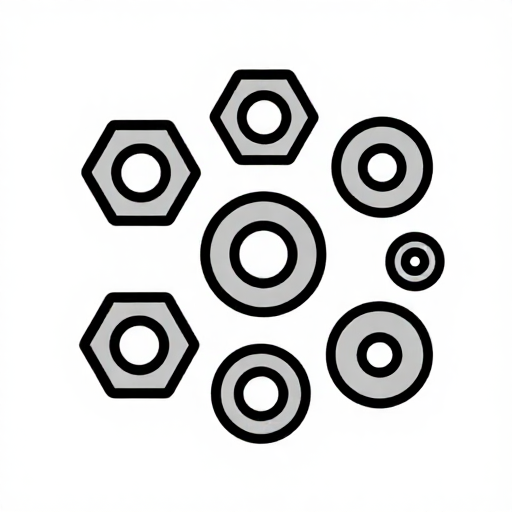 너트와 와셔 모음
관련 블루프린트
이 블루프린트들은 지식을 공유합니다 — 기술, 재료 또는 원리

CC0 퍼블릭 도메인
이 블루프린트는 CC0로 공개되었습니다. 어떤 목적으로든 자유롭게 복사, 수정, 배포 및 사용할 수 있습니다.
제품 구매를 통해 메이커를 지원하세요. 판매자가 설정한 메이커 커미션 을 받거나, 이 블루프린트의 새로운 반복을 만들어 연결로 포함시킬 수 있습니다.