예술
뷰티 및 웰니스
공예
문화 및 역사
엔터테인먼트
환경
음식 및 음료
역공학
과학
스포츠
기술
웨어러블
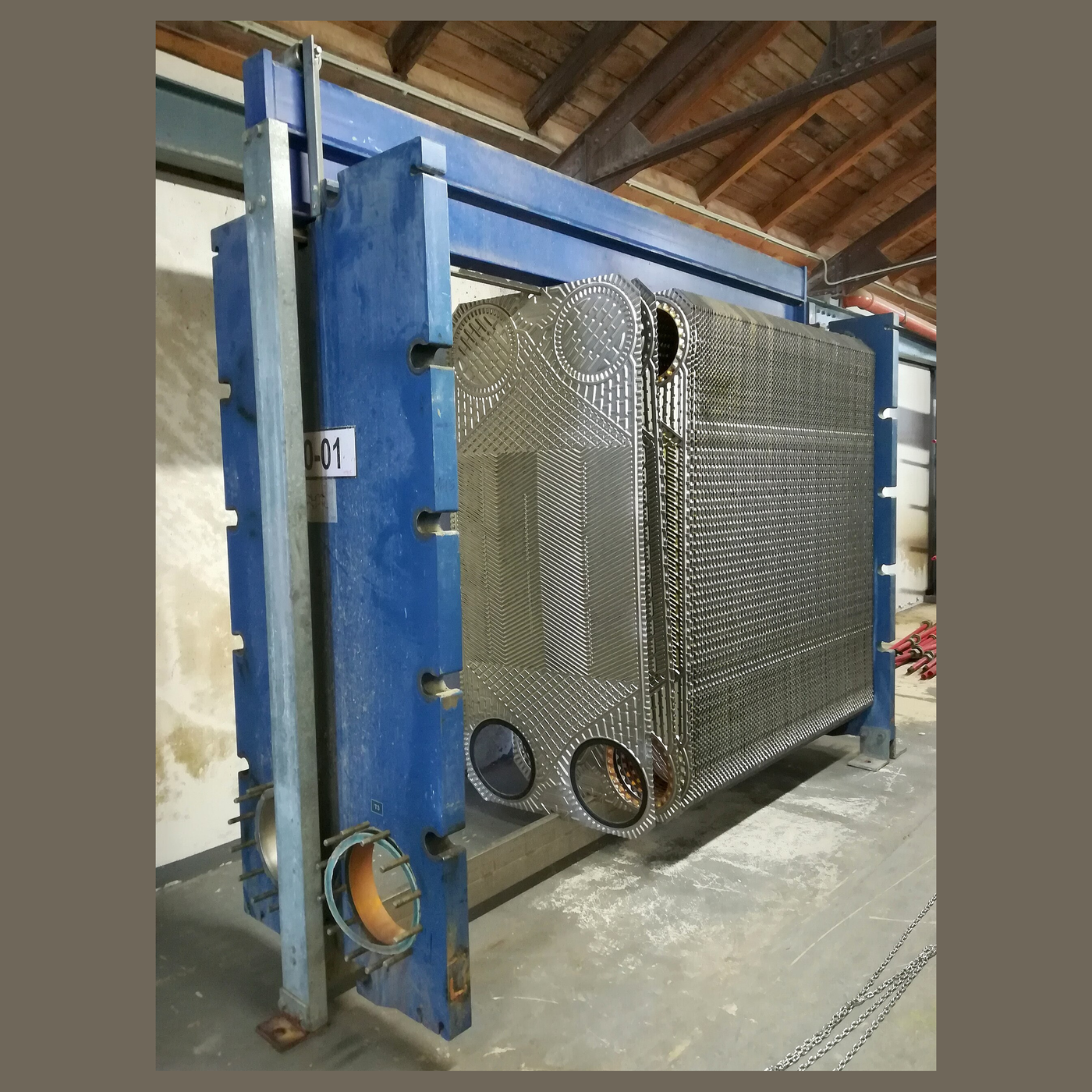

The Plate Heat Exchanger: Thin Plates, Turbulence, and a Frame You Can Open
A stack of thin pressed-metal plates, each sealed to the next by a gasket round its edge, clamped between two heavy frame plates by long bolts. Hot and cold liquids flow in alternate gaps, so every plate has hot on one face and cold on the other.
Richard Seligman's plate heat exchanger of 1923, made by his Aluminium Plate & Vessel Company (APV), was built for the dairy: milk had to be heated and cooled quickly for pasteurisation, and the equipment had to come apart for cleaning every day. Thin corrugated plates give very high heat transfer in a small space; the gasketed frame opens with a spanner.
This rung works out where the size advantage comes from, and builds a two-channel plate exchanger from copper sheet, printed gaskets and a clamped frame.
중급
About 6 hours
안내
1
1
Where the high U comes from, and what fouling costs
Where the high U comes from, and what fouling costs
Jupyter 노트북 불러오는 중…
2
2
Plate exchangers run in counterflow
Plate exchangers run in counterflow
A plate exchanger's ports are arranged so the two liquids run in opposite directions through alternate gaps. The embedded blueprint explains why, and measures it on a tube-in-tube exchanger.
3
3
Build a two-channel plate exchanger
Build a two-channel plate exchanger
Cut three copper sheets 150 × 100 mm. The middle one is the heat-transfer plate; the outer two are blanks. Print two gasket frames in TPU, 3 mm thick, each the outline of the plate with a 10 mm border, so each frame encloses a flow gap.
Stack: acrylic end plate / copper blank / gasket frame / copper plate / gasket frame / copper blank / acrylic end plate. Drill four corner bolt holes through everything and clamp with threaded rod and wing nuts, tightening evenly.
Drill and fit hose tails so that gap 1 is fed at the top-left and drains at the bottom-right, and gap 2 is fed at the bottom-right and drains at the top-left — counterflow across the plate. Add ridges to the gasket frames or press shallow chevrons into the copper with a blunt punch to break up the flow.
이 단계의 재료:
 구리판1 장
 TPU 연질 필라멘트40 g
 아크릴 판1 장
 전산 볼트(나사 봉)1 개
 나비 너트4 개
 PVC 배관 부속 모음1 세트
 실리콘 실런트1 개
필요한 도구:
 FDM 3D 프린터
 무선 드릴
무선 드릴 드릴 비트 세트
 자
자 멍키스패너
멍키스패너 가죽 작업 장갑
4
4
Test it, then open it
Test it, then open it
Run hot water through one gap and cold through the other at equal, timed flows, and read the four temperatures with the thermometer (or reuse the four-probe logger from the counterflow rung). Work out the heat carried by each side.
Now the reason the design exists: undo the wing nuts, lift the stack apart and look. Any sediment, scale or film is on the copper where you can wipe it. Wipe, restack and tighten. An exchanger you can open is an exchanger you can keep clean — which in a dairy is the difference between a safe product and a spoiled one.
Retighten evenly: a gasket squeezed harder on one side leaks on the other.
이 단계의 재료:
 물30 리터
필요한 도구:
 유리 전기 주전자
 양동이
양동이 계량 저그
계량 저그 스톱워치
스톱워치 주방용 온도계멍키스패너
5
5
History and context
History and context
**Richard Seligman, 1923** — the first commercially successful plate heat exchanger, made by the Aluminium Plate & Vessel Company he had founded in London in 1910, for the high-temperature short-time pasteurisation of milk. No patent number is asserted here: it could not be read from a primary source, and the design is fully documented.
Plate exchangers now run in food, brewing, district heating, heat pumps and chemical plant; brazed versions with no gaskets at all are the small cube in many domestic boilers.
**Honest limits.** Gaskets limit the temperature and pressure, and the chemicals they can meet. Narrow gaps clog on fibrous or particle-laden liquids, where shell-and-tube exchangers still win. And the high pressure drop of those turbulent gaps costs pumping power.
재료
8- 1 장플레이스홀더
- 40 g플레이스홀더
- 1 장플레이스홀더
- 1 개플레이스홀더
- 나비 너트10% 수수료4 개플레이스홀더
- 1 세트플레이스홀더
- 1 개플레이스홀더
- 30 리터플레이스홀더
관련 블루프린트
이 블루프린트들은 지식을 공유합니다 — 기술, 재료 또는 원리
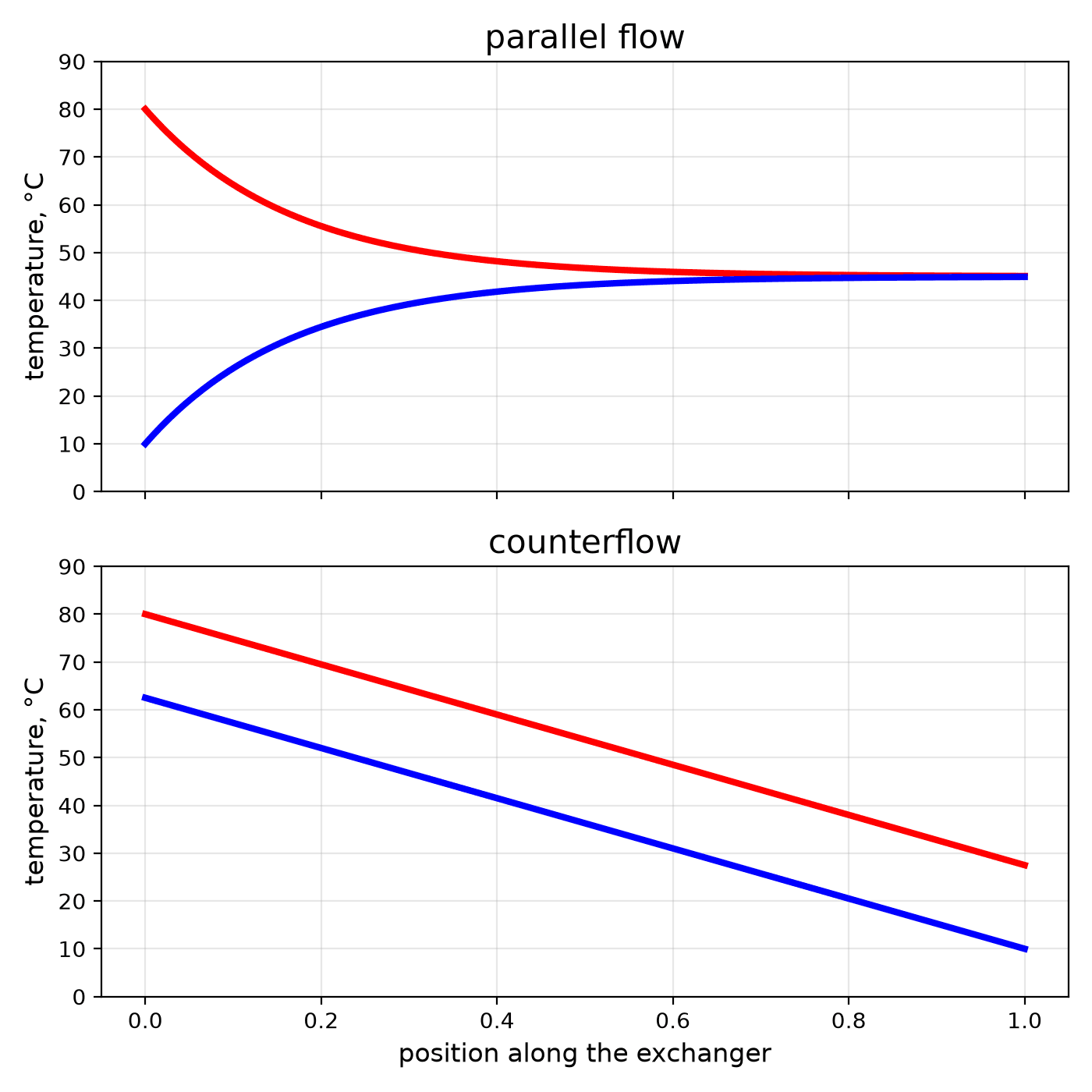
Counterflow: The Same Area Does More When the Streams Run Opposite
Emma 작성
역학
34
0
0
0
0
0

The Economiser: The Heat Still Going Up the Chimney
Martin 작성
역학
34
0
0
0
0
0
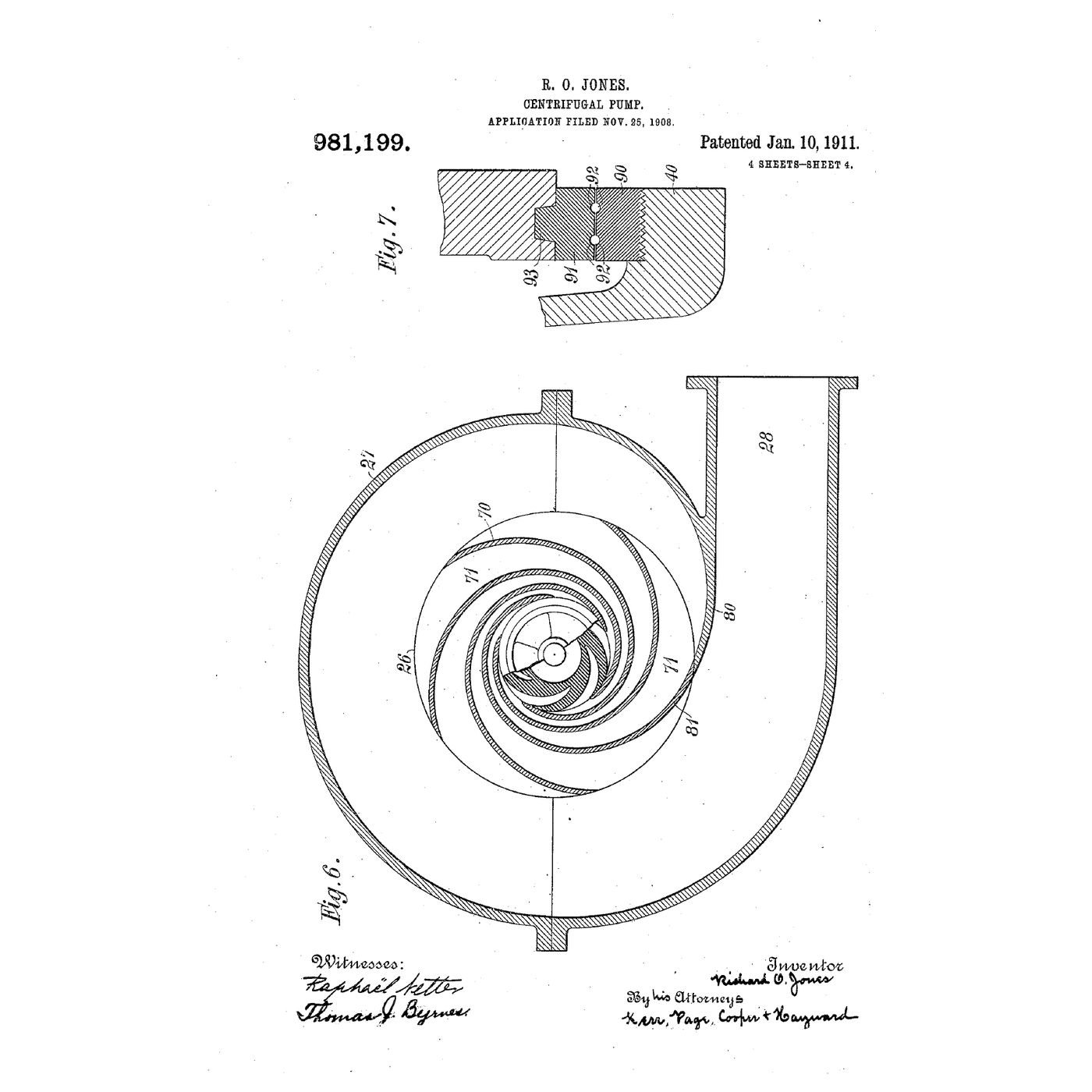
The Centrifugal Pump: Speed Squared, and Why It Cannot Lift Air
Emma 작성
역학
34
0
0
0
0
0
The Ferrule Fitting: Gripping and Sealing With One Nut
Emma 작성
공구
40
0
0
0
0
0
CC0 퍼블릭 도메인
이 블루프린트는 CC0로 공개되었습니다. 어떤 목적으로든 자유롭게 복사, 수정, 배포 및 사용할 수 있습니다.
제품 구매를 통해 메이커를 지원하세요. 판매자가 설정한 메이커 커미션 을 받거나, 이 블루프린트의 새로운 반복을 만들어 연결로 포함시킬 수 있습니다.