예술
뷰티 및 웰니스
공예
문화 및 역사
엔터테인먼트
환경
음식 및 음료
역공학
과학
스포츠
기술
웨어러블
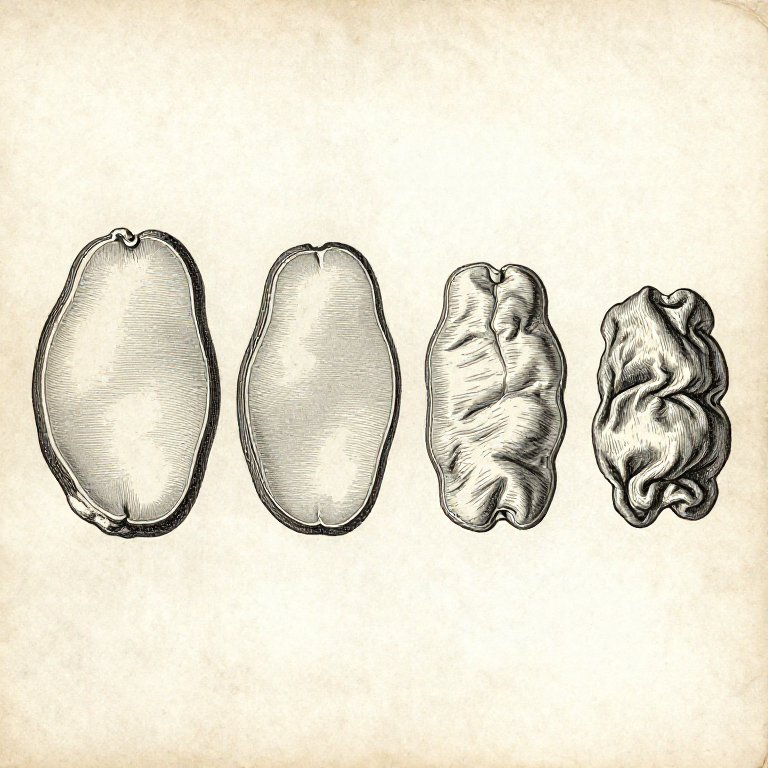


Water Activity: Honey Is 17% Water and Never Spoils
Honey is about 17% water and keeps for ever. Fresh meat is about 75% water and is dangerous within a day. Both numbers are water CONTENT, and neither predicts anything.
What predicts spoilage is **water activity** — how much of that water is free rather than bound up by salt, sugar or the structure of the food itself. Microbes cannot drink bound water, and every organism has a level below which it simply stops.
This one number ties together every preservation method in the catalogue: drying, salting, sugaring, smoking, freezing. Knowing where a food sits on the scale says what can still grow in it, and therefore what else it needs.
중급
3 hours
안내
1
1
What water activity is, and how it is measured
What water activity is, and how it is measured
Water activity is the vapour pressure of the water in a food divided by the vapour pressure of pure water at the same temperature. Pure water is 1.00; anything with dissolved or bound water is less.
The useful equivalence: **water activity is the relative humidity the food reaches in a sealed container, divided by 100.** A food at 0.75 will sit in equilibrium with air at 75% RH — it neither dries further nor takes water up.
That is also how it is measured at home. Seal a sample in a small airtight container with a hygrometer, leave it a few hours to equilibrate at a steady temperature, and read the humidity. A cheap digital hygrometer is good to a few percent, which is enough to tell 0.75 from 0.90.
Calibrate the hygrometer first, with a saturated salt solution in a sealed jar. Saturated sodium chloride sits at **75.3% RH at 20 C** — a genuine physical constant, and the standard calibration point.
Temperature matters: water activity rises slightly as a food warms, so a measurement without a temperature is incomplete.
이 단계의 재료:
 소금1 개
소금1 개 기름기 없는 소고기1 개
필요한 도구:
 습도계
습도계 저장 유리병(메이슨)
 즉시 판독 온도계
2
2
The lines that matter, and where foods fall
The lines that matter, and where foods fall
Jupyter 노트북 불러오는 중…
필요한 도구:
 데스크톱 컴퓨터
3
3
The four ways to lower it
The four ways to lower it
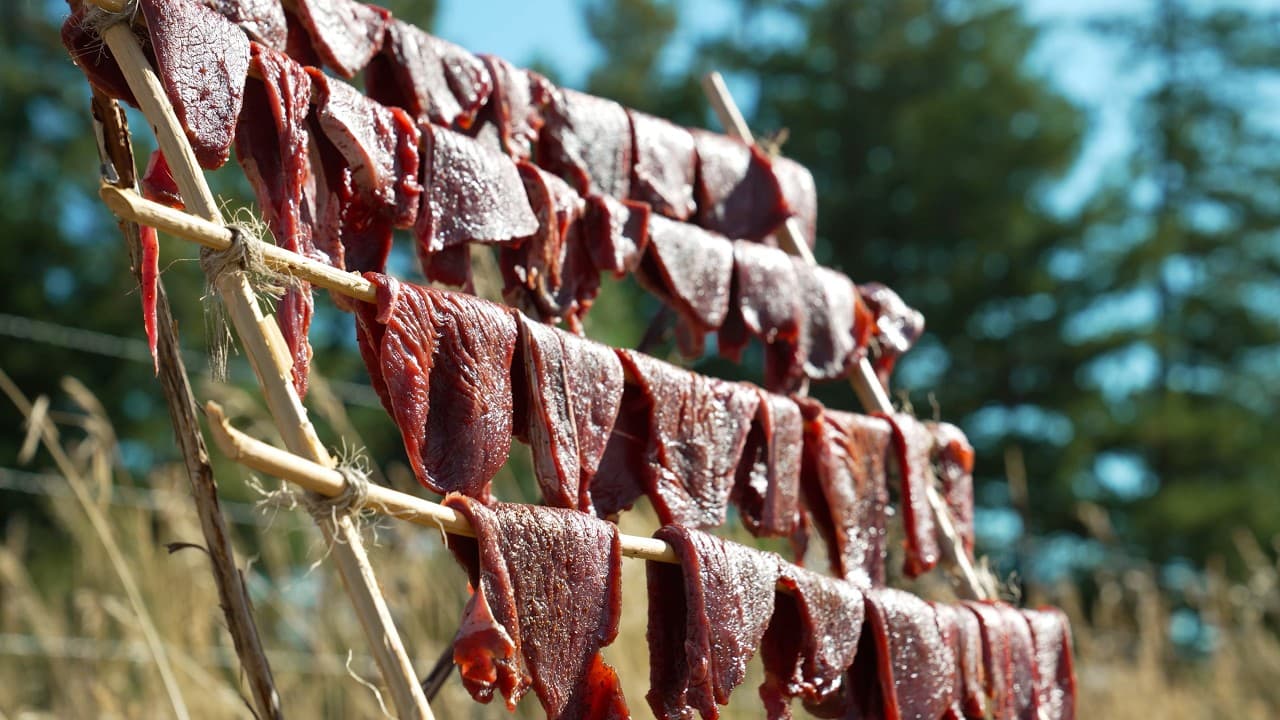
**Remove the water.** Drying, in the sun, in air, over a fire or in a dehydrator. Simple, slow, and limited by the weather unless heat is supplied.
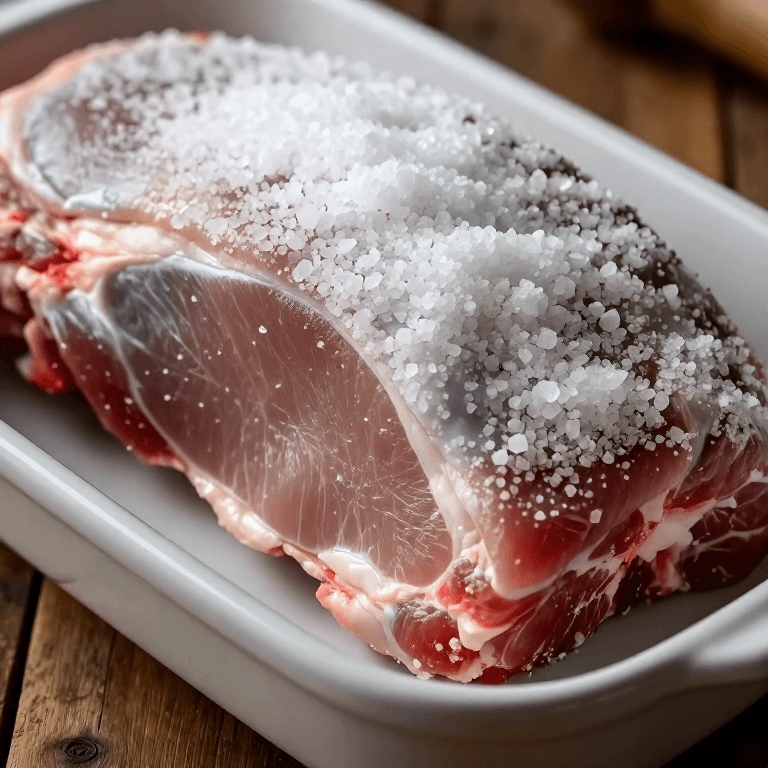
**Bind it with salt.** Salt dissolves into the water that is present and ties it up. A modest amount of salt lowers water activity far more than the same weight of water removed, which is why salt and drying are almost always used together.
**Bind it with sugar.** The same mechanism, needing far more sugar by weight because sugar does not dissociate and its molecules are heavier. This is why jam is roughly equal weights of fruit and sugar, and why honey keeps at all.
**Freeze it.** Ice is not available water. A food at -18 C has an effective water activity around 0.8, which is why freezing halts growth — it does not kill anything, and everything resumes on thawing.
Smoking is on this list only partly. It dries the surface and deposits antimicrobial phenols, but a smoked food that is not also salted or dried is not preserved. That is the commonest misunderstanding in the whole subject.
이 단계의 재료:
소금1 개 그래뉴당1 개기름기 없는 소고기1 개
필요한 도구:
 디지털 주방 저울습도계
 건조대
건조대4
4
The hurdle idea: several small barriers beat one large one
The hurdle idea: several small barriers beat one large one
Very few preserved foods rely on one thing. A salami is not safe because of salt, or acid, or nitrite, or drying — it is safe because of all four, each of which would be insufficient alone.
This is the hurdle principle, and it is what makes traditional preservation work. Each barrier need only be partial if there are enough of them:
* salt lowers water activity
* fermentation lowers pH
* nitrite blocks *Clostridium* specifically
* drying lowers water activity further
* smoke adds phenols and dries the surface
* cold slows everything
The practical consequence is the important one: **removing one hurdle from a traditional recipe can make it dangerous, even if everything else is done perfectly.** Low-salt bacon, unsmoked ham, a sausage fermented at the wrong temperature — each removes a hurdle the others were counting on.
When adapting a recipe, work out which hurdle is being changed and what is left carrying the load. That question has a real answer, and the rest of this batch is about how to compute it.
관련 블루프린트
이 블루프린트들은 지식을 공유합니다 — 기술, 재료 또는 원리

CC0 퍼블릭 도메인
이 블루프린트는 CC0로 공개되었습니다. 어떤 목적으로든 자유롭게 복사, 수정, 배포 및 사용할 수 있습니다.
제품 구매를 통해 메이커를 지원하세요. 판매자가 설정한 메이커 커미션 을 받거나, 이 블루프린트의 새로운 반복을 만들어 연결로 포함시킬 수 있습니다.