ศิลปะ
ความงามและสุขภาพ
งานฝีมือ
วัฒนธรรมและประวัติศาสตร์
ความบันเทิง
สิ่งแวดล้อม
อาหารและเครื่องดื่ม
วิศวกรรมย้อนรอย
วิทยาศาสตร์
กีฬา
เทคโนโลยี
อุปกรณ์สวมใส่



Trigonometry — Build a Clinometer and Measure a Tree's Height
A hands-on maths project: make a simple clinometer from a protractor, a straw and a weighted string, use it to measure the angle to the top of a tree or building, and then calculate the height you cannot reach. A Python cell does the trigonometry, and a compendium shows why sine waves run through all of science.
เริ่มต้น
30 minutes
คำแนะนำ
1
1
Turning an angle into a height
Turning an angle into a height
Ancient astronomers invented trigonometry to turn the ANGLES they measured into the LENGTHS of triangles. You will use it to measure the height of something too tall to reach.
2
2
Build a clinometer
Build a clinometer
Tape a drinking straw along the straight edge of a protractor to sight through. Tie a short string to the centre of the protractor with a small weight on the end, so it hangs down and shows the angle. That is a clinometer -- it measures how steeply you are looking up.
วัสดุสำหรับขั้นตอนนี้:
 กระดาษการ์ด1 ชิ้น
 เชือกฝ้ายสำหรับครัว1 ชิ้น
 ชุดหลอดสเตนเลส1 ชิ้น
เครื่องมือที่ต้องใช้:
 ไม้โปรแทรกเตอร์ / เครื่องวัดมุม
3
3
Sight the treetop and measure
Sight the treetop and measure
Stand back from a tree or building and look through the straw at its very top. Read the angle the hanging string marks on the protractor (this tells you the angle above horizontal). Then measure your distance from the base with a tape measure. Write down the angle and the distance.
เครื่องมือที่ต้องใช้:
 ตลับเมตร
4
4
Calculate the height
Calculate the height
กำลังโหลดสมุด Jupyter…
เครื่องมือที่ต้องใช้:
 คอมพิวเตอร์ตั้งโต๊ะ
 เครื่องคิดเลข
5
5
Compendium: the mathematics of waves
Compendium: the mathematics of waves
What your clinometer teaches. (1) In a right triangle the sine, cosine and tangent are ratios of the sides that depend ONLY on the angle, so a single table of them works for every triangle -- Ptolemy tabulated them around 150 AD, and Indian mathematicians shaped them into the 'sine' we use (the word comes from Sanskrit jya). (2) The tangent turns an angle you can see into a length you cannot reach -- the everyday tool of surveyors and sailors. (3) As an angle turns full circle, sine and cosine trace smooth repeating WAVES. (4) Those sine waves describe sound, light, radio, tides and alternating current, and underlie GPS, music synthesis and the Fourier analysis that compresses every image and song on your phone.
วัสดุ
4- 1 ชิ้นตัวยึดตำแหน่ง
- 1 ชิ้นตัวยึดตำแหน่ง
- 1 ชิ้นตัวยึดตำแหน่ง
- 1 แผ่นตัวยึดตำแหน่ง
เครื่องมือที่จำเป็น
5- ตัวยึดตำแหน่ง
- 1 vendor sell this, none ship to you yetตัวยึดตำแหน่ง
- ตัวยึดตำแหน่ง
- ตัวยึดตำแหน่ง
- ตัวยึดตำแหน่ง
บลูพริ้นท์ที่เกี่ยวข้อง
บลูพริ้นท์เหล่านี้แบ่งปันความรู้ — เทคนิค วัสดุ หรือหลักการ

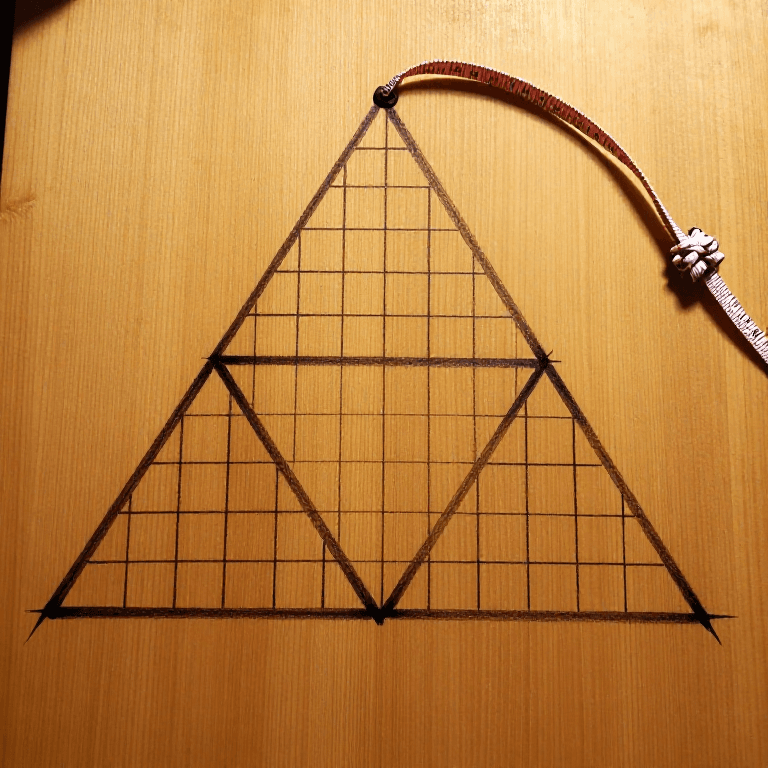
CC0 สาธารณสมบัติ
พิมพ์เขียวนี้เผยแพร่ภายใต้ CC0 คุณสามารถคัดลอก แก้ไข แจกจ่าย และใช้งานผลงานนี้เพื่อวัตถุประสงค์ใดก็ได้ โดยไม่ต้องขออนุญาต
สนับสนุนเมกเกอร์โดยซื้อสินค้าผ่านพิมพ์เขียวของพวกเขา ซึ่งพวกเขาจะได้รับ ค่าคอมมิชชันเมกเกอร์ ที่ผู้ขายกำหนด หรือสร้างเวอร์ชันใหม่ของพิมพ์เขียวนี้และรวมเป็นการเชื่อมต่อในพิมพ์เขียวของคุณเพื่อแบ่งรายได้