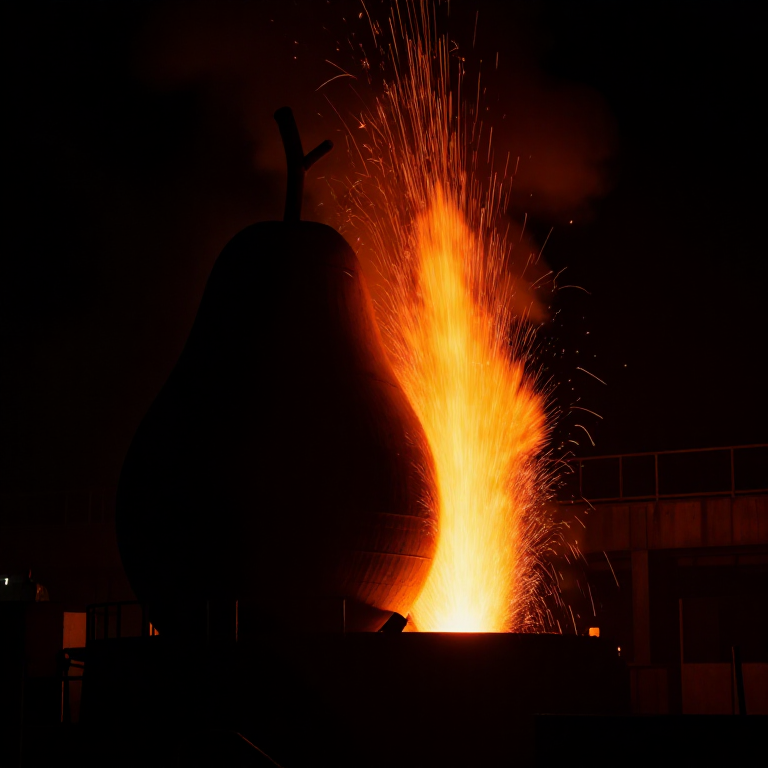


Making Steel in a Bessemer Converter — Mass Steel by Blowing Air Through Iron
Crucible steel was superb but slow, made a few kilograms at a time. In 1856 Henry Bessemer found a way to make steel by the tonne in about twenty minutes, and the price of steel collapsed from a luxury to a commodity. Rails, ships, bridges, and the first steel-framed buildings all became possible almost overnight.
His method sounds reckless: blow cold air straight up through a vessel of molten pig iron. The oxygen in the blast burns out the silicon, manganese, and carbon that make pig iron brittle — and because those reactions give off enormous heat, the metal does not cool but actually gets hotter, staying liquid with no added fuel. A volcano of flame and sparks roars from the converter's mouth while the carbon burns away.
The trick is knowing when to stop. The operator reads the flame, and the instant the carbon is gone, halts the blow and adds back a precise dose of carbon-rich spiegeleisen to hit the exact steel he wants. Tilt, pour, and there is a ladle of molten steel where minutes before there was crude pig iron.
คำแนะนำ
Understand the converter
Understand the converter
Build and line the converter
Build and line the converter
วัสดุสำหรับขั้นตอนนี้:
 อิฐทนไฟ120 ชิ้น
เครื่องมือที่ต้องใช้:
 เสียมมือ
Charge molten pig iron
Charge molten pig iron
วัสดุสำหรับขั้นตอนนี้:
 แท่งเหล็กดิบ100 กก.
Start the blast
Start the blast
เครื่องมือที่ต้องใช้:
 เครื่องเป่าลม
Burn out the impurities
Burn out the impurities
Read the flame
Read the flame
เครื่องมือที่ต้องใช้:
 แว่นครอบตานิรภัยแบบปิดสนิท
Stop at the drop
Stop at the drop
Recarburise with spiegeleisen
Recarburise with spiegeleisen
วัสดุสำหรับขั้นตอนนี้:
 ชปีเกลไอเซิน8 กก.
Handle phosphoric iron
Handle phosphoric iron
วัสดุสำหรับขั้นตอนนี้:
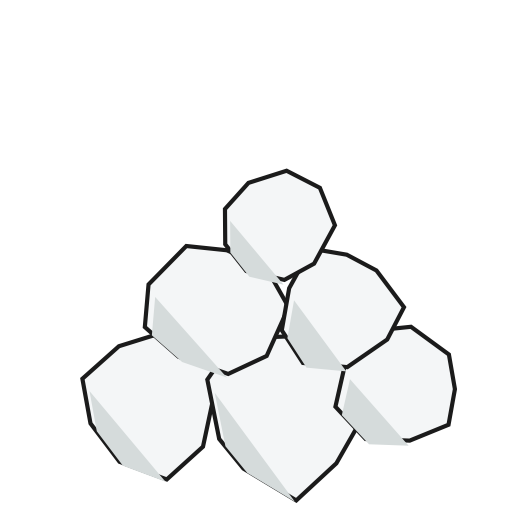 ปูนดิบ10 กก.
Pour into the ladle
Pour into the ladle
เครื่องมือที่ต้องใช้:
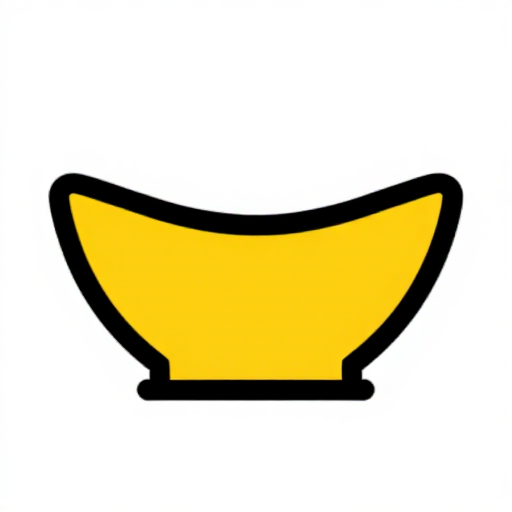 แบบหล่อแท่งโลหะ
Strip and roll
Strip and roll
เครื่องมือที่ต้องใช้:
 เครื่องรีดโลหะ
Appreciate the impact
Appreciate the impact
วัสดุ
4- 120 ชิ้นตัวยึดตำแหน่ง
- 100 กก.ตัวยึดตำแหน่ง
- 8 กก.ตัวยึดตำแหน่ง
- 10 กก.ตัวยึดตำแหน่ง
เครื่องมือที่จำเป็น
5- ตัวยึดตำแหน่ง
- ตัวยึดตำแหน่ง
- ตัวยึดตำแหน่ง
- ตัวยึดตำแหน่ง
- ตัวยึดตำแหน่ง
วัสดุจากพิมพ์เขียวที่เชื่อมต่อ

พิมพ์เขียวนี้สร้าง
บลูพริ้นท์ที่เกี่ยวข้อง
บลูพริ้นท์เหล่านี้แบ่งปันความรู้ — เทคนิค วัสดุ หรือหลักการ


CC0 สาธารณสมบัติ
พิมพ์เขียวนี้เผยแพร่ภายใต้ CC0 คุณสามารถคัดลอก แก้ไข แจกจ่าย และใช้งานผลงานนี้เพื่อวัตถุประสงค์ใดก็ได้ โดยไม่ต้องขออนุญาต
สนับสนุนเมกเกอร์โดยซื้อสินค้าผ่านพิมพ์เขียวของพวกเขา ซึ่งพวกเขาจะได้รับ ค่าคอมมิชชันเมกเกอร์ ที่ผู้ขายกำหนด หรือสร้างเวอร์ชันใหม่ของพิมพ์เขียวนี้และรวมเป็นการเชื่อมต่อในพิมพ์เขียวของคุณเพื่อแบ่งรายได้