ศิลปะ
ความงามและสุขภาพ
งานฝีมือ
วัฒนธรรมและประวัติศาสตร์
ความบันเทิง
สิ่งแวดล้อม
อาหารและเครื่องดื่ม
วิศวกรรมย้อนรอย
วิทยาศาสตร์
กีฬา
เทคโนโลยี
อุปกรณ์สวมใส่
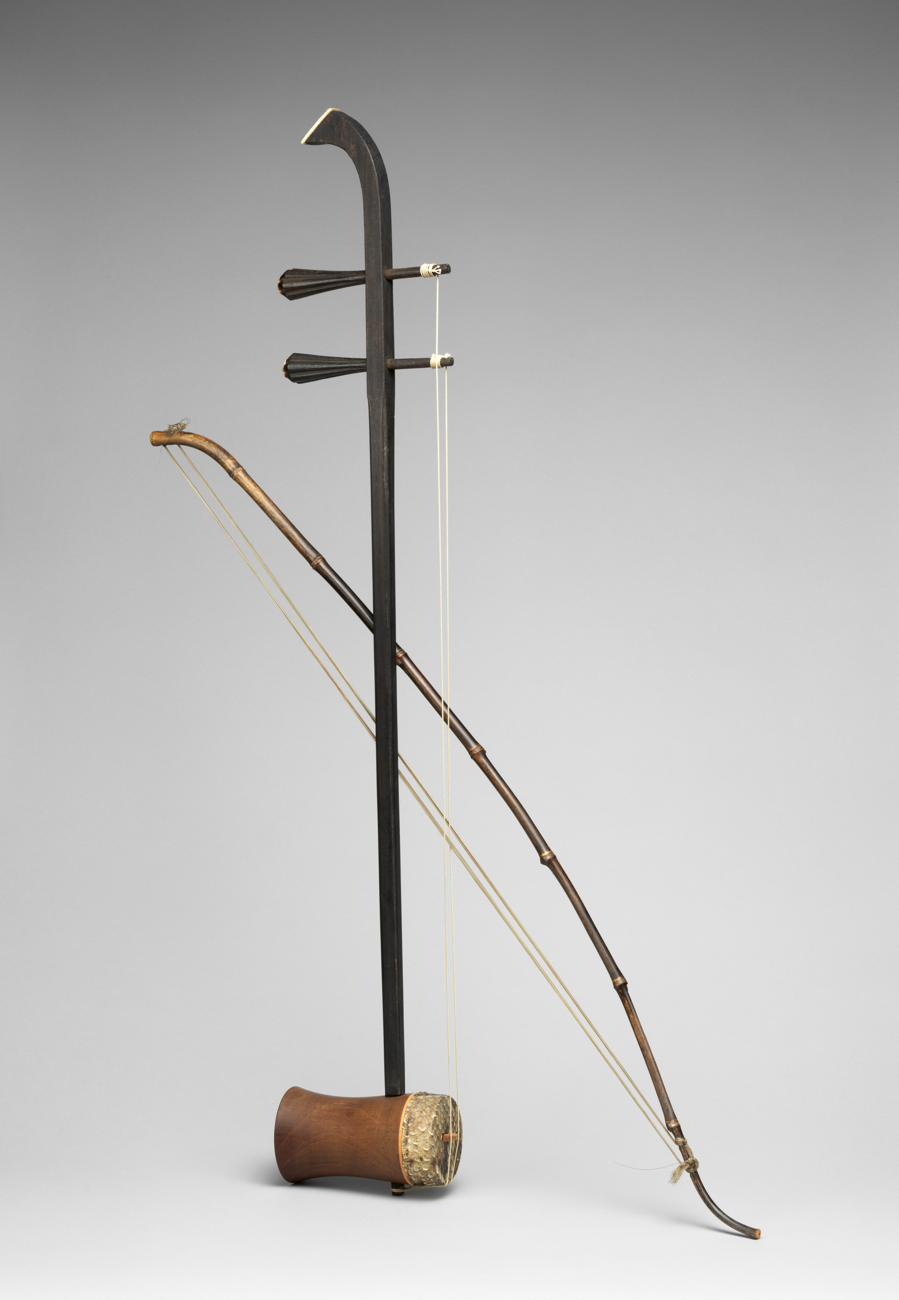


Building an Erhu — The Chinese Two-String Bowed Fiddle
Build an erhu: a two-string Chinese fiddle with a bow trapped between the strings, a little skin-covered drum for a body, and no fingerboard — you press the strings in mid-air and slide between notes. A serious maker build in the bowed string and stick-slip friction, the physics behind every violin.
ระดับกลาง
Several hours over a few sessions
คำแนะนำ
1
1
A fiddle with a drum for a body
A fiddle with a drum for a body
The erhu has just two strings, a bow that lives trapped between them, and a little skin-covered drum for a body. It has no fingerboard, so you press the strings in mid-air and slide to every note between.
2
2
Make the resonator drum
Make the resonator drum
Cut a short, thick length of bamboo about 13 cm long, open at both ends. This little hollow tube is the sound-body of the erhu.
วัสดุสำหรับขั้นตอนนี้:
 ไผ่1 ชิ้น
เครื่องมือที่ต้องใช้:
 เลื่อยตัดเหล็ก
3
3
Skin the front
Skin the front
Soak a piece of rawhide, stretch it drum-tight over one end of the tube, glue and lash it down, and let it dry hard. This membrane is what makes the erhu loud, like a banjo head.
วัสดุสำหรับขั้นตอนนี้:
 หนังดิบ1 ชิ้น
 กาวไม้ PVA1 ชิ้น
4
4
Fit the neck
Fit the neck
Push a long dowel neck down through the body near the skin end, so it stands up tall and straight from the drum.
วัสดุสำหรับขั้นตอนนี้:
 เดือยไม้1 ชิ้นกาวไม้ PVA1 ชิ้น
5
5
Fit two tuning pegs
Fit two tuning pegs
Bore two holes near the top of the neck and fit a friction tuning peg into each, one above the other.
วัสดุสำหรับขั้นตอนนี้:
 ลูกบิดตั้งสาย2 ชิ้น
เครื่องมือที่ต้องใช้:
 เหล็กหมาด (สว่านเจาะรูมือ)
6
6
String it
String it
Run two strings from the base of the body up to the two pegs, close together and parallel — the erhu's whole set of strings.
วัสดุสำหรับขั้นตอนนี้:
 ลวดเปียโนเหล็ก 0.032 นิ้ว1 ชิ้น
7
7
Stand the bridge on the skin
Stand the bridge on the skin
Carve a tiny wooden bridge and stand it on the middle of the skin, under the strings, so the strings press down onto the membrane.
เครื่องมือที่ต้องใช้:
 มีดสโลยด์
8
8
Tune the two strings a fifth apart
Tune the two strings a fifth apart
Tune the inner string to a low note and the outer string a fifth higher, like D and A. Twist the pegs to reach the two notes.
9
9
Make the bow
Make the bow
Tie a flat hank of horsehair between the two ends of a springy stick to make a bow, tight enough to twang.
วัสดุสำหรับขั้นตอนนี้:
 กิ่งโค้ง (คันธนู)1 ชิ้น
 ขนคันชัก (ขนหางม้า)1 ชิ้น
10
10
Thread the bow between the strings
Thread the bow between the strings
Slide the bow hair BETWEEN the two strings. On an erhu the bow lives there permanently and cannot be taken out — that is why it plays only its own two strings.
11
11
Rosin the hair
Rosin the hair
Rub hard pine rosin along the bow hair so it grips the strings. Without rosin the hair is too slippery to set a string singing.
12
12
Play a note
Play a note
Draw the bow steadily across a string. Press the hair toward the inner or the outer string to choose which one sounds.
13
13
Slide and bend
Slide and bend
With no fingerboard, press a string in open air and slide your finger up or down the neck to glide smoothly between notes — the erhu's crying, singing voice.
14
14
Compendium — bowing and the skin drum
Compendium — bowing and the skin drum
The erhu makes sound the way every bowed instrument does: by stick-slip friction. The rosined hair grabs the string and drags it sideways until the string's tension tears it free; the string snaps back, is caught again, and the cycle repeats hundreds of times a second. This catch-and-release, called Helmholtz motion, keeps the string vibrating steadily for as long as you bow — which is why a bowed note can sing on and on while a plucked one quickly dies. Unlike a lyre or a guitar, the erhu's soundbox is a little DRUM: the strings press through the bridge onto a stretched skin, and that membrane radiates the sound into the air, exactly as a banjo head does, giving the erhu its bright, nasal, almost human voice. And it has no fingerboard — you stop the strings by pressing them in open air — so there are no fixed frets and you can slide through every pitch, which is why the erhu can weep and sing like a person. It grew from the bowed huqin fiddles of the Tang and Song dynasties more than a thousand years ago, and its two strings are tuned a fifth apart. Its cousins are the whole huqin family and, far to the west, every member of the violin family — all of them stick-slip machines singing through a resonating body.
วัสดุ
8- 1 ชิ้นตัวยึดตำแหน่ง
- 1 ชิ้นตัวยึดตำแหน่ง
- 1 ชิ้นตัวยึดตำแหน่ง
- 1 ชิ้นตัวยึดตำแหน่ง
- 2 ชิ้นตัวยึดตำแหน่ง
- ตัวยึดตำแหน่ง
- 1 ชิ้นตัวยึดตำแหน่ง
- 1 ชิ้นตัวยึดตำแหน่ง
เครื่องมือที่จำเป็น
3- ตัวยึดตำแหน่ง
- ตัวยึดตำแหน่ง
- ตัวยึดตำแหน่ง
พิมพ์เขียวนี้สร้าง
บลูพริ้นท์ที่เกี่ยวข้อง
บลูพริ้นท์เหล่านี้แบ่งปันความรู้ — เทคนิค วัสดุ หรือหลักการ

CC0 สาธารณสมบัติ
พิมพ์เขียวนี้เผยแพร่ภายใต้ CC0 คุณสามารถคัดลอก แก้ไข แจกจ่าย และใช้งานผลงานนี้เพื่อวัตถุประสงค์ใดก็ได้ โดยไม่ต้องขออนุญาต
สนับสนุนเมกเกอร์โดยซื้อสินค้าผ่านพิมพ์เขียวของพวกเขา ซึ่งพวกเขาจะได้รับ ค่าคอมมิชชันเมกเกอร์ ที่ผู้ขายกำหนด หรือสร้างเวอร์ชันใหม่ของพิมพ์เขียวนี้และรวมเป็นการเชื่อมต่อในพิมพ์เขียวของคุณเพื่อแบ่งรายได้