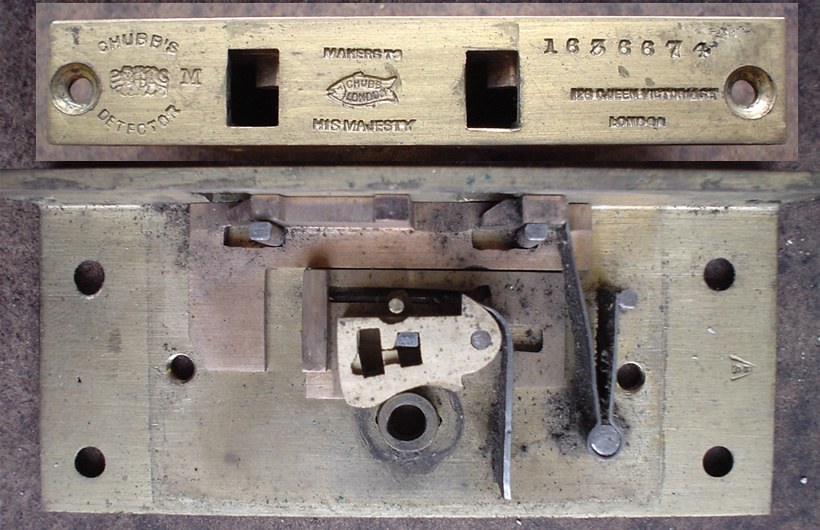


กุญแจตรวจจับของชับบ์
คำแนะนำ
สร้างคันโยกหนึ่งอัน
สร้างคันโยกหนึ่งอัน
ทำความเข้าใจกุญแจแบบคันโยกพื้นฐานก่อนเพิ่มส่วนที่ชาญฉลาด
- ติดตั้งคันโยกแบนที่มีร่องเจาะไว้บนแกนหมุน โดยมีสปริงกดลงด้านล่าง
- ใส่หมุด — เสาที่ติดตายบนสลัก — ซึ่งอยู่ในร่องนั้น
- สลักจะเลื่อนได้ก็ต่อเมื่อช่องประตูของร่องตรงกับหมุดเท่านั้น
วัสดุสำหรับขั้นตอนนี้:
 แถบเหล็กสปริง1 strip
 แท่งทองเหลือง1 length
ซ้อนคันโยกที่มีความสูงต่างกัน
ซ้อนคันโยกที่มีความสูงต่างกัน
ความปลอดภัยมาจากการต้องใช้ความสูงที่ถูกต้องหลายค่าพร้อมกัน
- ซ้อนคันโยกหลายอันบนแกนหมุนเดียวกัน แต่ละอันมีช่องประตูที่ความสูงต่างกัน
- ตัดลูกกุญแจให้มีขั้นต่างกันสำหรับคันโยกแต่ละอัน
- ตรวจสอบว่าสลักจะเคลื่อนได้ก็ต่อเมื่อช่องประตูทุกช่องตรงกันพร้อมกันเท่านั้น
เพิ่มตัวตรวจจับ
เพิ่มตัวตรวจจับ
ตัวสิ่งประดิษฐ์เอง: กับดักสำหรับคันโยกที่ถูกยกสูงเกินไป
- เพิ่มขอเกี่ยวแบบมีสปริงที่วางไว้เหนือความสูงที่ถูกต้องของคันโยก
- คันโยกใดก็ตามที่ถูกยกเลยช่องประตูของมันจะถูกขอเกี่ยวนั้นจับและยึดไว้
- เมื่อมีคันโยกหนึ่งอันถูกยึดไว้ด้านบน ไม่มีชุดการยกใดที่จะทำให้ช่องประตูทุกช่องตรงกันได้
ทำให้มันทำงาน แล้วรีเซ็ต
ทำให้มันทำงาน แล้วรีเซ็ต
โจมตีกุญแจของคุณเอง แล้วกู้คืนมัน
- จงใจยกคันโยกหนึ่งอันสูงเกินไป แล้วสัมผัสได้ถึงการที่ตัวตรวจจับจับมันไว้
- ลองใช้ลูกกุญแจที่ถูกต้อง — กุญแจควรไม่ยอมเปิด
- หมุนลูกกุญแจที่ถูกต้องย้อนกลับเพื่อปลดตัวตรวจจับ แล้วเปิดตามปกติ
ประวัติและบริบท
ประวัติและบริบท
เจเรไมอาห์ ชับบ์ จดสิทธิบัตรกุญแจตรวจจับในปี 1818 ว่ากันว่าได้แรงกระตุ้นจากการประกวดของรัฐบาลหลังเกิดการโจรกรรมที่อู่ต่อเรือพอร์ตสมัท เรื่องเล่าที่มีชื่อเสียงคือ ช่างกุญแจที่ต้องโทษซึ่งถูกคุมขังบนเรือคุก ได้รับข้อเสนอให้อภัยโทษและรางวัลหากเปิดได้หนึ่งอัน และเขายอมแพ้หลังจากพยายามอยู่หลายเดือน เรื่องนี้ปรากฏในเอกสารของบริษัทชับบ์ และควรรับฟังด้วยความระมัดระวังตามปกติต่อโฆษณาที่กลายเป็นประวัติศาสตร์
ยุคของกุญแจที่สะเดาะไม่ได้สิ้นสุดลงอย่างเปิดเผยในปี 1851 ที่งานนิทรรศการใหญ่ในลอนดอน ช่างกุญแจชาวอเมริกัน อัลเฟรด ชาลส์ ฮอบส์ สะเดาะกุญแจตรวจจับของชับบ์ได้ จากนั้น — ในเวลาราวห้าสิบชั่วโมงที่กระจายอยู่ในหลายสัปดาห์ — ก็เปิดกุญแจของบรามาห์ที่ตั้งอยู่ในหน้าร้านมานานหลายทศวรรษพร้อมคำท้า 200 กินี วงการกุญแจสั่นสะเทือนอย่างหนัก และตามมาด้วยการถกเถียงสาธารณะอย่างแท้จริงว่าการพูดถึงจุดอ่อนของกุญแจช่วยโจร หรือบังคับให้เกิดการปรับปรุง
คำตอบของฮอบส์ในการถกเถียงนั้นยังคงถูกอ้างถึงในงานด้านความปลอดภัย: คนร้ายรู้วิธีเหล่านี้อยู่แล้ว และการปล่อยให้สาธารณชนไม่รู้มีแต่จะทำให้พวกเขาไร้การป้องกัน โดยสาระแล้วนี่คือเหตุผลสนับสนุนการเปิดเผยช่องโหว่อย่างเต็มที่ ซึ่งกล่าวไว้ในปี 1853 และยังคงเป็นเหตุผลเดิม
สิ่งที่ยังคงอยู่: กุญแจแบบคันโยกยังคงเป็นมาตรฐานของตู้เซฟและกุญแจประตูในอังกฤษ แนวคิดตัวตรวจจับยังคงอยู่อย่างกว้างขวางกว่านั้นในฐานะหลักการที่ว่า ระบบความปลอดภัยควรบันทึกและรายงานการโจมตี ไม่ใช่เพียงรับมันไว้เฉย ๆ
วัสดุ
2- 1 stripตัวยึดตำแหน่ง
- 1 lengthตัวยึดตำแหน่ง
CC0 สาธารณสมบัติ
พิมพ์เขียวนี้เผยแพร่ภายใต้ CC0 คุณสามารถคัดลอก แก้ไข แจกจ่าย และใช้งานผลงานนี้เพื่อวัตถุประสงค์ใดก็ได้ โดยไม่ต้องขออนุญาต
สนับสนุนเมกเกอร์โดยซื้อสินค้าผ่านพิมพ์เขียวของพวกเขา ซึ่งพวกเขาจะได้รับ ค่าคอมมิชชันเมกเกอร์ ที่ผู้ขายกำหนด หรือสร้างเวอร์ชันใหม่ของพิมพ์เขียวนี้และรวมเป็นการเชื่อมต่อในพิมพ์เขียวของคุณเพื่อแบ่งรายได้