ศิลปะ
ความงามและสุขภาพ
งานฝีมือ
วัฒนธรรมและประวัติศาสตร์
ความบันเทิง
สิ่งแวดล้อม
อาหารและเครื่องดื่ม
วิศวกรรมย้อนรอย
วิทยาศาสตร์
กีฬา
เทคโนโลยี
อุปกรณ์สวมใส่
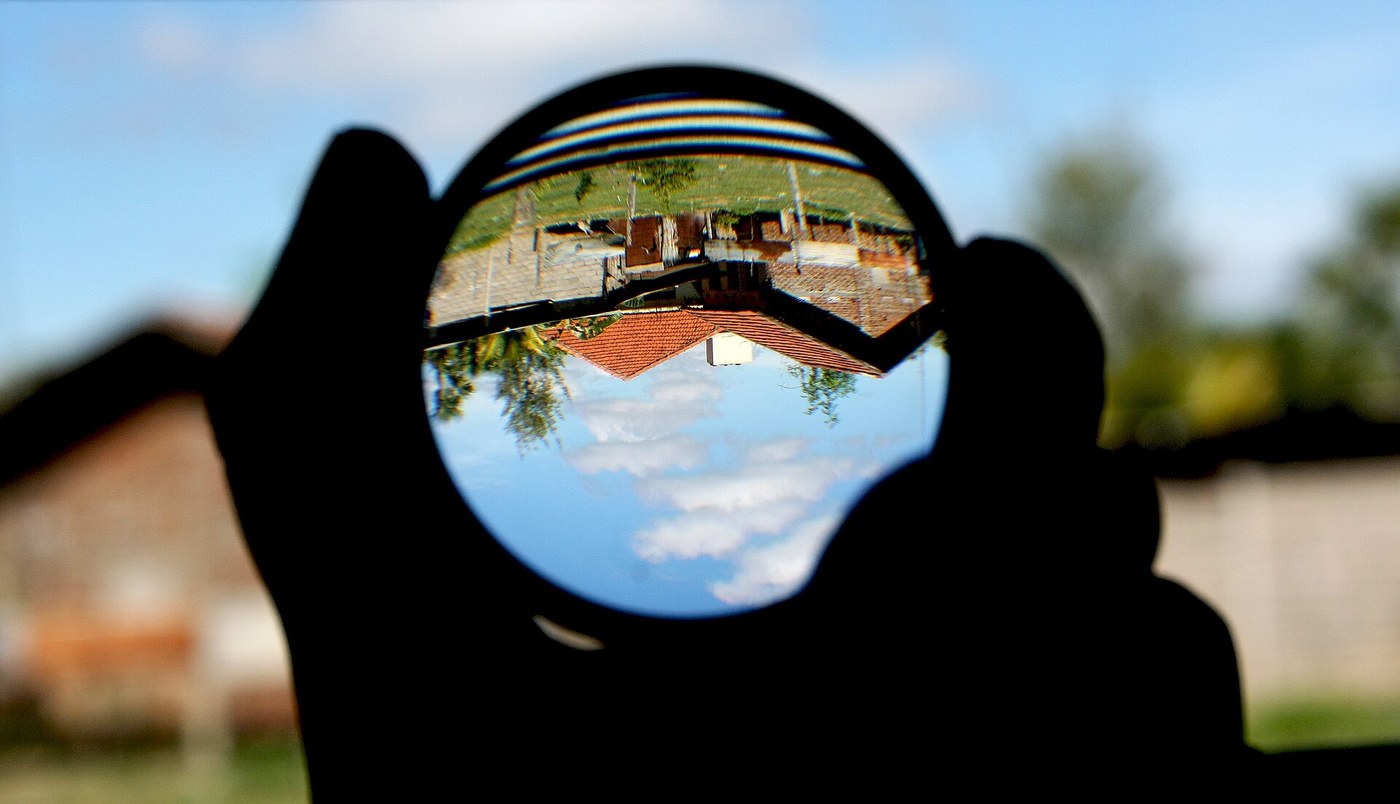


Convex and Concave Lenses Ground as a Pair
Rub one glass disc over another with wet grit and both change shape: the one on top goes hollow, the one beneath goes domed, and they stay a perfect fit. Grind both faces of a pair this way and the bottom disc becomes a double-convex lens, the top one a double-concave lens of the same curve. Longer work gives deeper curves and shorter focal lengths.
The picture: a double-convex lens held at arm's length shows the scene small and upside down.
ขั้นสูง
Several days per pair
คำแนะนำ
1
1
Cut two discs
Cut two discs
Score two equal circles on the glass sheet, snap them out and nibble the edges round with grozing pliers. Fix a short wooden handle to the back of each with warm pitch.
วัสดุสำหรับขั้นตอนนี้:
 แผ่นแก้ว1 ชิ้น
 กาวชันสน20 ก.
 แถบไม้เนื้อแข็ง1 ชิ้น
เครื่องมือที่ต้องใช้:
 มีดกรีดแก้ว
 คีมแทะกระจก
 แว่นนิรภัย
2
2
Rough grind the first faces
Rough grind the first faces
Lay one disc face up on a firm table, wet it and sprinkle coarse grit. Push the other disc over it, face down, in short strokes, turning both a little all the time. The top one becomes concave, the bottom convex. Rinse and recharge as the grit wears.
วัสดุสำหรับขั้นตอนนี้:
 น้ำ2 ลิตร
เครื่องมือที่ต้องใช้:
 ไม้บรรทัด
 เม็ดซิลิคอนคาร์ไบด์
3
3
Check the curve
Check the curve
Lay a ruler across the hollow disc and measure the depth at the centre with the caliper. Keep the top disc on top to deepen the curve; swap them to flatten it.
เครื่องมือที่ต้องใช้:
ไม้บรรทัด เวอร์เนียร์ดิจิทัล 6 นิ้ว
4
4
Fine grind and polish
Fine grind and polish
Go through finer grits, washing everything clean between grits. Polish each face on a pitch lap pressed to the other disc's curve, with tin oxide (putty powder) and water, until clear.
วัสดุสำหรับขั้นตอนนี้:
 ทินออกไซด์ (สแตนนิกออกไซด์)30 ก.กาวชันสน100 ก.
เครื่องมือที่ต้องใช้:
เม็ดซิลิคอนคาร์ไบด์5
5
Turn them over, do the second faces
Turn them over, do the second faces
Move the handles to the finished faces and grind the other sides the same way, the same disc on top, to the same depth. The bottom disc is now a double-convex lens, the top one double-concave.
วัสดุสำหรับขั้นตอนนี้:
ทินออกไซด์ (สแตนนิกออกไซด์)20 ก.เครื่องมือที่ต้องใช้:
เวอร์เนียร์ดิจิทัล 6 นิ้วเม็ดซิลิคอนคาร์ไบด์6
6
Find the focal length
Find the focal length
Hold the convex lens in sunlight over paper and move it until the spot is smallest; that distance is its focal length. Grind more pairs to different depths for a set of focal lengths.
เครื่องมือที่ต้องใช้:
ไม้บรรทัด7
7
Focal length from the curve
Focal length from the curve
กำลังโหลดสมุด Jupyter…
8
8
Limits
Limits
Which disc goes hollow is the mirror makers' rule (Sky & Telescope, Stellafane); the lens formula is from Wikipedia. Window glass is not optical glass: expect some colour fringes and bubbles.
วัสดุ
5- 1 ชิ้นตัวยึดตำแหน่ง
- 120 ก.ตัวยึดตำแหน่ง
- 1 ชิ้นตัวยึดตำแหน่ง
- 2 ลิตรตัวยึดตำแหน่ง
- ตัวยึดตำแหน่ง
พิมพ์เขียวนี้สร้าง



บลูพริ้นท์ที่เกี่ยวข้อง
บลูพริ้นท์เหล่านี้แบ่งปันความรู้ — เทคนิค วัสดุ หรือหลักการ

CC0 สาธารณสมบัติ
พิมพ์เขียวนี้เผยแพร่ภายใต้ CC0 คุณสามารถคัดลอก แก้ไข แจกจ่าย และใช้งานผลงานนี้เพื่อวัตถุประสงค์ใดก็ได้ โดยไม่ต้องขออนุญาต
สนับสนุนเมกเกอร์โดยซื้อสินค้าผ่านพิมพ์เขียวของพวกเขา ซึ่งพวกเขาจะได้รับ ค่าคอมมิชชันเมกเกอร์ ที่ผู้ขายกำหนด หรือสร้างเวอร์ชันใหม่ของพิมพ์เขียวนี้และรวมเป็นการเชื่อมต่อในพิมพ์เขียวของคุณเพื่อแบ่งรายได้