ศิลปะ
ความงามและสุขภาพ
งานฝีมือ
วัฒนธรรมและประวัติศาสตร์
ความบันเทิง
สิ่งแวดล้อม
อาหารและเครื่องดื่ม
วิศวกรรมย้อนรอย
วิทยาศาสตร์
กีฬา
เทคโนโลยี
อุปกรณ์สวมใส่
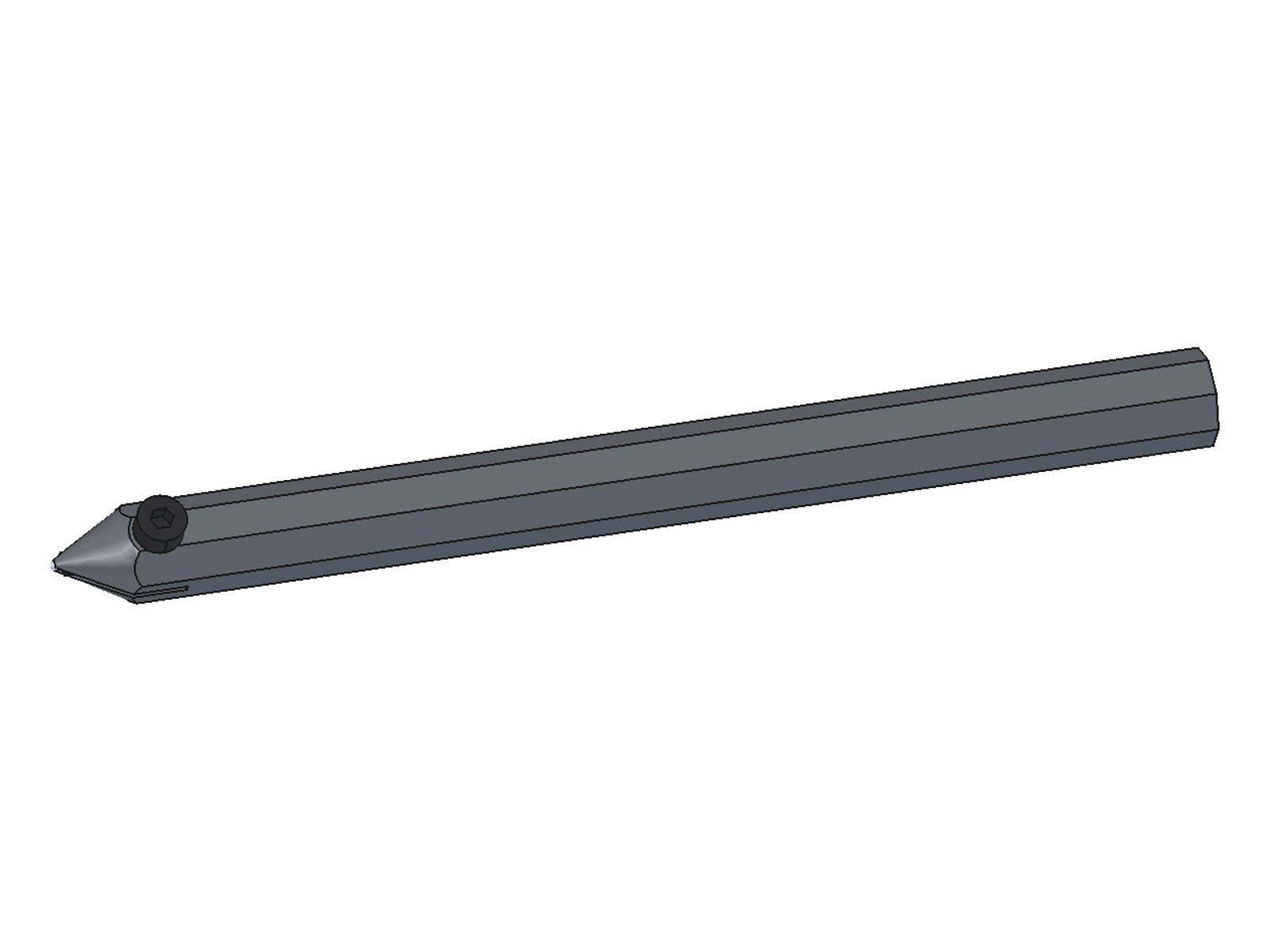


Diamond Scriber: a Diamond Clamped in a Slotted Steel Shank (after Poulain, 1920)
A scriber that marks glass, ceramic, hardened steel and stone: a small diamond held in the slotted tip of a tool steel bar and clamped by one screw. Paul Poulain patented this way of holding a diamond in 1920: the shank split into two jaws, a bolt through one jaw into the other, and a plate behind the stone.
ระดับกลาง
About 2 hours
คำแนะนำ
1
1
How a scriber is used
How a scriber is used
Marking lines with a scribe (JewelrySupply). A diamond point does the same on glass and hardened steel.
2
2
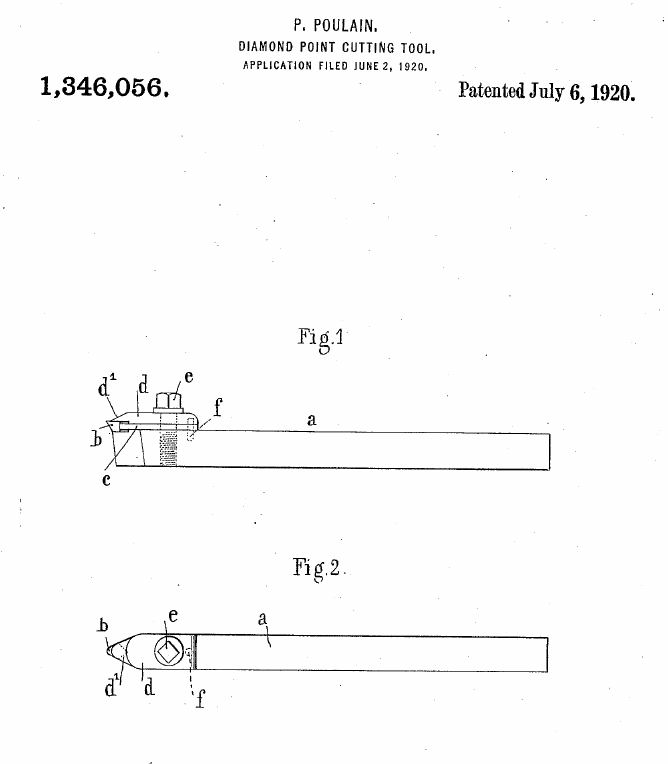
Poulain's diamond holder, 1920
Poulain's diamond holder, 1920
US 1,346,056: the diamond b sits at the bevelled end of a steel shank a, a plate c behind it as an abutment, an upper jaw d pressing on both, clamped by a bolt e. He adds that the shank may instead be slotted, gripping the stone between the two jaws with a bolt through one jaw into the other: that is how this scriber is made.
3
3
Print the drawing
Print the drawing
The scriber at 1:1, side and top views. Print at 100 % and check the 50 x 10 mm box.
4
4
Shape the shank
Shape the shank
Cut 130 mm of 10 mm octagonal tool steel and file one end to a 60 degree point, 8.7 mm long. Leave the steel soft, as supplied.
วัสดุสำหรับขั้นตอนนี้:
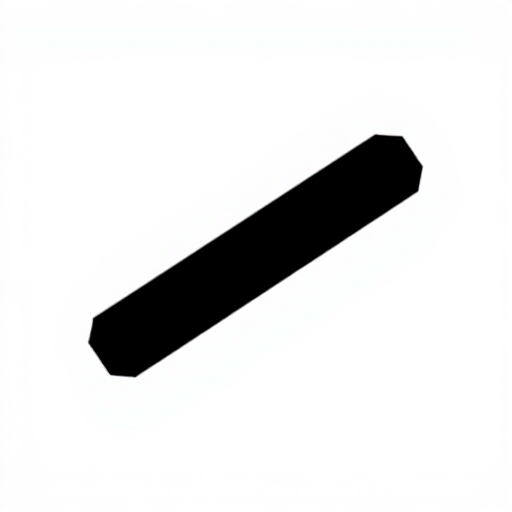 เหล็กเครื่องมือแปดเหลี่ยม1 piece (10 mm octagonal, 130 mm)
เครื่องมือที่ต้องใช้:
 เลื่อยตัดเหล็ก
 ตะไบโลหะ
 ปากกาจับชิ้นงานหน้าโต๊ะ
 เวอร์เนียร์ดิจิทัล 6 นิ้ว
5
5
Slot the tip
Slot the tip
Saw a slot 14 mm deep straight down the axis through the point, about 0.8 mm wide (one hacksaw cut). File the slot faces clean; the two halves are the jaws.
เครื่องมือที่ต้องใช้:
เลื่อยตัดเหล็กตะไบโลหะปากกาจับชิ้นงานหน้าโต๊ะ6
6
Drill and tap the jaws
Drill and tap the jaws
Punch a mark on a flat, 11 mm from the tip, across the slot. Drill 2.5 mm through both jaws; open the near jaw to 3.2 mm and tap the far jaw M3.
เครื่องมือที่ต้องใช้:
 เหล็กตอกนำศูนย์
 ชุดดอกสว่าน
 ชุดต๊าปและดายทำเกลียวปากกาจับชิ้นงานหน้าโต๊ะ
7
7
Set the diamond
Set the diamond
Cut a strip of brass sheet to fill the slot behind the stone (the abutment). Under a lens, seat the stone at the apex of the slot with its sharpest corner out by about half a millimetre, slide the brass in behind it and tighten the M3 x 10 screw.
วัสดุสำหรับขั้นตอนนี้:
 เพชรอุตสาหกรรม1 piece (about 1 mm)
 แผ่นทองเหลือง1 piece (strip, 0.5 mm x 3 x 12 mm)
 สกรูหัวจมหกเหลี่ยม1 piece (M3 x 10)
เครื่องมือที่ต้องใช้:
 แว่นขยายมือถือ 10 เท่า
 กรรไกรตัดแผ่นโลหะ
 ชุดประแจหกเหลี่ยม
8
8
Troubleshooting
Troubleshooting
Scriber problems and fixes.
Flow
Loading...
9
9
History and honest limits
History and honest limits
Paul Poulain, Paris: US 1,346,056, "Diamond-Point Cutting-Tool", filed 2 June 1920, granted 6 July 1920, a lathe tool for cutting steel, bronze, fibre, ebonite, paper and rubber. Ours: the hand scriber made from his slotted-shank variant, and every size. Not made by us yet.
วัสดุ
4- 1 piece (10 mm octagonal, 130 mm)ตัวยึดตำแหน่ง
- 1 piece (about 1 mm)ตัวยึดตำแหน่ง
- 1 piece (strip, 0.5 mm x 3 x 12 mm)ตัวยึดตำแหน่ง
- 1 piece (M3 x 10)ตัวยึดตำแหน่ง
เครื่องมือที่จำเป็น
10- ตัวยึดตำแหน่ง
- ตัวยึดตำแหน่ง
- ตัวยึดตำแหน่ง
- ตัวยึดตำแหน่ง
- ตัวยึดตำแหน่ง
- ตัวยึดตำแหน่ง
- ตัวยึดตำแหน่ง
- ตัวยึดตำแหน่ง
- ตัวยึดตำแหน่ง
- ตัวยึดตำแหน่ง
ไฟล์ออกแบบ
1วัสดุจากพิมพ์เขียวที่เชื่อมต่อ
พิมพ์เขียวนี้สร้าง

CC0 สาธารณสมบัติ
พิมพ์เขียวนี้เผยแพร่ภายใต้ CC0 คุณสามารถคัดลอก แก้ไข แจกจ่าย และใช้งานผลงานนี้เพื่อวัตถุประสงค์ใดก็ได้ โดยไม่ต้องขออนุญาต
สนับสนุนเมกเกอร์โดยซื้อสินค้าผ่านพิมพ์เขียวของพวกเขา ซึ่งพวกเขาจะได้รับ ค่าคอมมิชชันเมกเกอร์ ที่ผู้ขายกำหนด หรือสร้างเวอร์ชันใหม่ของพิมพ์เขียวนี้และรวมเป็นการเชื่อมต่อในพิมพ์เขียวของคุณเพื่อแบ่งรายได้