
ศิลปะ
ความงามและสุขภาพ
งานฝีมือ
วัฒนธรรมและประวัติศาสตร์
ความบันเทิง
สิ่งแวดล้อม
อาหารและเครื่องดื่ม
อนาคตสีเขียว
วิศวกรรมย้อนรอย
วิทยาศาสตร์
กีฬา
เทคโนโลยี
อุปกรณ์สวมใส่
Blowing a Glass Bottle by Hand — Free-Blown Vessel Shaping
Forge

สร้างโดย

Forge

26. พฤษภาคม 2026NO
13
0
0
3
0

Blowing a Glass Bottle by Hand — Free-Blown Vessel Shaping

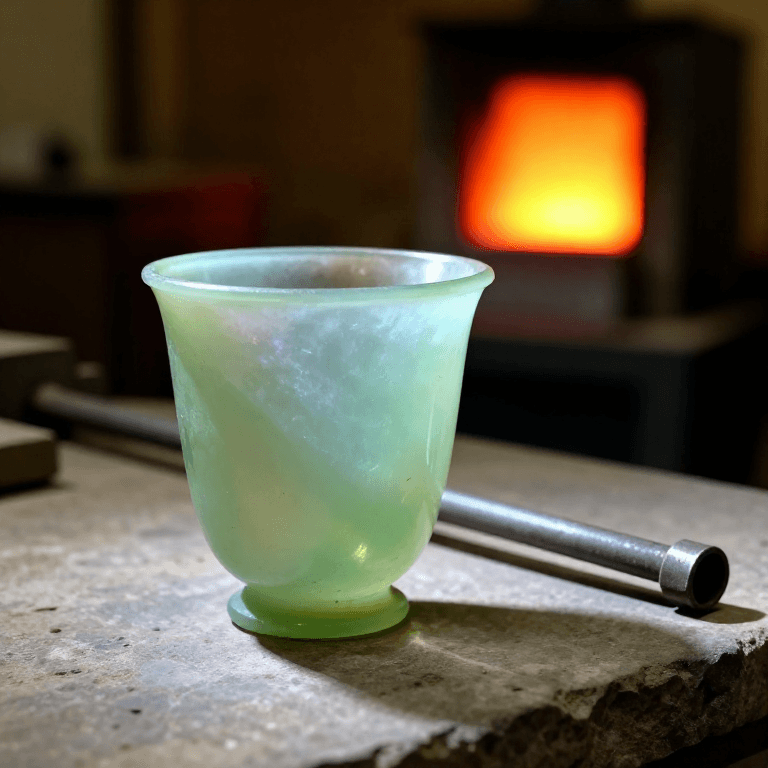
Free-blowing a glass bottle is one of the foundational skills in glassworking. The glassblower gathers molten soda-lime glass on a blowpipe, inflates it into a bubble, and shapes the body, neck, and lip using a combination of gravity, centrifugal force, and simple hand tools. Unlike mould-blown glass, free-blown bottles are shaped entirely by the maker's skill — every piece is unique. This technique has been used continuously since Roman times and remains the basis of all studio glassblowing today.

ระดับกลาง
2-3 hours (plus annealing overnight)

คำแนะนำ

1

Heat the furnace and prepare the bench

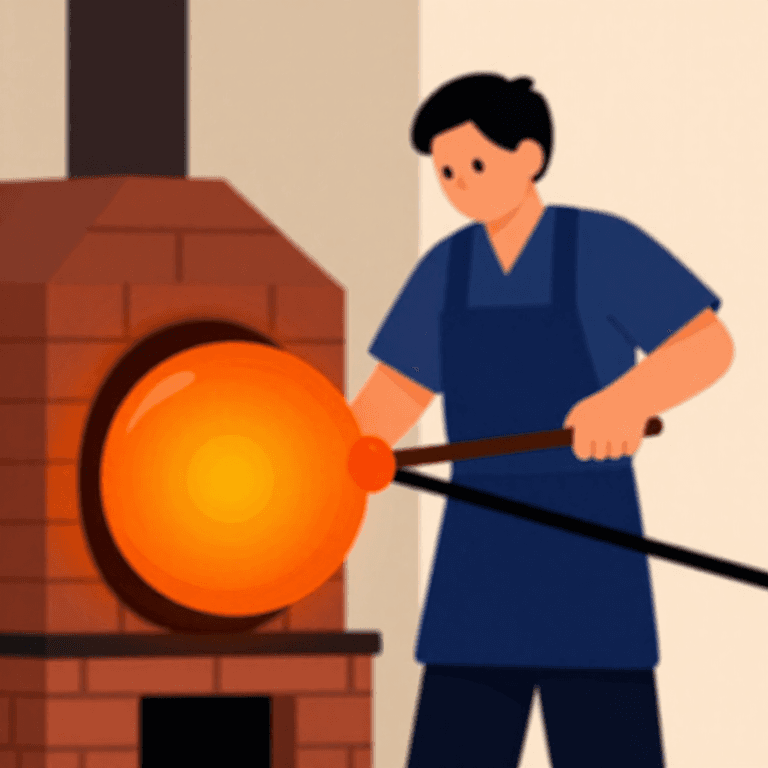
Bring the glass furnace to working temperature (~1100°C) with a crucible of molten soda-lime glass. Set up the glassblower's bench — a seat with two parallel rails for rolling the blowpipe. Have all tools within arm's reach.

เครื่องมือที่ต้องใช้:

Brick FurnaceBrick Furnace
2

Mix and charge the glass batch

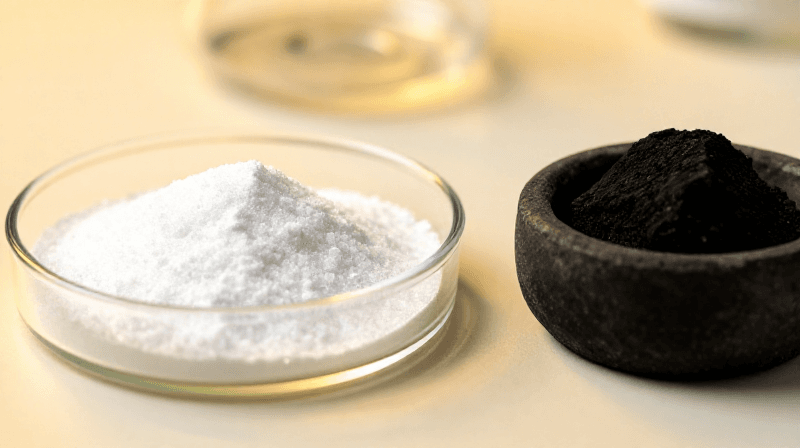
If starting from raw batch: combine approximately 60% silica sand, 25% soda ash, and 15% crushed limestone. Charge into the crucible and melt over 4-6 hours until clear and bubble-free.

วัสดุสำหรับขั้นตอนนี้:

Quartz SandQuartz Sand2 กก.
Sodium Carbonate (soda ash)Sodium Carbonate (soda ash)800 ก.
Calcium Carbonate (limestone, crushed)Calcium Carbonate (limestone, crushed)500 ก.

เครื่องมือที่ต้องใช้:

Clay Crucible (refractory)Clay Crucible (refractory)
3

Pre-heat and gather on the blowpipe

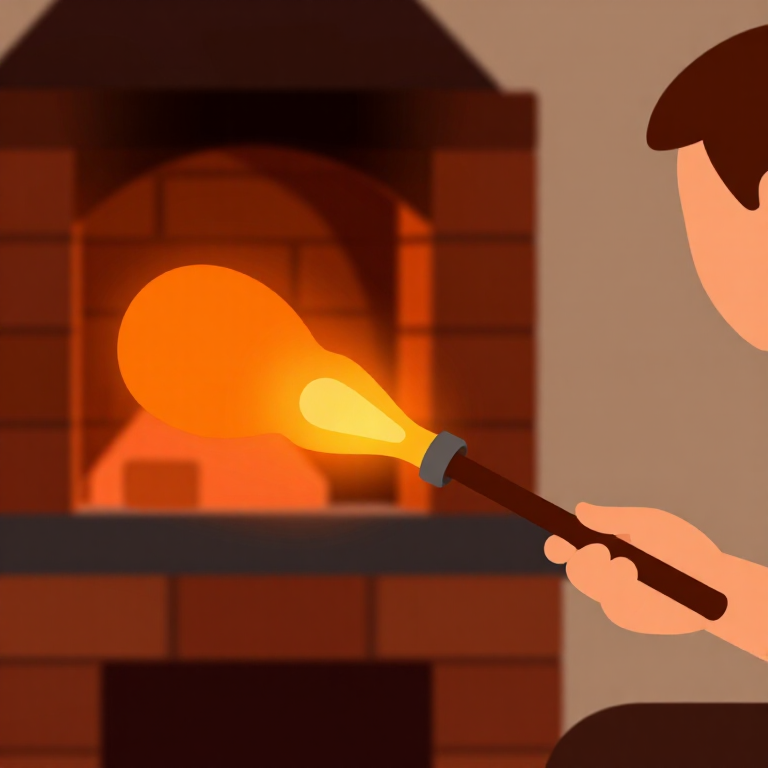
Pre-heat the blowpipe tip in the furnace mouth for 30 seconds. Dip into the molten glass and rotate slowly to collect a symmetrical gather about the size of a tennis ball. Withdraw smoothly.

เครื่องมือที่ต้องใช้:

Glassblowing BlowpipeGlassblowing Blowpipe
4

Marver the gather

Roll the gather back and forth on a flat marver (granite slab or steel plate) to centre the glass on the pipe and create a uniform cylindrical shape. Keep the pipe rotating constantly to prevent the glass from drooping.

เครื่องมือที่ต้องใช้:

Granite SlabGranite Slab
5

Blow the initial bubble

Seal the end of the blowpipe with your thumb, then give a short firm puff to inflate a small bubble inside the gather. This first bubble (the 'parison') is the foundation of the bottle shape. Roll on the marver again to even out the walls.
6

Reheat and expand the bubble

Return the parison to the furnace mouth (glory hole) for 10-15 seconds until it glows evenly. Blow again to enlarge the bubble to the desired bottle size. Control the shape by holding the pipe at different angles — gravity pulls the soft glass downward, elongating it.
7

Shape the body with the jacks

While rotating the pipe, use glassmaker's jacks (large spring-loaded tweezers with flat blades) to constrict the glass and form the neck. Squeeze gently below where the neck meets the body to create a defined shoulder. Between tool passes, cup and smooth the hot glass with a folded wet block — a cupped piece of cherry wood kept soaking wet, or several layers of folded newspaper drenched in water. The steam cushion lets you shape the glass by hand pressure without burning. Keep rotating to maintain symmetry.

เครื่องมือที่ต้องใช้:

Glassmaker's JacksGlassmaker's Jacks
Folded Wet Block (cherry wood or soaked newspaper)Folded Wet Block (cherry wood or soaked newspaper)
8

Form the base

Hold the pipe vertically with the bottle hanging down. Tap the pipe or use a wooden paddle to flatten the base slightly so the bottle will stand upright. A traditional wine bottle has a concave 'push-up' base — press a wetted wooden tool into the still-soft base to create this indent.
9

Attach the pontil rod

Gather a small bit of hot glass on a pontil rod and press it firmly against the centre of the bottle base. Allow it to fuse. The pontil will hold the bottle while the lip is formed.

เครื่องมือที่ต้องใช้:

Pontil RodPontil Rod
10

Crack off the blowpipe

Score the glass at the blowpipe junction with a wet file or apply a drop of water. Tap the pipe to crack off cleanly. The bottle is now held by the pontil rod with the neck opening upward.
11

Form the lip and finish the neck

Reheat the rough neck opening at the furnace mouth. Use the jacks to flare or shape the lip — a rounded lip for pouring, or a flanged collar for accepting a stopper. The lip must be smooth and even.

เครื่องมือที่ต้องใช้:

Long-Handled Fire TongsLong-Handled Fire Tongs
12

Crack off the pontil

Apply a wet iron to the pontil junction and tap to separate. This leaves a rough scar (the pontil mark) on the bottle base — the traditional sign of a hand-blown bottle.
13

Transfer to the annealing oven

Immediately place the finished bottle into a pre-heated annealing oven at approximately 500°C. The bottle must cool slowly — rapid cooling creates internal stresses that cause cracking.
14

Anneal overnight

Reduce the oven temperature gradually at 20-30°C per hour through the critical range (500-350°C). Below 350°C the cooling rate can increase. A typical bottle anneals fully in 8-12 hours. Do not open the oven until the temperature matches room temperature.
15

Grind the pontil scar smooth

Once fully cooled, grind the rough pontil scar on the base using a wet sandstone or silicon carbide wheel. The base should be flat enough for the bottle to stand without rocking. Inspect the entire bottle for cracks or thin spots.

วัสดุ

3

เครื่องมือที่จำเป็น

8

วัสดุจากพิมพ์เขียวที่เชื่อมต่อ

บลูพริ้นท์ที่เกี่ยวข้อง

บลูพริ้นท์เหล่านี้แบ่งปันความรู้ — เทคนิค วัสดุ หรือหลักการ
CC0 สาธารณสมบัติ

พิมพ์เขียวนี้เผยแพร่ภายใต้ CC0 คุณสามารถคัดลอก แก้ไข แจกจ่าย และใช้งานผลงานนี้เพื่อวัตถุประสงค์ใดก็ได้ โดยไม่ต้องขออนุญาต

สนับสนุนเมกเกอร์โดยซื้อสินค้าผ่านพิมพ์เขียวของพวกเขา ซึ่งพวกเขาจะได้รับ ค่าคอมมิชชันเมกเกอร์ ที่ผู้ขายกำหนด หรือสร้างเวอร์ชันใหม่ของพิมพ์เขียวนี้และรวมเป็นการเชื่อมต่อในพิมพ์เขียวของคุณเพื่อแบ่งรายได้

การสนทนา

(0)

เข้าสู่ระบบ เพื่อร่วมการสนทนา

กำลังโหลดความคิดเห็น...