ศิลปะ
ความงามและสุขภาพ
งานฝีมือ
วัฒนธรรมและประวัติศาสตร์
ความบันเทิง
สิ่งแวดล้อม
อาหารและเครื่องดื่ม
วิศวกรรมย้อนรอย
วิทยาศาสตร์
กีฬา
เทคโนโลยี
อุปกรณ์สวมใส่
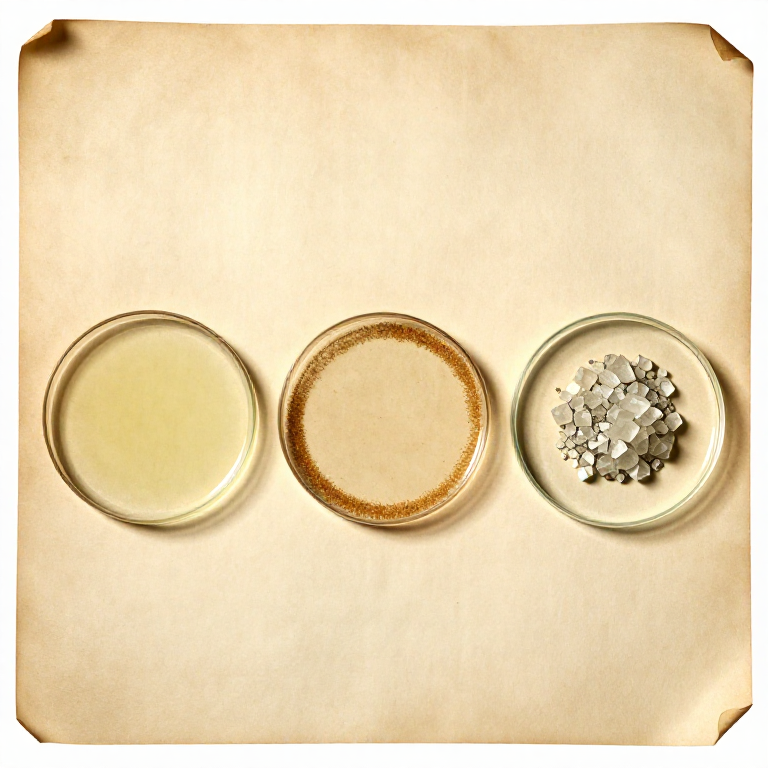


Getting the Solid Back: Evaporate, Crystallise, and Dry to Constant Mass
Boiling a solution dry gives you everything that was dissolved in it, including the impurities. Letting it crystallise slowly gives you the substance you wanted and leaves most of the impurities in the liquid — because a growing crystal is fussy about what it lets in.
So evaporating to dryness and crystallising are not two ways of doing the same job. The first is for recovering everything; the second is for purifying.
Then there is the question of when it is actually DRY, which cannot be answered by looking. The answer is a measurement loop: dry, weigh, dry again, weigh again, and stop when the mass stops changing.
ระดับกลาง
3 hours
คำแนะนำ
1
1
Evaporate gently, and never to the last drop over heat
Evaporate gently, and never to the last drop over heat
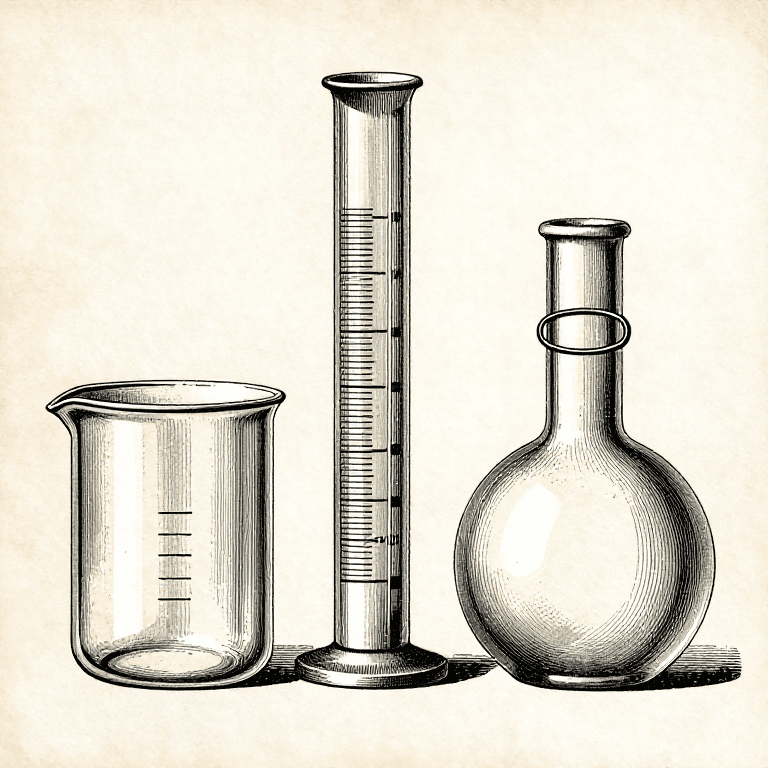
Use a wide, shallow evaporating dish rather than a beaker: evaporation happens at the surface, so the area is what sets the speed, and a wide dish is faster at a much lower temperature.
Stop while a little liquid remains and let the rest go at room temperature. Once the liquid is nearly gone there is nothing left to absorb the heat, the solid overheats in seconds, and it spits, decomposes or bakes onto the dish.
A steam bath or a hot plate on a low setting is better than a flame for anything that matters. Direct flame heats one spot far above the boiling point of the solution, and many substances that survive 100 degrees do not survive that.
วัสดุสำหรับขั้นตอนนี้:
 น้ำกลั่น1 ลิตร
 โซเดียมคลอไรด์ (เกลือ)1 ชิ้น
เครื่องมือที่ต้องใช้:
 จานระเหย
 แผ่นให้ความร้อน
 กระจกนาฬิกา
2
2
Crystallise slowly, and crystallise on purpose
Crystallise slowly, and crystallise on purpose
Dissolve the solid in the smallest volume of hot solvent that will take it, then let it cool UNDISTURBED. Slow cooling grows few, large, pure crystals; rapid cooling or stirring gives a mass of tiny ones that trap the mother liquor and everything dissolved in it.
If nothing appears, it is usually because there is too much solvent or because there is no nucleus to start on. Boil a little solvent off, scratch the inside of the glass with a rod at the surface, or add one seed crystal.
Then filter the crystals off cold and rinse them with a SMALL amount of ICE-COLD solvent. Rinsing with warm solvent dissolves the product you just spent an hour growing, which is the most disheartening way to lose a yield.
วัสดุสำหรับขั้นตอนนี้:
น้ำกลั่น1 ลิตร คอปเปอร์ซัลเฟตเพนตะไฮเดรต (CuSO4·5H2O)1 ชิ้น
เครื่องมือที่ต้องใช้:
 บีกเกอร์แก้ว
 แท่งแก้วคน
 กรวยบุชเนอร์ (กระเบื้องเคลือบ)
 กระดาษกรอง
3
3
Dry to constant mass, which is a measurement not a judgement
Dry to constant mass, which is a measurement not a judgement
กำลังโหลดสมุด Jupyter…
วัสดุสำหรับขั้นตอนนี้:
โซเดียมคลอไรด์ (เกลือ)1 ชิ้นเครื่องมือที่ต้องใช้:
 เตาอบตาก
 โถดูดความชื้นแก้ว
 เครื่องชั่งความแม่นยำสูง
 คอมพิวเตอร์ตั้งโต๊ะ
4
4
Work out the yield, and be honest about it
Work out the yield, and be honest about it
Percentage yield is what you got divided by what the equation says you could have got. Both numbers have to be real: the mass actually recovered and dried, and the theoretical mass calculated from the LIMITING reagent.
Yields above 100% mean the product is not dry, or it has picked up something. That is worth treating as a fault rather than a bonus, because a wet product weighs more and is worth less.
Record where the losses went, in the notebook: left in the mother liquor, stuck to the filter paper, lost in the rinse, spilled. Those lines are what make the next attempt better, and a yield with no explanation attached is a number nobody can improve.
เครื่องมือที่ต้องใช้:
เครื่องชั่งความแม่นยำสูง เครื่องคิดเลข
วัสดุ
3- 2 ลิตรตัวยึดตำแหน่ง
- 1 ชิ้นตัวยึดตำแหน่ง
- ตัวยึดตำแหน่ง
เครื่องมือที่จำเป็น
12- ตัวยึดตำแหน่ง
- ตัวยึดตำแหน่ง
- ตัวยึดตำแหน่ง
- ตัวยึดตำแหน่ง
- ตัวยึดตำแหน่ง
- ตัวยึดตำแหน่ง
- ตัวยึดตำแหน่ง
- ตัวยึดตำแหน่ง
- โถดูดความชื้นแก้วค่าคอมมิชชัน 10%ตัวยึดตำแหน่ง
- ตัวยึดตำแหน่ง
- ตัวยึดตำแหน่ง
- ตัวยึดตำแหน่ง
บลูพริ้นท์ที่เกี่ยวข้อง
บลูพริ้นท์เหล่านี้แบ่งปันความรู้ — เทคนิค วัสดุ หรือหลักการ


CC0 สาธารณสมบัติ
พิมพ์เขียวนี้เผยแพร่ภายใต้ CC0 คุณสามารถคัดลอก แก้ไข แจกจ่าย และใช้งานผลงานนี้เพื่อวัตถุประสงค์ใดก็ได้ โดยไม่ต้องขออนุญาต
สนับสนุนเมกเกอร์โดยซื้อสินค้าผ่านพิมพ์เขียวของพวกเขา ซึ่งพวกเขาจะได้รับ ค่าคอมมิชชันเมกเกอร์ ที่ผู้ขายกำหนด หรือสร้างเวอร์ชันใหม่ของพิมพ์เขียวนี้และรวมเป็นการเชื่อมต่อในพิมพ์เขียวของคุณเพื่อแบ่งรายได้