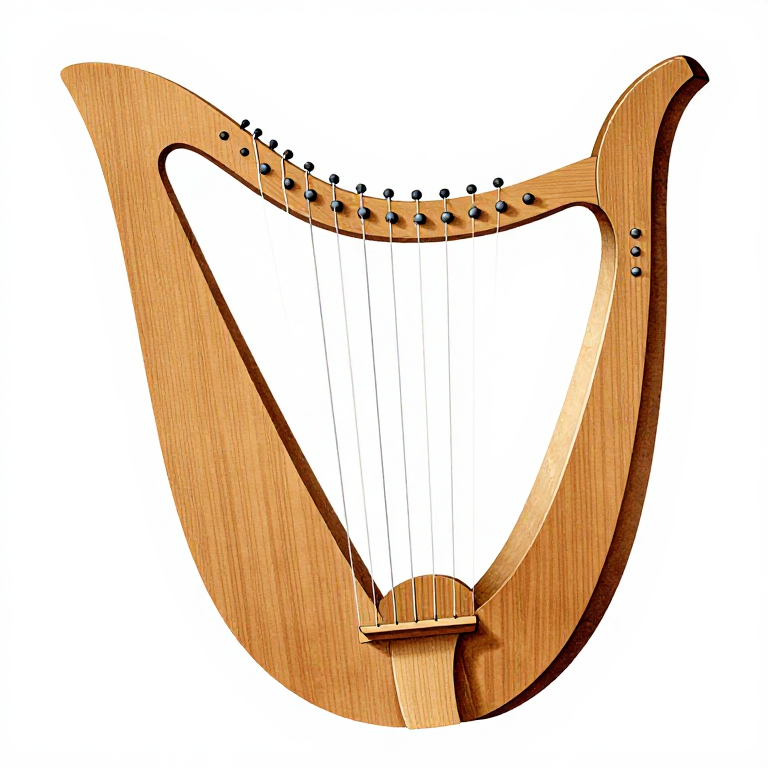


Greek Lyre — Building a Tortoise-Shell Lyre
คำแนะนำ
Prepare the Sound Box
Prepare the Sound Box
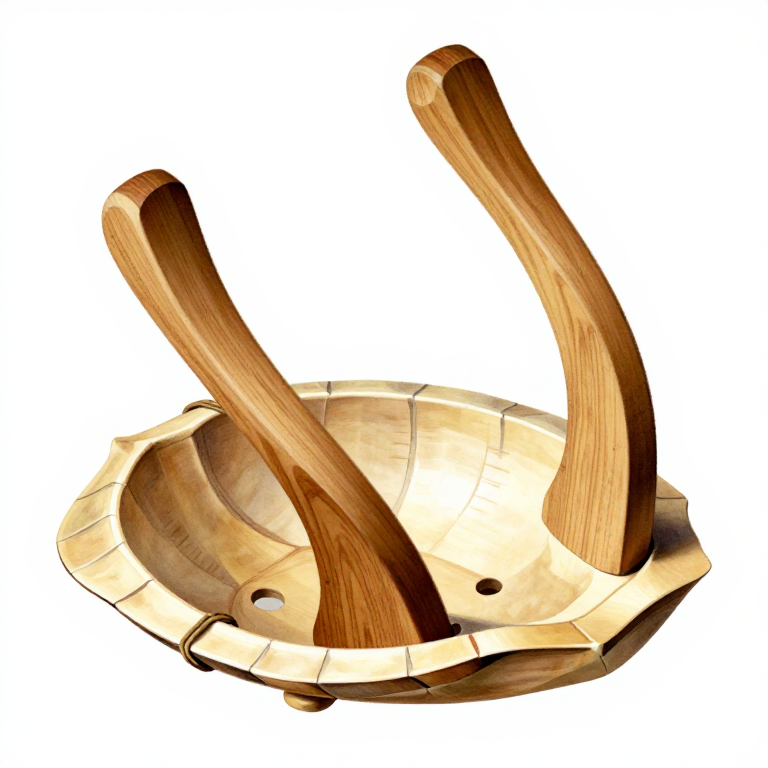
Clean and prepare a tortoise shell (or substitute a carved wooden bowl of similar shape, approximately 20-25 cm long and 15-18 cm wide). If using a real shell, remove all flesh and membrane from the interior, scrub clean, and allow to dry thoroughly. The hollow shell serves as the resonating chamber that amplifies the string vibrations. Stretch a piece of animal skin (goat or ox hide, soaked until pliable) tightly across the open underside of the shell and lash or glue it around the shell rim. This skin membrane is the sound board that transmits string vibrations to the air inside the shell cavity. Punch two small sound holes in the skin for acoustic projection. The Homeric Hymn to Hermes describes the god stretching an ox-hide across the shell and fitting the arms on the day he invented the instrument.
วัสดุสำหรับขั้นตอนนี้:
 ไม้เนื้อแข็งสำหรับทำด้าม1 ชิ้นไม้เนื้อแข็งสำหรับทำด้าม2 ชิ้นไม้เนื้อแข็งสำหรับทำด้าม1 ชิ้น
 เชือกไส้สัตว์7 strings ชิ้น
 หนังดิบ1 piece ชิ้นไม้เนื้อแข็งสำหรับทำด้าม1 ชิ้น
เครื่องมือที่ต้องใช้:
 เหล็กหมาด (สว่านเจาะรูมือ)
 มีด
มีด เชือกรับแรงสูง
 กาวหนังสัตว์
Attach the Arms
Attach the Arms
Insert two curved arms (traditionally goat horns, but carved wooden arms work well) into the shell body at the wider end, one on each side. The arms should curve outward slightly then upward, extending approximately 30-40 cm above the shell. Drill holes through the shell rim and the base of each arm, then lash them firmly with strong cord and reinforce with hide glue. The arms must be securely attached because they bear the combined tension of all seven strings — approximately 10-15 kg of total force. Ensure both arms are the same length and angle for symmetry. Ancient lyre arms were sometimes reinforced with a thin wooden or bone lining inside the horn curve for additional strength.
Fit the Crossbar with Tuning Mechanism
Fit the Crossbar with Tuning Mechanism
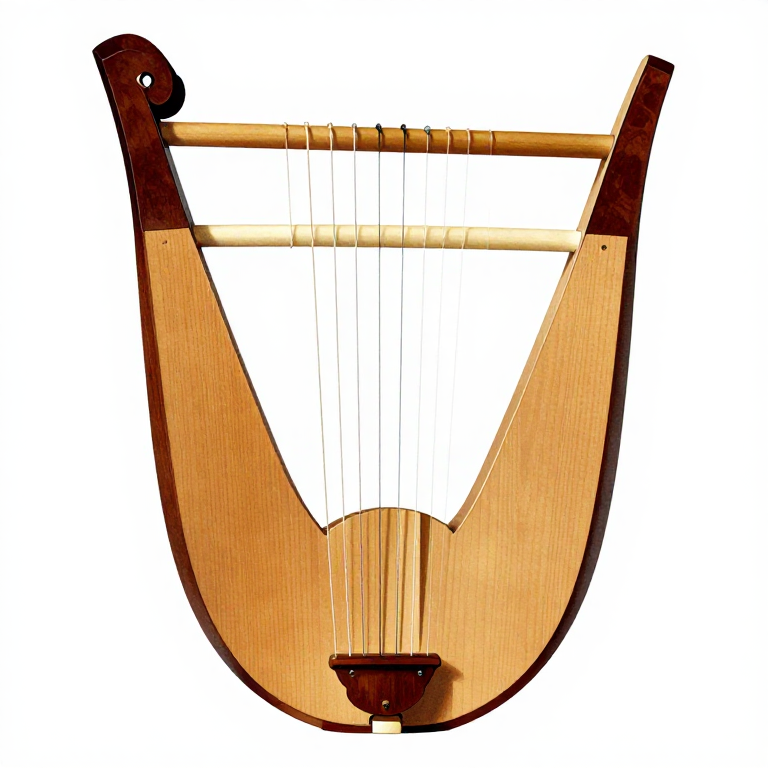
At the top of the two arms, fit a horizontal crossbar (zygon) made from a straight, strong piece of hardwood approximately 25-30 cm long. Bind or peg the crossbar to the tops of both arms. The crossbar must be strong enough to resist the combined pull of all strings without bending. Drill or carve small holes or notches in the crossbar for the strings to pass through. For tuning, the Greeks used kollopes — small pegs or wraps of leather around the crossbar that could be tightened or loosened to adjust string tension and therefore pitch. Each string wraps around the crossbar and is held by friction of the kollops against the wood. This is a simple but effective tuning system that allows each string to be individually adjusted.
String the Lyre
String the Lyre
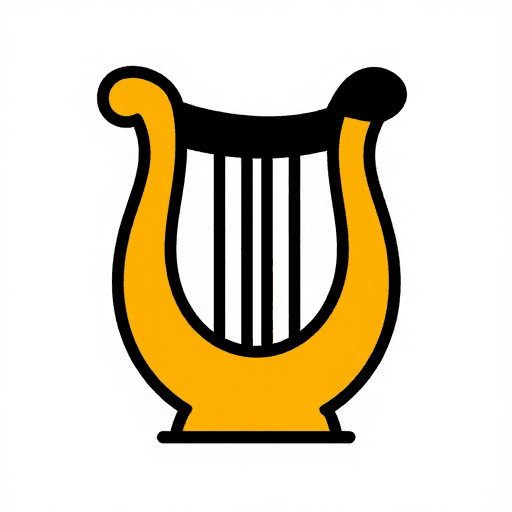
Attach a small wooden bridge to the skin sound board near the bottom of the shell, held in place by the downward pressure of the strings. Tie one end of each gut string (traditionally sheep or goat intestine, cleaned, twisted, and dried) to the bridge, stretch it up the length of the instrument, and wrap it around the crossbar through its corresponding kollops. A standard Greek lyre had seven strings, tuned to the notes of a musical mode (such as the Dorian, Phrygian, or Mixolydian). Tune the strings by adjusting the kollopes on the crossbar — tightening raises the pitch, loosening lowers it. The strings should be approximately evenly spaced, 1.5-2 cm apart, and stretched taut enough to produce a clear musical tone when plucked.
Tune and Play the Lyre
Tune and Play the Lyre
Tune the seven strings to a Greek musical scale. The Dorian mode, considered the most noble by Plato and Aristotle, used intervals roughly corresponding to the modern D-E-F-G-A-B-C-D descending pattern. Hold the lyre upright against the body with the left arm passing behind the instrument to dampen unwanted strings, while the right hand plucks the strings with the fingers or a plectrum (a small pick of bone, wood, or ivory). Greek lyre technique involved both plucking (psallein) and strumming (krekein). The lyre was the instrument of education and culture — every freeborn Greek boy learned to play it, and lyric poetry was composed for lyre accompaniment. The sound is soft, harp-like, and intimate, suited to small rooms and symposia rather than large outdoor performances (which used the louder kithara, a larger professional version of the lyre).
วัสดุ
3- 1 ชิ้นตัวยึดตำแหน่ง
- 7 strings ชิ้นตัวยึดตำแหน่ง
- 1 piece ชิ้นตัวยึดตำแหน่ง
เครื่องมือที่จำเป็น
4- ตัวยึดตำแหน่ง
- ตัวยึดตำแหน่ง
- ตัวยึดตำแหน่ง
- ตัวยึดตำแหน่ง
พิมพ์เขียวนี้สร้าง
CC0 สาธารณสมบัติ
พิมพ์เขียวนี้เผยแพร่ภายใต้ CC0 คุณสามารถคัดลอก แก้ไข แจกจ่าย และใช้งานผลงานนี้เพื่อวัตถุประสงค์ใดก็ได้ โดยไม่ต้องขออนุญาต
สนับสนุนเมกเกอร์โดยซื้อสินค้าผ่านพิมพ์เขียวของพวกเขา ซึ่งพวกเขาจะได้รับ ค่าคอมมิชชันเมกเกอร์ ที่ผู้ขายกำหนด หรือสร้างเวอร์ชันใหม่ของพิมพ์เขียวนี้และรวมเป็นการเชื่อมต่อในพิมพ์เขียวของคุณเพื่อแบ่งรายได้