ศิลปะ
ความงามและสุขภาพ
งานฝีมือ
วัฒนธรรมและประวัติศาสตร์
ความบันเทิง
สิ่งแวดล้อม
อาหารและเครื่องดื่ม
วิศวกรรมย้อนรอย
วิทยาศาสตร์
กีฬา
เทคโนโลยี
อุปกรณ์สวมใส่
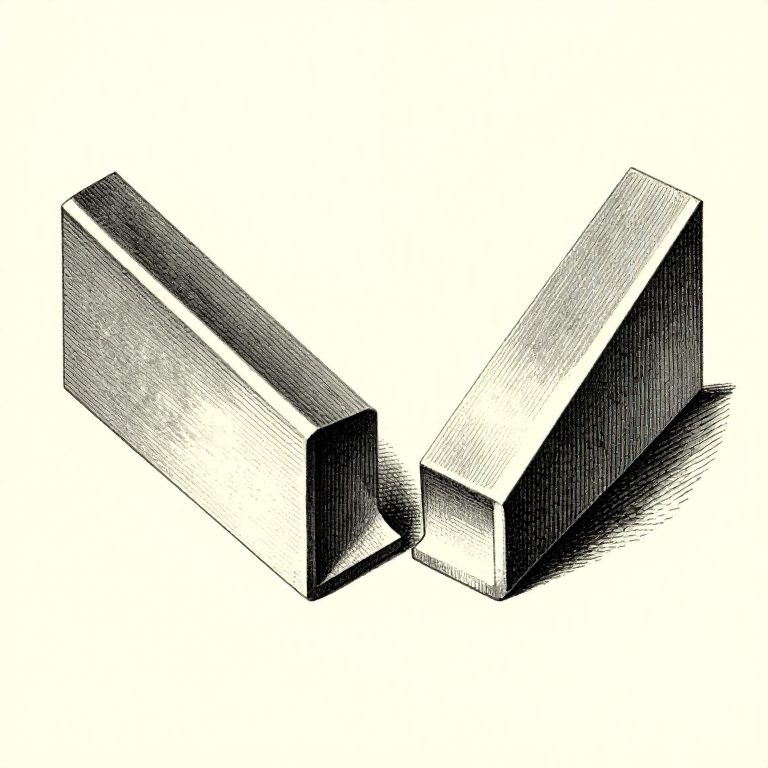


Joint Preparation: Most of a Weld Is Decided Before the Arc Is Struck
An arc melts a shallow pool. On thin sheet that is enough to fuse right through; on anything thicker it is not, and no amount of skill with the torch makes up for a joint the heat cannot reach.
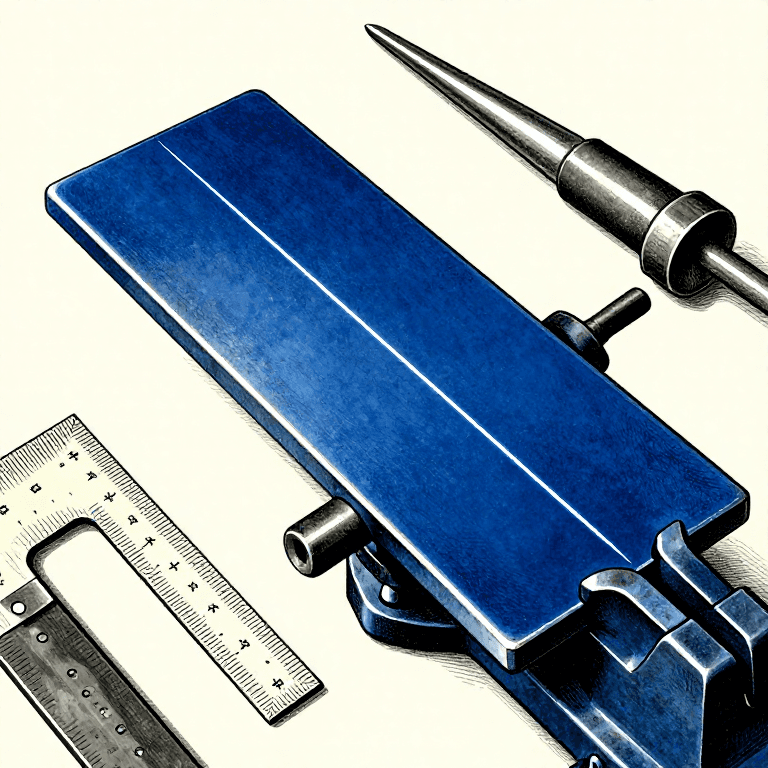
So the joint is shaped first: edges cut square, faces cleaned back to bright metal, a bevel where the plate is too thick to fuse in one pass, a root gap so the first run can reach the bottom, and the parts clamped where they are meant to stay.
This rung covers the four decisions — cleanliness, fit-up, bevel and gap — and works out what a bevel costs in filler metal, because that number is also the heat that will pull the work out of shape.
เริ่มต้น
2 hours
คำแนะนำ
1
1
Bright metal, or the weld is full of the coating
Bright metal, or the weld is full of the coating
Mill scale, rust, paint, galvanising, oil and cutting fluid all end up in the weld pool if they are still there when the arc arrives.
Scale and rust are oxides — they make slag inclusions and porosity. Paint and oil burn to gas under the arc and that gas is trapped as the pool freezes. Zinc from galvanising boils at 907 C, well below the pool temperature, so it comes off as a white fume that is genuinely dangerous to breathe (the hazard rung covers it).
Clean 25 mm back from the joint on both faces, not just the edge, because the arc wanders and the pool is wider than the gap. A wire brush takes loose rust; a flap disc or grinding wheel takes mill scale. Wipe solvent off and let it dry — a solvent-wet joint is worse than a dirty one.
วัสดุสำหรับขั้นตอนนี้:
 แผ่นเหล็กกล้าละมุน2 ชิ้น
 เหล็กแบนกล้าละมุน1 ชิ้น
เครื่องมือที่ต้องใช้:
 เครื่องเจียรมุม
 ล้อเจียร
 ชุดแปรงลวด
 แว่นตานิรภัยใส
2
2
Fit-up: the gap you leave is the gap you have to fill
Fit-up: the gap you leave is the gap you have to fill
Two plates that meet with a 3 mm gap in one place and touch in another cannot be welded at one setting. Where they touch the arc burns a hole; where they gape the pool falls through.
Cut both edges square and check them against each other, not against a rule — a pair of edges that match make a good joint even if neither is exactly straight.
For a butt joint in plate up to about 5 mm, a root gap of roughly the electrode core diameter is the usual start: about 2.5 mm for a 2.5 mm rod. Less and the root does not fuse; more and the pool drops through. Clamp so the gap is held, and tack it (step 4 of the distortion rung explains the order).
วัสดุสำหรับขั้นตอนนี้:
แผ่นเหล็กกล้าละมุน2 ชิ้นเครื่องมือที่ต้องใช้:
 ฉากรวมอเนกประสงค์
 แคลมป์ตัวซี
 แคลมป์แบบบาร์
 ไม้บรรทัด
 ก้อนหินสบู่
3
3
The bevel, and what it costs
The bevel, and what it costs
กำลังโหลดสมุด Jupyter…
วัสดุสำหรับขั้นตอนนี้:
แผ่นเหล็กกล้าละมุน2 ชิ้นเครื่องมือที่ต้องใช้:
เครื่องเจียรมุมล้อเจียร เกจวัดมุมดิจิทัล
 คอมพิวเตอร์ตั้งโต๊ะ
4
4
Which joint, and why it is that one
Which joint, and why it is that one
Five joints cover nearly everything: butt, lap, tee, corner and edge.
A **butt** joint puts the two parts in the same plane and is the only one that can be made as strong as the parent metal, because the weld replaces the section rather than adding to it. It is also the one that needs the most preparation.
A **lap** joint overlaps the parts and welds along the exposed edges. It needs no edge preparation at all, which is why it is everywhere in sheet metal, but the load path bends through the overlap so it is poor in fatigue.
A **tee** joint stands one part on another and is welded with fillets in the two inside corners. This is the workhorse of frames and brackets.
A **corner** joint meets at the edges, and an **edge** joint welds two parallel faces along their common edge — useful for sheet, not for load.
Choose by the load first, then by how much preparation the job is worth. A handrail bracket does not need a bevelled butt weld.
วัสดุสำหรับขั้นตอนนี้:
แผ่นเหล็กกล้าละมุน2 ชิ้น เหล็กฉากเหล็กกล้าละมุน1 ชิ้น
เครื่องมือที่ต้องใช้:
ฉากรวมอเนกประสงค์ก้อนหินสบู่วัสดุ
3- 2 ชิ้นตัวยึดตำแหน่ง
- 1 ชิ้นตัวยึดตำแหน่ง
- 1 ชิ้นตัวยึดตำแหน่ง
เครื่องมือที่จำเป็น
11- 1 vendor sell this, none ship to you yetตัวยึดตำแหน่ง
- ตัวยึดตำแหน่ง
- ตัวยึดตำแหน่ง
- ตัวยึดตำแหน่ง
- ตัวยึดตำแหน่ง
- ตัวยึดตำแหน่ง
- ตัวยึดตำแหน่ง
- ตัวยึดตำแหน่ง
- ตัวยึดตำแหน่ง
- ตัวยึดตำแหน่ง
- ตัวยึดตำแหน่ง
บลูพริ้นท์ที่เกี่ยวข้อง
บลูพริ้นท์เหล่านี้แบ่งปันความรู้ — เทคนิค วัสดุ หรือหลักการ

CC0 สาธารณสมบัติ
พิมพ์เขียวนี้เผยแพร่ภายใต้ CC0 คุณสามารถคัดลอก แก้ไข แจกจ่าย และใช้งานผลงานนี้เพื่อวัตถุประสงค์ใดก็ได้ โดยไม่ต้องขออนุญาต
สนับสนุนเมกเกอร์โดยซื้อสินค้าผ่านพิมพ์เขียวของพวกเขา ซึ่งพวกเขาจะได้รับ ค่าคอมมิชชันเมกเกอร์ ที่ผู้ขายกำหนด หรือสร้างเวอร์ชันใหม่ของพิมพ์เขียวนี้และรวมเป็นการเชื่อมต่อในพิมพ์เขียวของคุณเพื่อแบ่งรายได้