

Langstroth Beehive
Bees glue everything down. Given any gap wider than about 9 mm they build comb across it; given any gap narrower than about 6 mm they fill it with propolis. A hive built without regard to that fact becomes one solid mass of wax, resin and brood, and the only way to take the honey is to cut the colony apart — which is why skeps were destroyed, and the bees with them, at every harvest.
Langstroth's hive works by leaving exactly the gap bees refuse to build in. Hang the combs in frames with that clearance all round, and the bees treat each frame as a separate object. Nothing is glued to anything. Every comb lifts out whole, is inspected, and goes back.
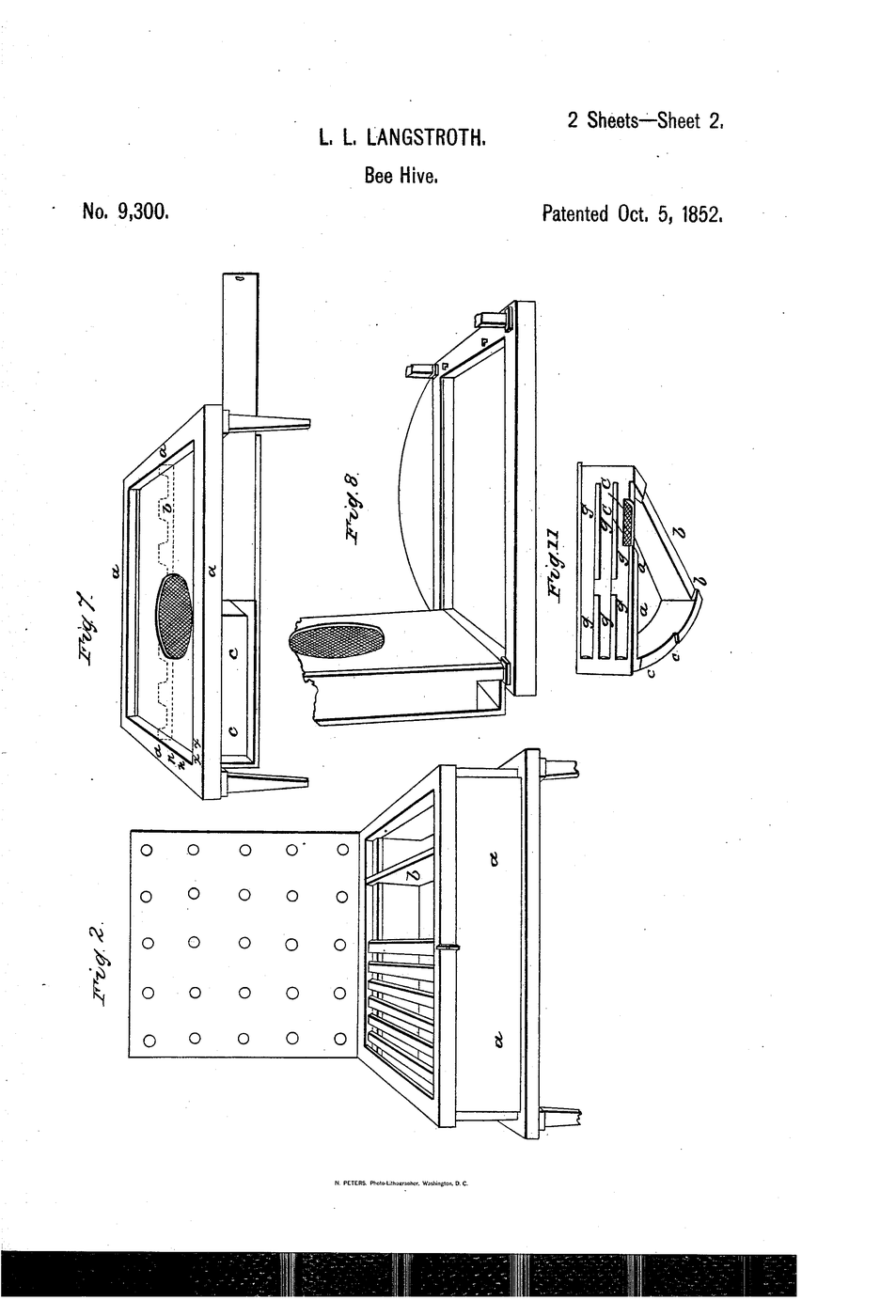
US Patent 9,300, simply titled "Beehive", granted 5 October 1852 to Lorenzo L. Langstroth. He claims movable frames arranged so bees attach each comb to one frame only, and states the result plainly: all necessary operations "without injuring a single bee".
คำแนะนำ
Do not open a live colony to learn on
Do not open a live colony to learn on
Build and measure the empty hive first. Working a live colony needs a veil, a smoker and someone experienced beside you — and beekeeping is regulated in many countries. Check your local rules before you keep bees.
Read US 9,300 and find the claim about attachment
Read US 9,300 and find the claim about attachment
Langstroth's key claim is frames arranged so bees attach each comb to a single frame, never spanning two. Everything else follows from that.
Measure comb spacing in a real or photographed hive
Measure comb spacing in a real or photographed hive
Measure the gap bees leave between finished combs. It is consistently close to 8 mm. Write the number down before designing anything.
Cut the hive body
Cut the hive body
Make a rectangular box from 20 mm timber, open top and bottom, roughly 460 × 370 mm internally. Square corners matter — a racked box loses the clearance everywhere at once.
วัสดุสำหรับขั้นตอนนี้:
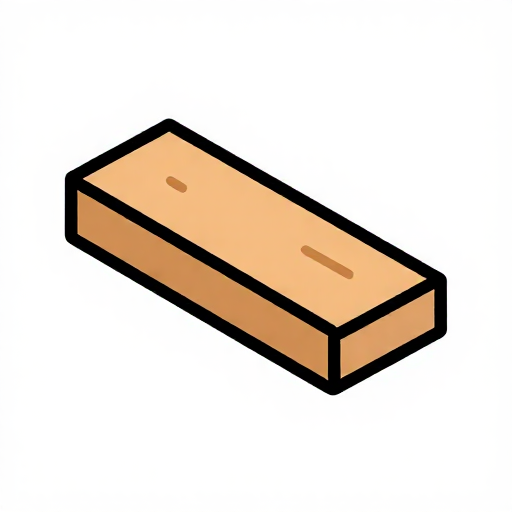 แผ่นไม้แปรรูป1 แผ่น
Cut a rebate for the frames to hang on
Cut a rebate for the frames to hang on
Rebate the two short walls so frame lugs rest on them and the frames hang free. The frames must hang, not sit on the floor.
Build eight frames
Build eight frames
Make eight rectangular frames with a top bar longer than the sides so it forms lugs. Keep every frame identical — one odd frame ruins the spacing of its neighbours.
เครื่องมือที่ต้องใช้:
 มีดคัตเตอร์งานประดิษฐ์
Set the gap to 8 mm everywhere
Set the gap to 8 mm everywhere
Space the frames 8 mm apart and leave 8 mm between the outer frames and the walls, and above and below. This clearance is the entire invention — hold a spacer gauge to every face.
Deliberately make one gap 15 mm
Deliberately make one gap 15 mm
Set one frame 15 mm from its neighbour and mark it. In a live hive bees will build bridge comb across that gap and lock the two frames together.
Make another gap 3 mm
Make another gap 3 mm
Set another pair only 3 mm apart. Bees seal gaps this small with propolis, gluing the frames just as firmly by the opposite mistake.
Lift each frame out and back in
Lift each frame out and back in
Remove and replace every frame in turn without disturbing its neighbours. If a frame binds, the box is out of square or a lug is long.
Add the shallow chamber above
Add the shallow chamber above
Fit a second shallow box on top for surplus honey. Langstroth describes it as a covered way to the honey receptacles — the brood stays below, the harvest above.
Cut an entrance and alighting board
Cut an entrance and alighting board
Make a narrow entrance slot at the bottom front with a projecting board below it. A narrow entrance is easier for the colony to defend.
Weigh a full frame and plan for it
Weigh a full frame and plan for it
A filled honey frame weighs around 2.5 kg, and a full super perhaps 20 kg. Check your lugs and rebates carry that without splitting.
Compare against a skep
Compare against a skep
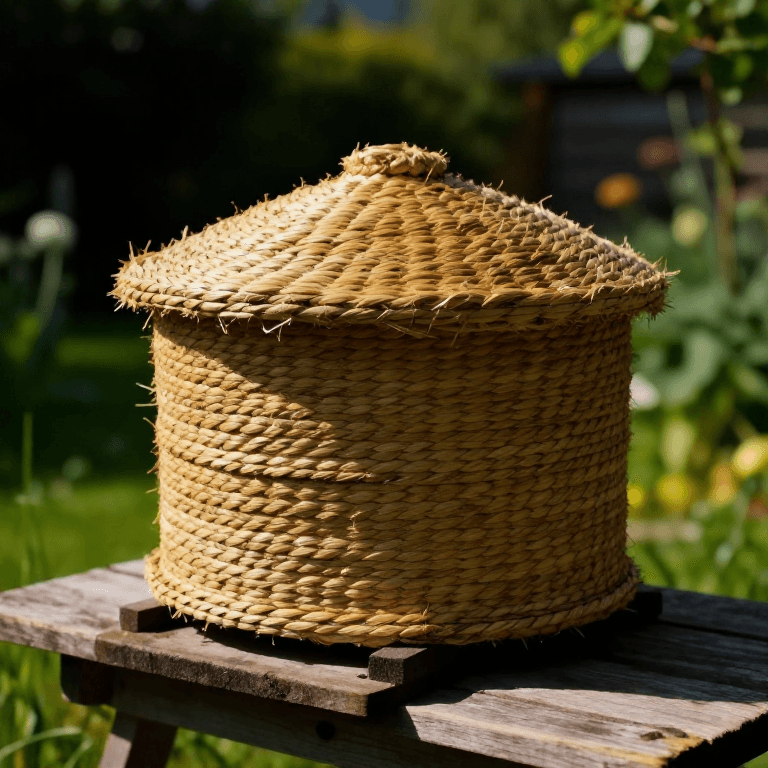
Look at a straw skep beside your hive. There is no way into a skep that does not destroy comb. Write down what that difference means for the colony.
History & Context — nine millimetres and a whole industry
History & Context — nine millimetres and a whole industry
The patent. US 9,300, "Beehive", granted 5 October 1852 to Lorenzo Lorraine Langstroth, a clergyman and schoolteacher in Philadelphia. Application and grant carry the same date, so only the grant is cited.
What he actually discovered is a behavioural constant, not a machine. Bees maintain a passage of roughly 6 to 9 mm between combs — enough for two bees to pass back to back. Anything wider gets filled with comb; anything narrower gets sealed with propolis. That range is now called bee space, and once it is known, a removable-frame hive is nearly obvious: build every gap inside that window and the bees decline to glue anything. The insight is biological; the woodwork is a consequence. Steps 8 and 9 are the two failure modes either side of it, and they are why earlier attempts at movable combs — there were several, including by Huber and Prokopovych — did not fully work.
It changed what beekeeping does to bees. The traditional straw skep has fixed comb, so harvesting means cutting the comb out, and the standard practice was to kill the colony first, usually with sulphur smoke. A hive whose combs lift out intact allows the beekeeper to take surplus honey and leave the colony alive, to inspect for disease, to see the queen, to split a strong colony rather than lose a swarm, and to move frames between hives. Beekeeping stops being an annual harvest and becomes management of a continuing animal. The skep blueprint elsewhere in this collection is the honest before-picture.
Langstroth did badly out of it, which is a recurring pattern here. The patent was widely infringed, he lacked the means and health to defend it effectively, and he did not grow rich from a design that became the world standard. He suffered from long periods of severe depression, which he wrote about with unusual frankness for the era. The hive is still called a Langstroth, and modern commercial beekeeping worldwide runs on boxes dimensioned from this patent — the frames in a hive today are interchangeable with the geometry he set out in 1852.
What the patent does not solve. Langstroth's own text advertises protection against the bee-moth, and moth traps at the entrance feature in his design. Wax moth is a genuine pest but a minor one compared with what came later — Varroa destructor, arriving in the twentieth century, is the threat that now shapes hive management, and no amount of correct bee space helps with it. It is worth noticing that the hive solved the mechanical problem of beekeeping completely and permanently, and the biological problems not at all.
วัสดุ
1- 1 แผ่นตัวยึดตำแหน่ง
เครื่องมือที่จำเป็น
1- ตัวยึดตำแหน่ง
พิมพ์เขียวนี้สร้าง
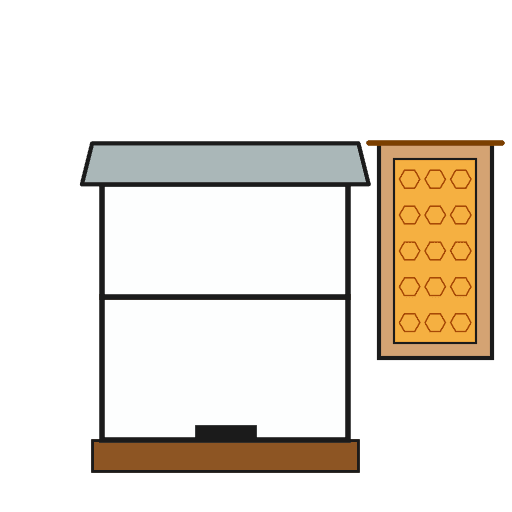
บลูพริ้นท์ที่เกี่ยวข้อง
บลูพริ้นท์เหล่านี้แบ่งปันความรู้ — เทคนิค วัสดุ หรือหลักการ

CC0 สาธารณสมบัติ
พิมพ์เขียวนี้เผยแพร่ภายใต้ CC0 คุณสามารถคัดลอก แก้ไข แจกจ่าย และใช้งานผลงานนี้เพื่อวัตถุประสงค์ใดก็ได้ โดยไม่ต้องขออนุญาต
สนับสนุนเมกเกอร์โดยซื้อสินค้าผ่านพิมพ์เขียวของพวกเขา ซึ่งพวกเขาจะได้รับ ค่าคอมมิชชันเมกเกอร์ ที่ผู้ขายกำหนด หรือสร้างเวอร์ชันใหม่ของพิมพ์เขียวนี้และรวมเป็นการเชื่อมต่อในพิมพ์เขียวของคุณเพื่อแบ่งรายได้