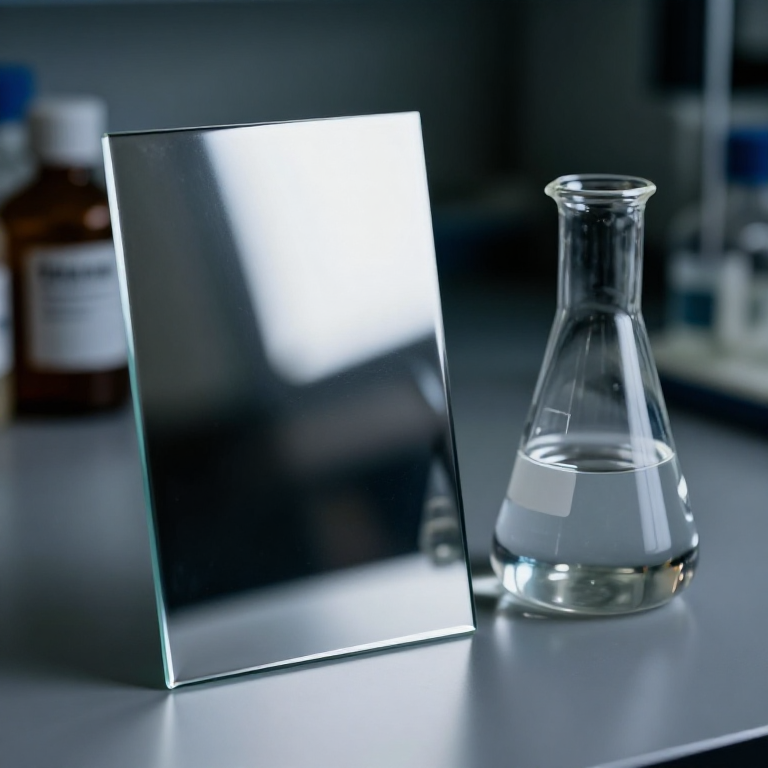


Making a Silver Mirror by the Liebig Process — Depositing Metallic Silver on Glass
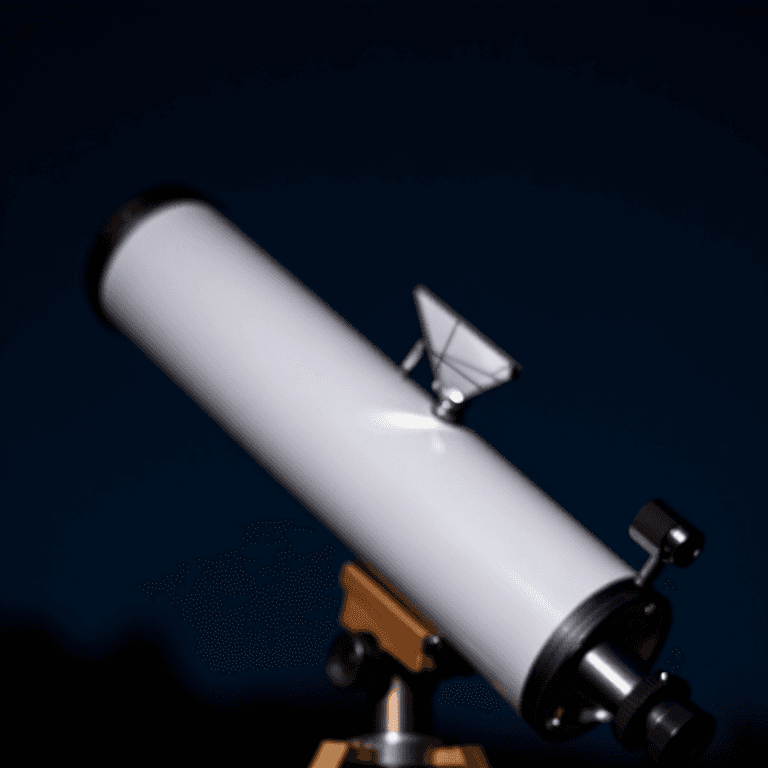
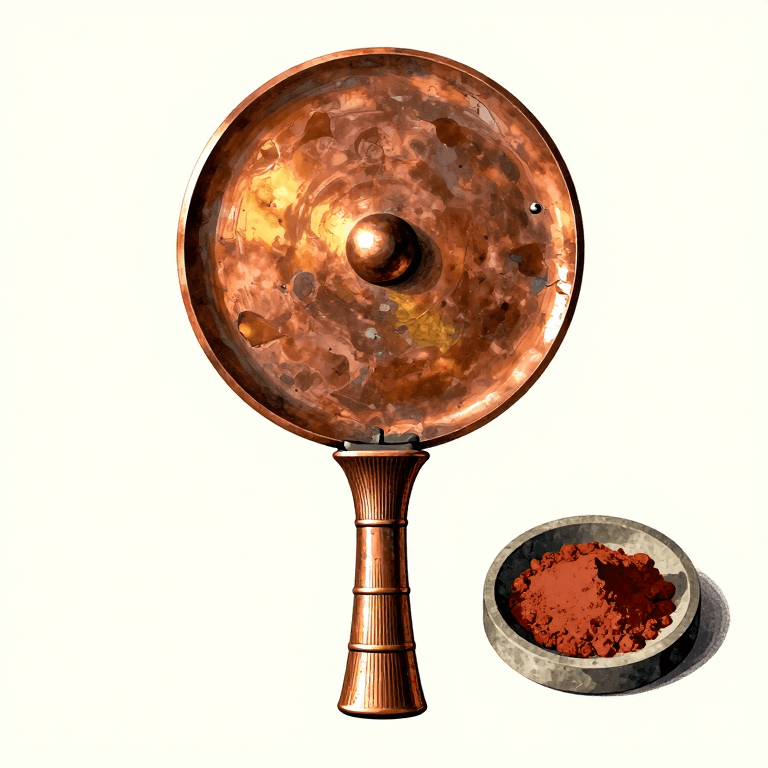
Before 1835, mirrors were made from polished metal — bronze, steel, or speculum alloy — which tarnished rapidly and reflected poorly compared to modern mirrors. The revolution came when Justus von Liebig developed a chemical process to deposit a thin, uniform layer of metallic silver directly onto a glass surface. The Liebig process uses the silver mirror reaction: silver nitrate is dissolved in ammonia to form diamminesilver(I) complex (Tollens' reagent), then a reducing sugar (glucose or formaldehyde) is added. The reducing agent donates electrons to the silver ions, which precipitate as metallic silver atoms that bond to the clean glass surface, building up an atomically smooth, highly reflective coating. The process works at room temperature and requires only simple chemicals. By the 1850s, Liebig's silvered glass mirrors had replaced speculum metal in telescopes — Léon Foucault used a silver-on-glass mirror in 1857 to build a reflecting telescope superior to anything made with speculum. Every household mirror, telescope mirror, and optical instrument mirror made between 1856 and the mid-20th century (when aluminium vacuum coating took over) used this process. This blueprint makes a silvered glass mirror using the Tollens' reagent method.
เนื้อหาอันตราย
บลูพริ้นท์นี้มีขั้นตอนที่เป็นอันตราย เข้าสู่ระบบและเปิดใช้เนื้อหาอันตรายในการตั้งค่าบัญชีของคุณเพื่อดูคำแนะนำทีละขั้นตอน
เข้าสู่ระบบพิมพ์เขียวนี้สร้าง


บลูพริ้นท์ที่เกี่ยวข้อง
บลูพริ้นท์เหล่านี้แบ่งปันความรู้ — เทคนิค วัสดุ หรือหลักการ


CC0 สาธารณสมบัติ
พิมพ์เขียวนี้เผยแพร่ภายใต้ CC0 คุณสามารถคัดลอก แก้ไข แจกจ่าย และใช้งานผลงานนี้เพื่อวัตถุประสงค์ใดก็ได้ โดยไม่ต้องขออนุญาต
สนับสนุนเมกเกอร์โดยซื้อสินค้าผ่านพิมพ์เขียวของพวกเขา ซึ่งพวกเขาจะได้รับ ค่าคอมมิชชันเมกเกอร์ ที่ผู้ขายกำหนด หรือสร้างเวอร์ชันใหม่ของพิมพ์เขียวนี้และรวมเป็นการเชื่อมต่อในพิมพ์เขียวของคุณเพื่อแบ่งรายได้