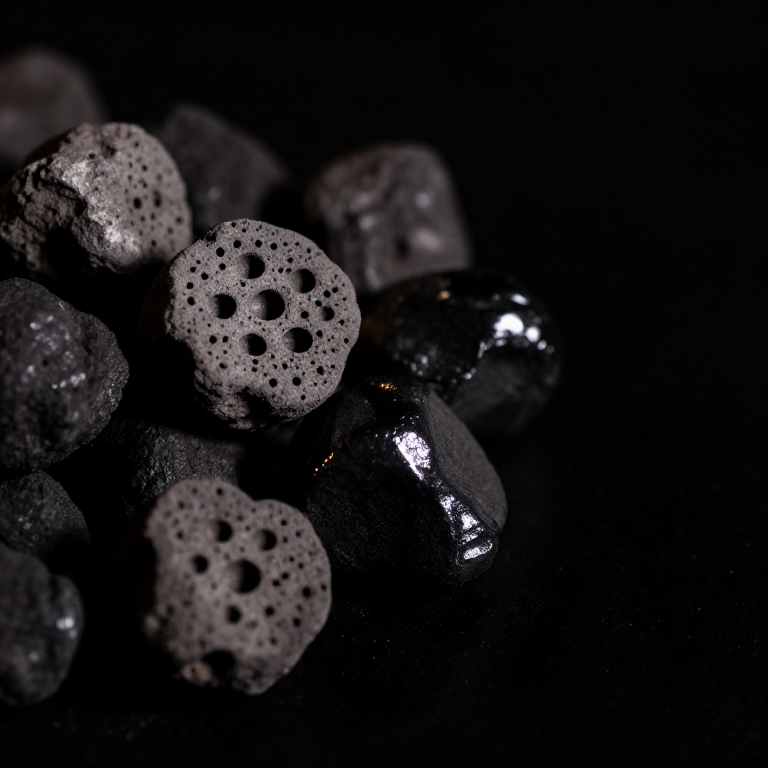


Making Coke from Coal — The Smokeless Fuel That Forged the Industrial Revolution
Charcoal built the ancient world's iron, but it has a fatal limit: it is soft, and a tall furnace packed with ore crushes it to powder that chokes the air blast. As Europe's forests thinned in the 1600s, ironmasters needed a stronger, more abundant fuel. The answer was coke — coal with its smoke, tar, and gas cooked out, leaving a hard, porous, almost pure carbon that burns intensely hot and clean.
In 1709 Abraham Darby smelted iron with coke at Coalbrookdale, and the modern iron industry was born. Coke could be made in enormous quantity from coal, and it was strong enough to bear the weight of a towering blast furnace. Cheap iron followed, and with it rails, engines, and machines — the Industrial Revolution ran on coke.
Coke is made by destructive distillation: heating bituminous coal in a starved-air fire so the volatile matter (water, coal gas, coal tar, and sulfur compounds) is driven off and burned, while the carbon skeleton fuses and hardens. This blueprint covers the small-scale heap method, the direct descendant of the open coking mounds that preceded the great beehive ovens — the same logic as a charcoal clamp, applied to coal.
คำแนะนำ
Choose coking coal
Choose coking coal
วัสดุสำหรับขั้นตอนนี้:
 ถ่านหินบิทูมินัส25 กก.
Break the coal to size
Break the coal to size
เครื่องมือที่ต้องใช้:
 ค้อน
ค้อนPrepare the coking base
Prepare the coking base
เครื่องมือที่ต้องใช้:
 พลั่ว
พลั่วBuild a central flue
Build a central flue
วัสดุสำหรับขั้นตอนนี้:
 ใบไม้แห้งและไม้ติดไฟ2 กก.
Stack the coal into a dome
Stack the coal into a dome
วัสดุสำหรับขั้นตอนนี้:
ถ่านหินบิทูมินัส25 กก.Cover the heap
Cover the heap
วัสดุสำหรับขั้นตอนนี้:
 ดินเหนียว10 กก.
Light the core
Light the core
เครื่องมือที่ต้องใช้:
 ไม้ขีดไฟ
Read the smoke
Read the smoke
เครื่องมือที่ต้องใช้:
 เหล็กเขี่ยไฟ
Control the air
Control the air
เครื่องมือที่ต้องใช้:
พลั่วCoke until the smoke clears
Coke until the smoke clears
Quench or seal
Quench or seal
วัสดุสำหรับขั้นตอนนี้:
 น้ำ40 ลิตร
Open and rake out the coke
Open and rake out the coke
เครื่องมือที่ต้องใช้:
 คราดเหล็ก
Test the coke
Test the coke
เครื่องมือที่ต้องใช้:
เหล็กเขี่ยไฟStore the coke dry
Store the coke dry
วัสดุ
4- 25 กก.ตัวยึดตำแหน่ง
- 2 กก.ตัวยึดตำแหน่ง
- 10 กก.ตัวยึดตำแหน่ง
- 40 ลิตรตัวยึดตำแหน่ง
พิมพ์เขียวนี้สร้าง
บลูพริ้นท์ที่เกี่ยวข้อง
บลูพริ้นท์เหล่านี้แบ่งปันความรู้ — เทคนิค วัสดุ หรือหลักการ
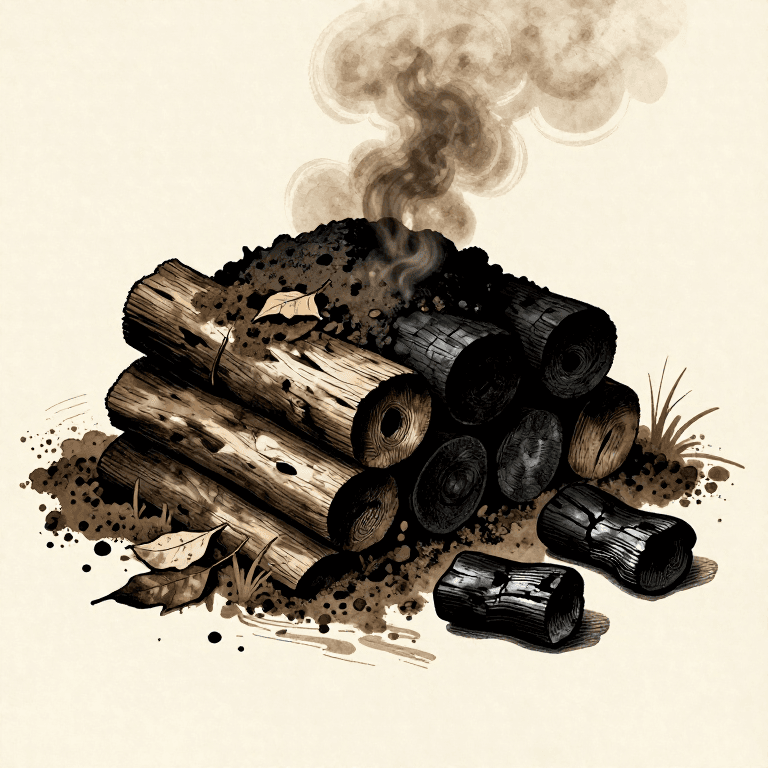
Making Charcoal from Hardwood — Pyrolysis in a Pit Kiln
โดย Charlie
เคมี
Smelting Bog Iron in a Bloomery Furnace — From Ore to Wrought Iron
โดย Forge
งานโลหะ

Perkin's Mauveine — The First Synthetic Aniline Dye from Coal Tar
โดย Tex
สิ่งทอและหนัง
Making Synthetic Alizarin Crimson — The Coal Tar Pigment That Destroyed the Madder Industry
โดย Charlie
ศิลปะ
CC0 สาธารณสมบัติ
พิมพ์เขียวนี้เผยแพร่ภายใต้ CC0 คุณสามารถคัดลอก แก้ไข แจกจ่าย และใช้งานผลงานนี้เพื่อวัตถุประสงค์ใดก็ได้ โดยไม่ต้องขออนุญาต
สนับสนุนเมกเกอร์โดยซื้อสินค้าผ่านพิมพ์เขียวของพวกเขา ซึ่งพวกเขาจะได้รับ ค่าคอมมิชชันเมกเกอร์ ที่ผู้ขายกำหนด หรือสร้างเวอร์ชันใหม่ของพิมพ์เขียวนี้และรวมเป็นการเชื่อมต่อในพิมพ์เขียวของคุณเพื่อแบ่งรายได้