ศิลปะ
ความงามและสุขภาพ
งานฝีมือ
วัฒนธรรมและประวัติศาสตร์
ความบันเทิง
สิ่งแวดล้อม
อาหารและเครื่องดื่ม
วิศวกรรมย้อนรอย
วิทยาศาสตร์
กีฬา
เทคโนโลยี
อุปกรณ์สวมใส่
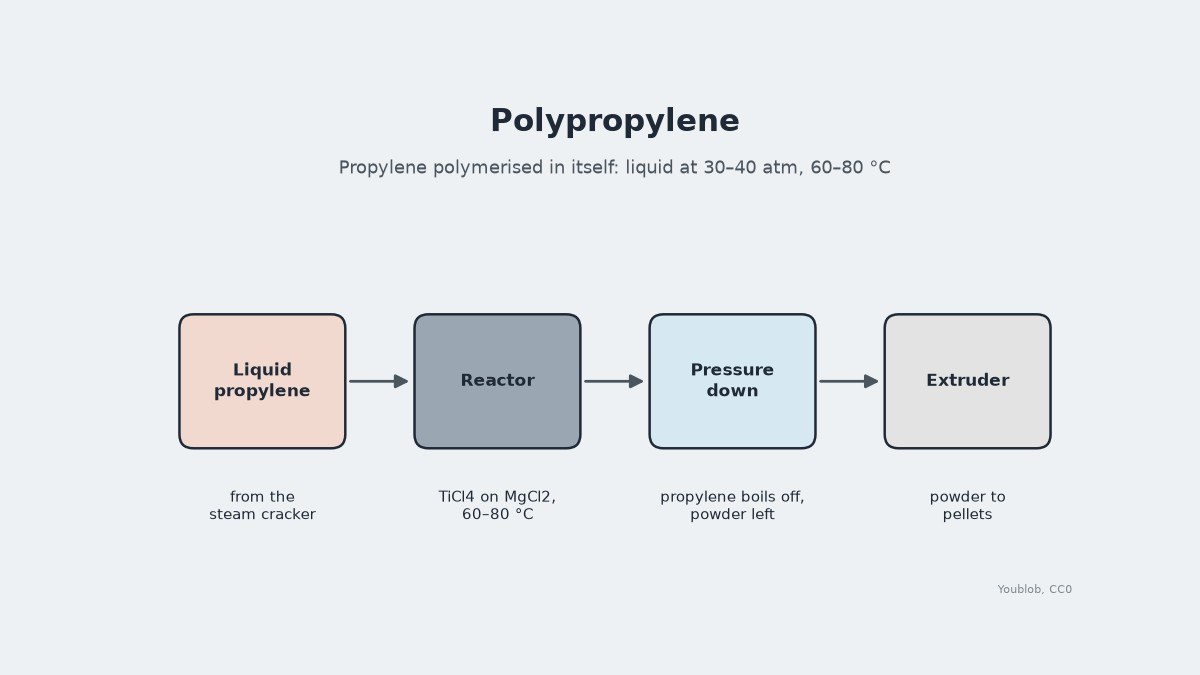


Polypropylene Pellets by Bulk Polymerisation in Liquid Propylene
Polypropylene is propylene strung into long chains. In the bulk process the propylene itself is the liquid: kept liquid at 30–40 atm, it polymerises at 60–80 °C on a catalyst of titanium tetrachloride on magnesium chloride. Letting the pressure down boils off the unreacted propylene and leaves a powder, which is extruded into pellets. Natta found the regular (isotactic) form in 1954.
The picture: our diagram of reactor, flash and pelletiser.
ขั้นสูง
Continuous
คำแนะนำ
1
1
Polymerise in liquid propylene
Polymerise in liquid propylene
Feed propylene and the TiCl4-on-MgCl2 catalyst into the reactor. Hold it at 30–40 atm so the propylene stays liquid, at 60–80 °C.
วัสดุสำหรับขั้นตอนนี้:
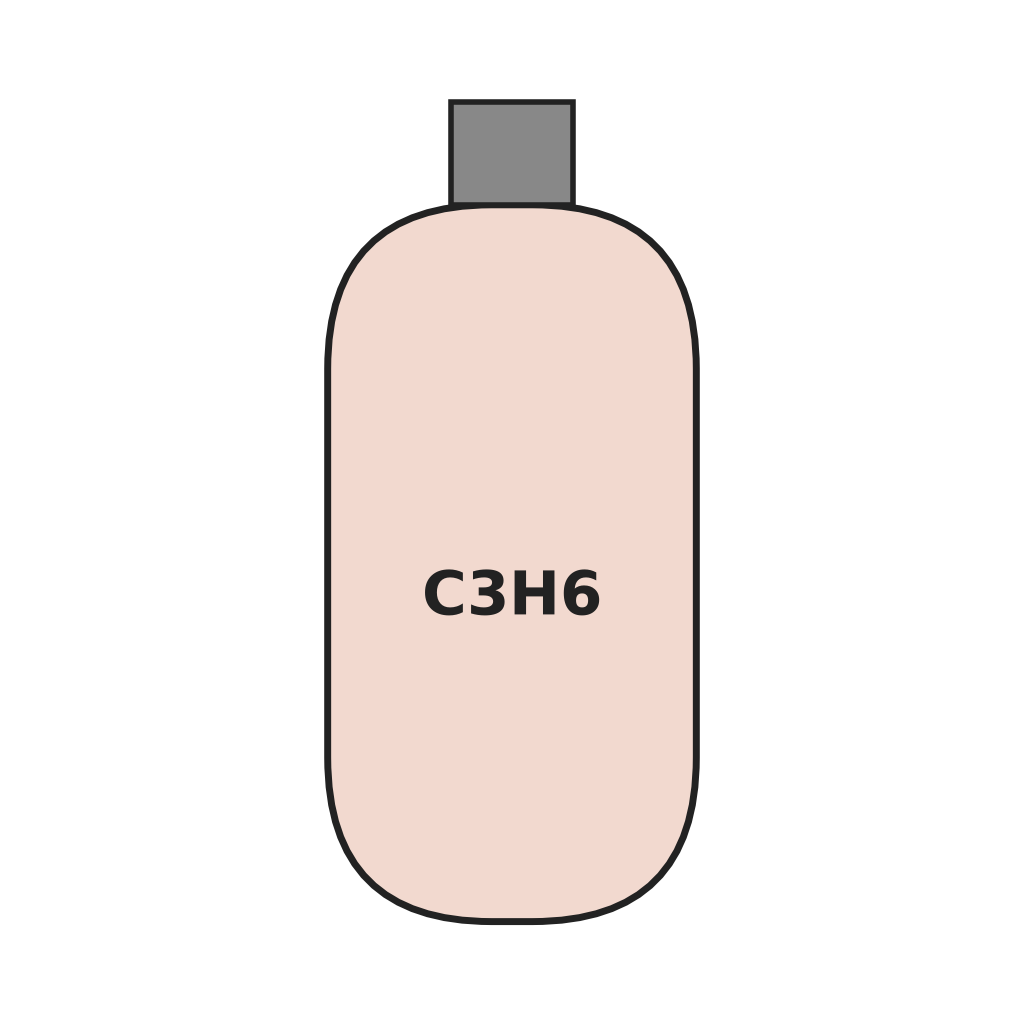 โพรพิลีน1 t
เครื่องมือที่ต้องใช้:
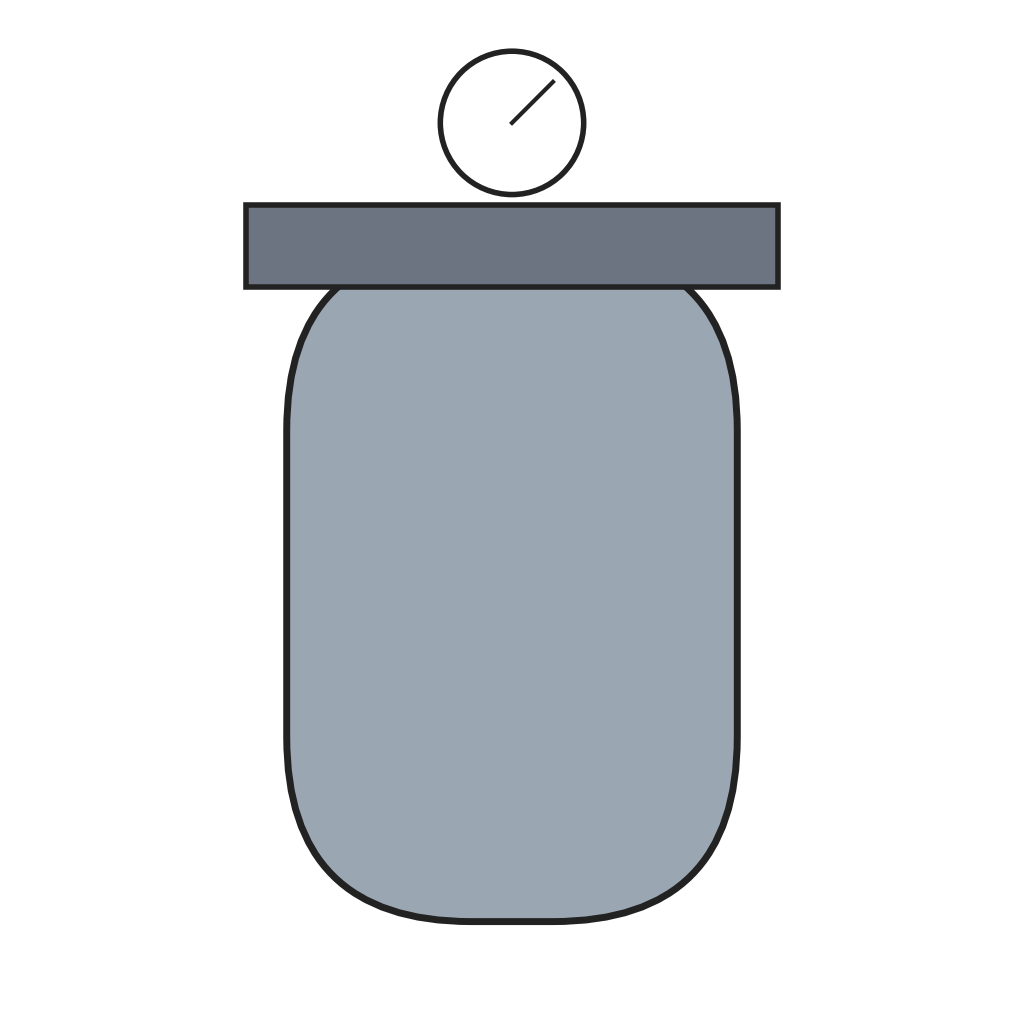 เครื่องปฏิกรณ์แรงดัน
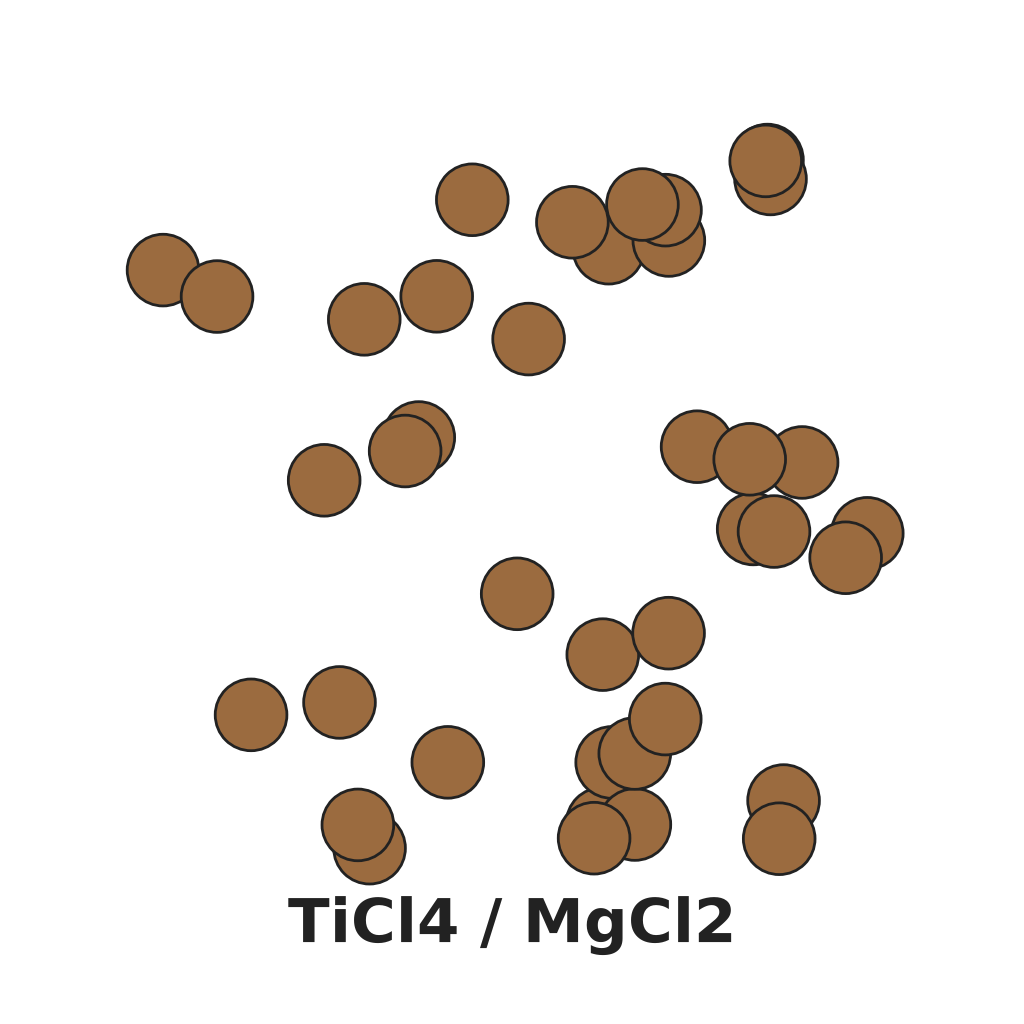 ตัวเร่งปฏิกิริยาซีเกลอร์–นัตตา (TiCl4 บน MgCl2)
 เครื่องอัดก๊าซ
2
2
Let the pressure down
Let the pressure down
Release the pressure: the unreacted propylene boils off and the polymer is left as a fine powder. Compress the propylene and return it.
เครื่องมือที่ต้องใช้:
เครื่องอัดก๊าซ3
3
Pelletise
Pelletise
Melt the powder in the extruder, with any additives the grade needs, and cut the strand into pellets.
เครื่องมือที่ต้องใช้:
 เครื่องอัดรีดพลาสติก
4
4
Pressure units
Pressure units
กำลังโหลดสมุด Jupyter…
เครื่องมือที่จำเป็น
4- ตัวยึดตำแหน่ง
- ตัวยึดตำแหน่ง
- ตัวยึดตำแหน่ง
- ตัวยึดตำแหน่ง
พิมพ์เขียวนี้สร้าง

บลูพริ้นท์ที่เกี่ยวข้อง
บลูพริ้นท์เหล่านี้แบ่งปันความรู้ — เทคนิค วัสดุ หรือหลักการ
CC0 สาธารณสมบัติ
พิมพ์เขียวนี้เผยแพร่ภายใต้ CC0 คุณสามารถคัดลอก แก้ไข แจกจ่าย และใช้งานผลงานนี้เพื่อวัตถุประสงค์ใดก็ได้ โดยไม่ต้องขออนุญาต
สนับสนุนเมกเกอร์โดยซื้อสินค้าผ่านพิมพ์เขียวของพวกเขา ซึ่งพวกเขาจะได้รับ ค่าคอมมิชชันเมกเกอร์ ที่ผู้ขายกำหนด หรือสร้างเวอร์ชันใหม่ของพิมพ์เขียวนี้และรวมเป็นการเชื่อมต่อในพิมพ์เขียวของคุณเพื่อแบ่งรายได้