
Making a Birch Bark Torch — Portable Fire Lighting
คำแนะนำ
Harvest the Birch Bark
Harvest the Birch Bark
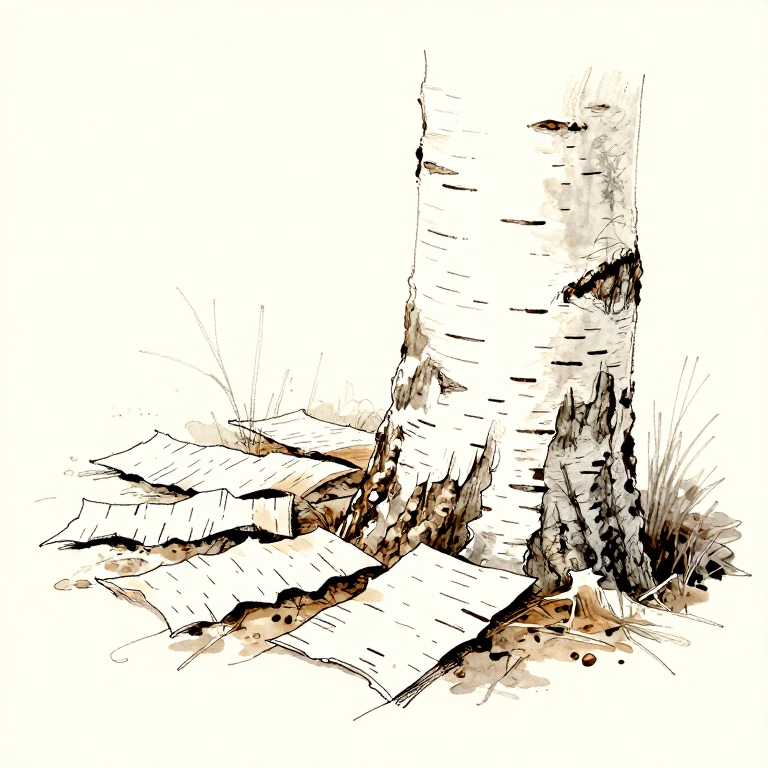
Collect outer bark from birch trees (Betula species) — the papery, white or silvery bark that peels naturally from the trunk. Harvest from recently fallen trees or from living trees only where bark is already loose and peeling, to avoid damaging the tree. The bark peels most easily in spring and early summer when sap is flowing. You need sheets approximately 20-30 cm wide and 30-40 cm long. Birch bark contains betulin (up to 30 percent of dry weight), a waxy triterpene that burns readily and sustains a flame even when damp. This is why birch bark serves as excellent fire-starting material in wet conditions.
วัสดุสำหรับขั้นตอนนี้:
 แผ่นเปลือกไม้เบิร์ช3-5 sheets, 20-30 cm wide ซม.
 ไม้ท่อน1 stick, 50-80 cm long, 2-3 cm diameter ซม.
 เชือก1-2 m m
เครื่องมือที่ต้องใช้:
 มีดหินเหล็กไฟ
Prepare the Handle
Prepare the Handle
Select a green (living) hardwood stick about 50-80 cm long and 2-3 cm in diameter. Green wood is essential because it resists catching fire from the burning bark above. Split the top 10-15 cm of the stick to create a cleft that will grip the bark bundle. Alternatively, leave the top unsplit and simply bind the bark around it. The handle should be long enough to hold the torch comfortably away from your body and above your head for illumination without the heat reaching your hand.
Roll the Bark Bundle
Roll the Bark Bundle
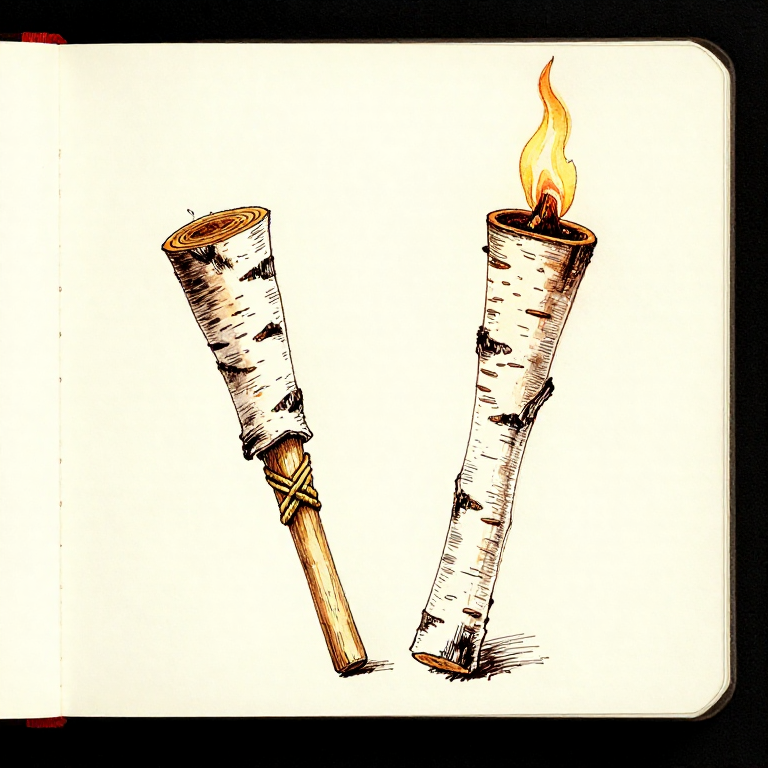
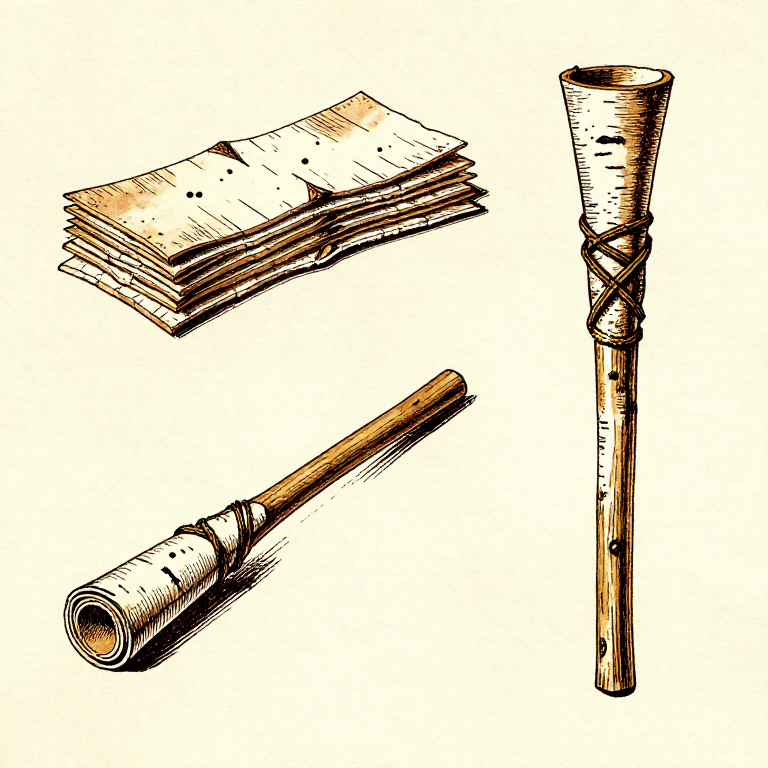
Stack 3-5 sheets of bark on top of each other, with the white outer surface facing outward. Roll the stack into a tight cylinder about 5-8 cm in diameter. The tighter the roll, the more slowly and evenly the torch burns — a loose roll burns too fast. If using the split-stick method, wedge the base of the bark roll into the cleft at the top of the handle. Bind the bark roll to the handle with cordage or flexible green withies, wrapping in a spiral from the bottom of the roll to within 5 cm of the top. Leave the top 5 cm unbound to serve as the lighting end.
Light and Use the Torch
Light and Use the Torch
Light the exposed top end of the bark roll. Birch bark ignites easily — even a spark from a fire steel or a small ember is sufficient. The betulin oils in the bark produce a bright, warm-toned flame. Hold the torch upright or at a slight angle to allow the flame to lick upward through the bark layers. A well-rolled torch of 4-5 bark sheets burns for 20-40 minutes. For longer burn times, add more bark layers or pack dry moss or resinous wood shavings between the bark sheets to provide additional fuel.
Safety and Variations
Safety and Variations
Birch bark torches produce dripping molten betulin that can cause burns — hold the torch away from your body and be aware of hot drips. When finished, extinguish the torch by pressing the burning end into damp earth or dunking it in water. For a wind-resistant variant, wrap a layer of green leaves around the outside of the bark roll, leaving only the top exposed. The leaf sheath slows combustion and protects the flame from gusts. In regions without birch, similar torches can be made from fatwood (resin-saturated pine heartwood) or bundles of cattail leaves dipped in rendered fat, though birch bark produces the most reliable flame due to its high betulin content.
วัสดุ
3- 3-5 sheets, 20-30 cm wide ซม.ตัวยึดตำแหน่ง
- 1 stick, 50-80 cm long, 2-3 cm diameter ซม.ตัวยึดตำแหน่ง
- 1-2 m mตัวยึดตำแหน่ง
เครื่องมือที่จำเป็น
1- ตัวยึดตำแหน่ง
พิมพ์เขียวนี้สร้าง

CC0 สาธารณสมบัติ
พิมพ์เขียวนี้เผยแพร่ภายใต้ CC0 คุณสามารถคัดลอก แก้ไข แจกจ่าย และใช้งานผลงานนี้เพื่อวัตถุประสงค์ใดก็ได้ โดยไม่ต้องขออนุญาต
สนับสนุนเมกเกอร์โดยซื้อสินค้าผ่านพิมพ์เขียวของพวกเขา ซึ่งพวกเขาจะได้รับ ค่าคอมมิชชันเมกเกอร์ ที่ผู้ขายกำหนด หรือสร้างเวอร์ชันใหม่ของพิมพ์เขียวนี้และรวมเป็นการเชื่อมต่อในพิมพ์เขียวของคุณเพื่อแบ่งรายได้