ศิลปะ
ความงามและสุขภาพ
งานฝีมือ
วัฒนธรรมและประวัติศาสตร์
ความบันเทิง
สิ่งแวดล้อม
อาหารและเครื่องดื่ม
วิศวกรรมย้อนรอย
วิทยาศาสตร์
กีฬา
เทคโนโลยี
อุปกรณ์สวมใส่
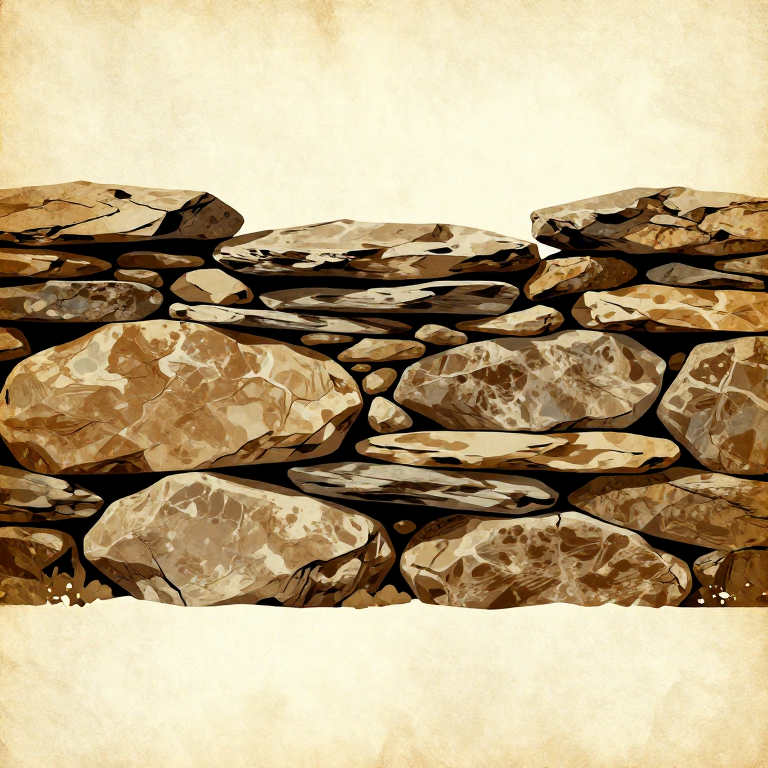


Building a Dry Stone Wall — Neolithic Mortarless Construction
Dry stone walling is the technique of building walls from carefully selected and stacked stones without mortar, relying entirely on gravity, friction, and skilled placement to hold them together. This is one of humanity's oldest construction methods, with examples dating back over 5,000 years — the Knap of Howar in Orkney (circa 3700 BCE) contains dry stone walls still standing today. The technique was used worldwide for field boundaries, animal enclosures, terracing, and building foundations. The key structural principles are: a wide base tapering inward (the batter), two parallel outer faces filled with small hearting stones in the centre, through-stones spanning the full width every two to three courses to tie the faces together, and heavy capstones on top to lock the wall together. A well-built dry stone wall distributes load through interlocking contact points — each stone bears on at least two stones below it, and through-stones prevent the two faces from splaying apart. This blueprint covers the complete process from foundation preparation through capstone placement.
ระดับกลาง
6-8 hours
คำแนะนำ
1
1
Select and Sort Building Stones
Select and Sort Building Stones
Gather a large quantity of stones from fields, riverbanks, or exposed rock outcrops. You need three categories: large flat-faced stones for the outer wall faces (20 to 40 cm long), small irregular stones for hearting fill, and long stones that span at least 50 cm for through-stones. Sort them into separate piles by size and shape before building begins.
วัสดุสำหรับขั้นตอนนี้:
 หินก้อนใหญ่หน้าเรียบ80 ชิ้น
 หินก้อนเล็กรูปร่างไม่สม่ำเสมอ100 ชิ้น
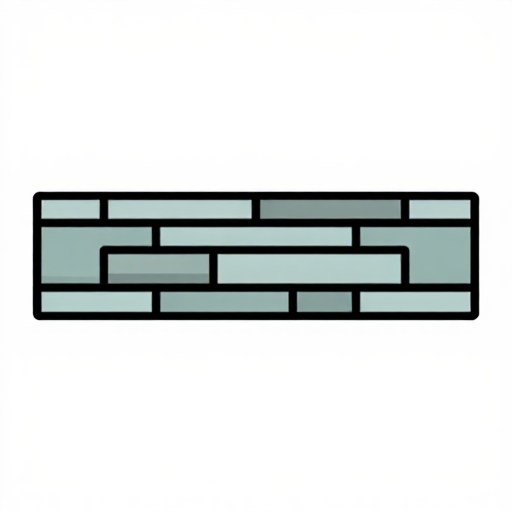 หินยึดทะลุผนัง12 ชิ้น
2
2
Mark and Excavate the Foundation Trench
Mark and Excavate the Foundation Trench
Mark out the wall line using wooden stakes and cordage. Excavate a shallow trench 60 to 70 cm wide and 15 to 20 cm deep along the full length. The trench should reach firm subsoil — never build on topsoil, which compresses and causes settlement. On sloped ground, step the foundation to follow the contour.
เครื่องมือที่ต้องใช้:
 ลำต้นไม้เนื้อแข็งขนาดเล็ก
 เชือก
เชือก3
3
Lay the Foundation Course
Lay the Foundation Course
Place the largest and heaviest stones in the foundation trench. These foundation stones should have at least one flat face pointing upward. Set them tightly side by side across the full trench width. The foundation course is the widest part of the wall — typically 55 to 65 cm wide. Fill any gaps between large stones with smaller pieces packed in tightly.
วัสดุสำหรับขั้นตอนนี้:
หินก้อนใหญ่หน้าเรียบ20 ชิ้นเครื่องมือที่ต้องใช้:
 หินทุบ
4
4
Build the First Outer Face Course
Build the First Outer Face Course
Begin building two parallel outer faces on top of the foundation. Each face stone must have a flat, presentable side facing outward. Place each stone so it spans across the joint between two stones below it — never stack joints directly above each other. The outer faces should already begin leaning inward slightly from the foundation width.
วัสดุสำหรับขั้นตอนนี้:
หินก้อนใหญ่หน้าเรียบ15 ชิ้น5
5
Fill the Centre with Hearting Stones
Fill the Centre with Hearting Stones
Pack the gap between the two outer faces with small irregular stones — this fill is called hearting. Push hearting stones in firmly so they wedge against each other and against the inner surfaces of the face stones. Good hearting is tightly packed with minimal voids. Never use soil or loose rubble — only stone. The hearting provides mass and prevents the faces from being pushed inward.
วัสดุสำหรับขั้นตอนนี้:
หินก้อนเล็กรูปร่างไม่สม่ำเสมอ25 ชิ้น6
6
Continue Building Courses with Batter
Continue Building Courses with Batter
Build successive courses, making each course slightly narrower than the one below. This inward taper — called the batter — typically reduces the wall width by about 2 to 3 cm per side per course. A wall that starts at 60 cm wide at the base might be 35 to 40 cm wide at the top. Use a batter frame (two sloped stakes connected by a string) as a guide to keep the taper consistent on both faces.
วัสดุสำหรับขั้นตอนนี้:
หินก้อนใหญ่หน้าเรียบ30 ชิ้นหินก้อนเล็กรูปร่างไม่สม่ำเสมอ40 ชิ้นเครื่องมือที่ต้องใช้:
ลำต้นไม้เนื้อแข็งขนาดเล็ก7
7
Ensure Every Stone Bears on Two Below
Ensure Every Stone Bears on Two Below
The most important rule of dry stone walling is 'one over two, two over one' — every stone must bridge the joint between two stones in the course below. This interlocking pattern distributes weight and prevents vertical fracture lines from forming. If a stone only rests on one stone below it, reposition or choose a different stone.
8
8
Place the First Row of Through-Stones
Place the First Row of Through-Stones
After every two to three courses (roughly 30 to 40 cm of height), lay through-stones that span the entire width of the wall from one face to the other. These long stones tie the two faces together and prevent them from bulging outward under the weight of the hearting. Space through-stones approximately 1 metre apart along the wall length. Each through-stone should be at least as long as the wall is wide at that height.
วัสดุสำหรับขั้นตอนนี้:
หินยึดทะลุผนัง6 ชิ้น9
9
Continue Courses to Working Height
Continue Courses to Working Height
Keep building courses with face stones, hearting, and through-stones every two to three courses. A typical field boundary wall reaches 1 to 1.2 metres in height. Check the batter angle periodically by stepping back and sighting along the wall. Both faces should taper inward at the same angle. Correct any outward lean immediately — it only gets worse with more weight above.
วัสดุสำหรับขั้นตอนนี้:
หินก้อนใหญ่หน้าเรียบ15 ชิ้นหินก้อนเล็กรูปร่างไม่สม่ำเสมอ35 ชิ้นหินยึดทะลุผนัง6 ชิ้น10
10
Level the Top Course for Capstones
Level the Top Course for Capstones
The final course before capping must be as level as possible. Use flat stone shims to level any high or low spots. The top surface should form a reasonably flat platform across the full width of the wall. This is critical — capstones must sit flat and stable.
เครื่องมือที่ต้องใช้:
หินทุบ11
11
Place Capstones Along the Top
Place Capstones Along the Top
Set heavy, flat capstones along the top of the wall, spanning its full width. Capstones should be placed upright on edge (vertically) or flat, depending on regional tradition. Vertical capstones shed rain better and add visual weight. Each capstone should press down firmly on both outer faces, locking them together. Capstones are the heaviest stones per unit in the wall — their weight compresses and stabilises everything below.
วัสดุสำหรับขั้นตอนนี้:
 หินปิดยอด10 ชิ้น
12
12
Pack Final Hearting Under Capstones
Pack Final Hearting Under Capstones
Push small wedge-shaped stones into any gaps beneath and between the capstones. These pinning stones lock the capstones in place and prevent them from rocking. Tap them in firmly with a hammerstone. No capstone should wobble when pressed from any direction.
วัสดุสำหรับขั้นตอนนี้:
หินก้อนเล็กรูปร่างไม่สม่ำเสมอ10 ชิ้นเครื่องมือที่ต้องใช้:
หินทุบ13
13
Inspect and Tighten the Entire Wall
Inspect and Tighten the Entire Wall
Walk along both sides of the completed wall. Push against it at several points — a properly built wall should not flex or shift. Look for any stones protruding excessively or any gaps where hearting has settled. Tap loose stones back into position with the hammerstone. A well-built dry stone wall should feel monolithic.
เครื่องมือที่ต้องใช้:
หินทุบ14
14
Build Wall Ends with Quoin Stones
Build Wall Ends with Quoin Stones
Wall ends (and gate openings) require the strongest construction. Use large, squared-off quoin stones at the ends, alternating their orientation on each course — one course with the long axis running along the wall, the next with it running into the wall. This alternating pattern creates an interlocked end that resists being pulled apart. Wall ends should be battered more steeply than the main wall.
วัสดุสำหรับขั้นตอนนี้:
หินก้อนใหญ่หน้าเรียบ8 ชิ้น15
15
Maintenance and Repair Over Time
Maintenance and Repair Over Time
Dry stone walls require periodic inspection. Frost heave can dislodge stones over winter, and animal pressure can push sections out of alignment. Repair promptly by rebuilding the affected section from the ground up — never just push a fallen stone back on top. Remove all stones from the damaged area, re-sort them, and rebuild course by course following the same principles. A maintained dry stone wall can last centuries.
วัสดุ
4- 168 ชิ้นตัวยึดตำแหน่ง
- 210 ชิ้นตัวยึดตำแหน่ง
- 24 ชิ้นตัวยึดตำแหน่ง
- 10 ชิ้นตัวยึดตำแหน่ง
วัสดุจากพิมพ์เขียวที่เชื่อมต่อ
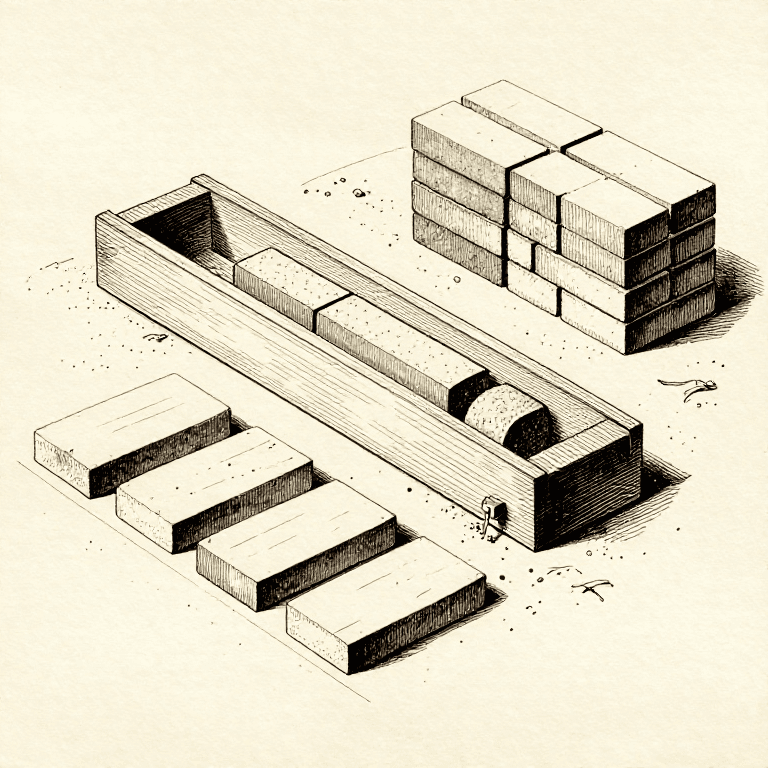

พิมพ์เขียวนี้สร้าง

บลูพริ้นท์ที่เกี่ยวข้อง
บลูพริ้นท์เหล่านี้แบ่งปันความรู้ — เทคนิค วัสดุ หรือหลักการ

CC0 สาธารณสมบัติ
พิมพ์เขียวนี้เผยแพร่ภายใต้ CC0 คุณสามารถคัดลอก แก้ไข แจกจ่าย และใช้งานผลงานนี้เพื่อวัตถุประสงค์ใดก็ได้ โดยไม่ต้องขออนุญาต
สนับสนุนเมกเกอร์โดยซื้อสินค้าผ่านพิมพ์เขียวของพวกเขา ซึ่งพวกเขาจะได้รับ ค่าคอมมิชชันเมกเกอร์ ที่ผู้ขายกำหนด หรือสร้างเวอร์ชันใหม่ของพิมพ์เขียวนี้และรวมเป็นการเชื่อมต่อในพิมพ์เขียวของคุณเพื่อแบ่งรายได้